a. When HBr adds to a conjugated diene, what is the rate-determining step? b. When HBr adds to a conjugated diene, what is the product-determining step?
Verified step by step guidance
1
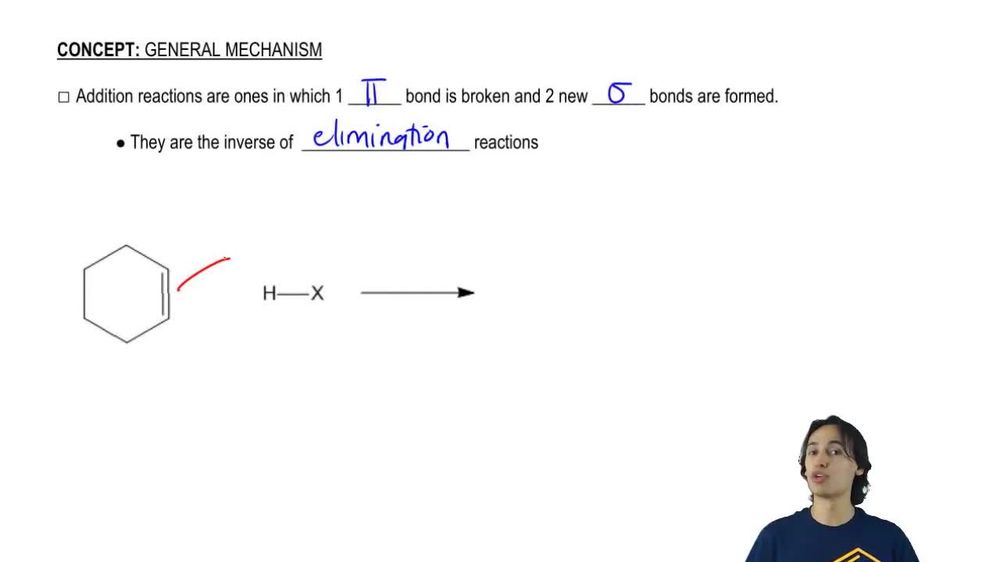
The first step is to understand the mechanism of HBr addition to a conjugated diene. A conjugated diene contains alternating double and single bonds, which allow for delocalization of electrons. The reaction proceeds via an electrophilic addition mechanism.
In the rate-determining step, the π-electrons of one of the double bonds in the conjugated diene attack the electrophilic hydrogen (H⁺) from HBr. This results in the formation of a carbocation intermediate. The formation of this carbocation is the slowest step because it involves breaking the π-bond and creating a high-energy intermediate.
The next step is the product-determining step. Once the carbocation intermediate is formed, the bromide ion (Br⁻) attacks the positively charged carbon in the carbocation. The position of the bromide ion's attack depends on the stability of the carbocation intermediate, which can lead to either the 1,2-addition product or the 1,4-addition product.
To determine the major product, consider the stability of the carbocation intermediate and the reaction conditions. Under kinetic control (low temperature), the 1,2-addition product is favored because it forms faster. Under thermodynamic control (higher temperature), the 1,4-addition product is favored because it is more stable.
Finally, summarize the key points: The rate-determining step is the formation of the carbocation intermediate, and the product-determining step is the attack of the bromide ion on the carbocation, which determines whether the 1,2- or 1,4-addition product is formed.
Verified video answer for a similar problem:
This video solution was recommended by our tutors as helpful for the problem above
Video duration:
4m
Play a video:
0 Comments
Key Concepts
Here are the essential concepts you must grasp in order to answer the question correctly.
Conjugated Dienes
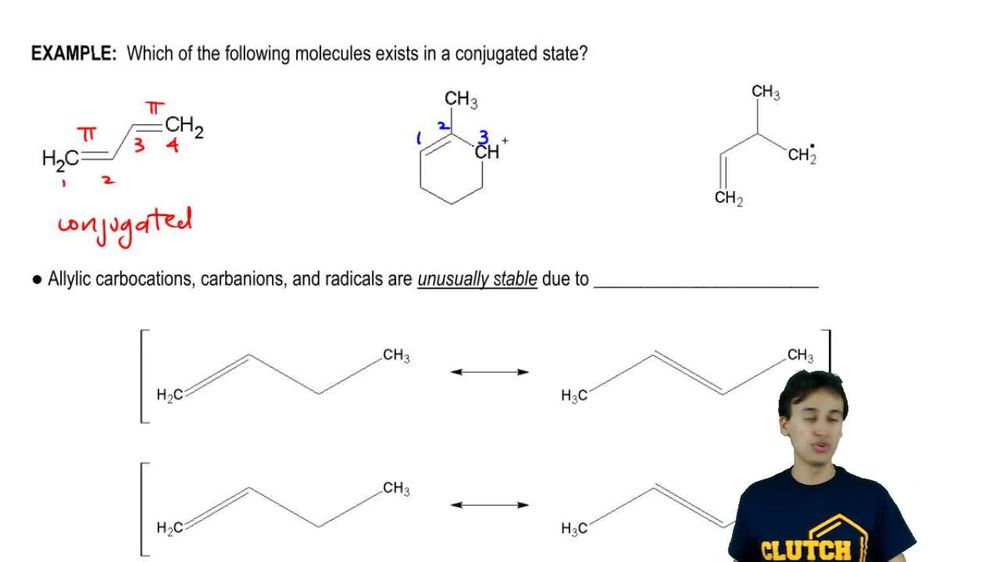
Conjugated dienes are hydrocarbons that contain two double bonds separated by a single bond. This arrangement allows for resonance stabilization, which can influence the reactivity and stability of the molecule. Understanding the structure and behavior of conjugated dienes is crucial for predicting the outcomes of reactions, such as the addition of HBr.
The electrophilic addition mechanism involves the reaction of an electrophile, like HBr, with a nucleophilic site in the diene. The first step typically involves the formation of a carbocation intermediate, which can lead to different products depending on the stability of the carbocation formed. Recognizing the steps in this mechanism is essential for determining both the rate-determining and product-determining steps in the reaction.
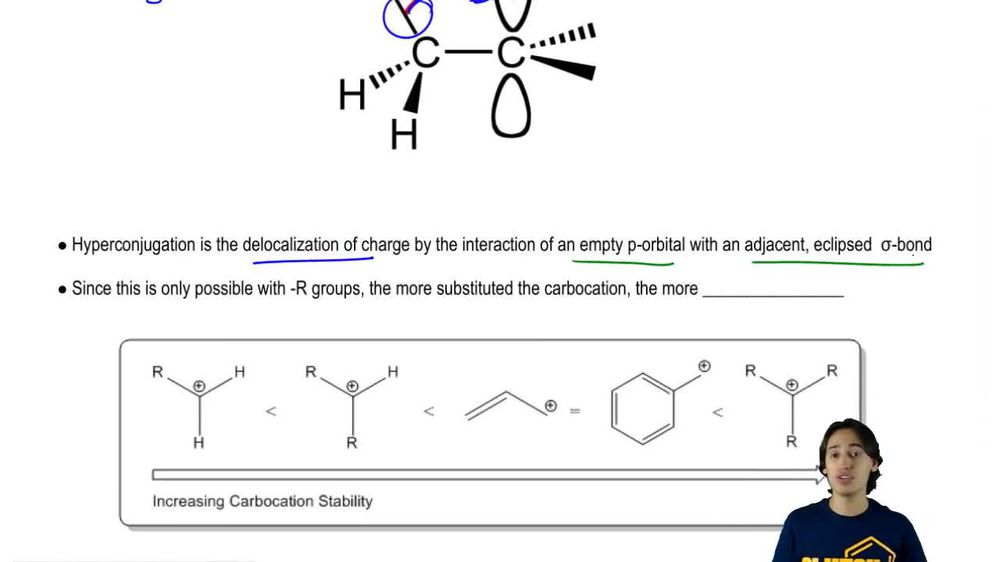
Carbocation stability is a key factor in determining the outcome of reactions involving electrophilic addition. More stable carbocations, such as tertiary carbocations, are favored in reactions because they can better accommodate the positive charge. The stability of the carbocation formed during the reaction with HBr will influence both the rate of the reaction and the final product, making it a critical concept in understanding the overall process.