How can the following compounds be prepared using ethyne as the starting material? c.
Verified step by step guidance
1
Step 1: Begin with ethyne (C≡CH) as the starting material. Ethyne is a simple alkyne with a triple bond between two carbon atoms.
Step 2: Perform hydroboration-oxidation on ethyne to convert it into an aldehyde. Use a reagent like disiamylborane (R2BH) followed by oxidation with hydrogen peroxide (H2O2) in a basic solution (NaOH). This will yield acetaldehyde (CH3CHO).
Step 3: Convert acetaldehyde into acetone (CH3COCH3) by oxidation. Use a strong oxidizing agent such as potassium dichromate (K2Cr2O7) in acidic conditions or PCC (Pyridinium chlorochromate) to achieve this transformation.
Step 4: To introduce the additional methyl group, perform a methylation reaction. React acetone with a methylating agent like methyl iodide (CH3I) in the presence of a base such as sodium hydride (NaH) or potassium tert-butoxide (KOtBu). This will yield the desired compound, 2,2-dimethylpropanal.
Step 5: Verify the structure of the final compound to ensure it matches the target molecule shown in the image. The compound should have two methyl groups attached to the central carbon and a carbonyl group (C=O) bonded to the same central carbon.
Verified video answer for a similar problem:
This video solution was recommended by our tutors as helpful for the problem above
Video duration:
1m
Play a video:
0 Comments
Key Concepts
Here are the essential concepts you must grasp in order to answer the question correctly.
Ethyne as a Building Block
Ethyne, also known as acetylene, is a simple alkyne that serves as a versatile building block in organic synthesis. Its triple bond allows for various reactions, including addition reactions with electrophiles, which can lead to the formation of more complex molecules. Understanding how to manipulate ethyne's structure is crucial for synthesizing a wide range of organic compounds.
Alkynes undergo several key reactions, including hydrogenation, halogenation, and hydroboration-oxidation. These reactions can modify the triple bond, allowing for the introduction of functional groups or the conversion of alkynes into alkenes or alkanes. Familiarity with these reaction mechanisms is essential for predicting the products formed when starting with ethyne.
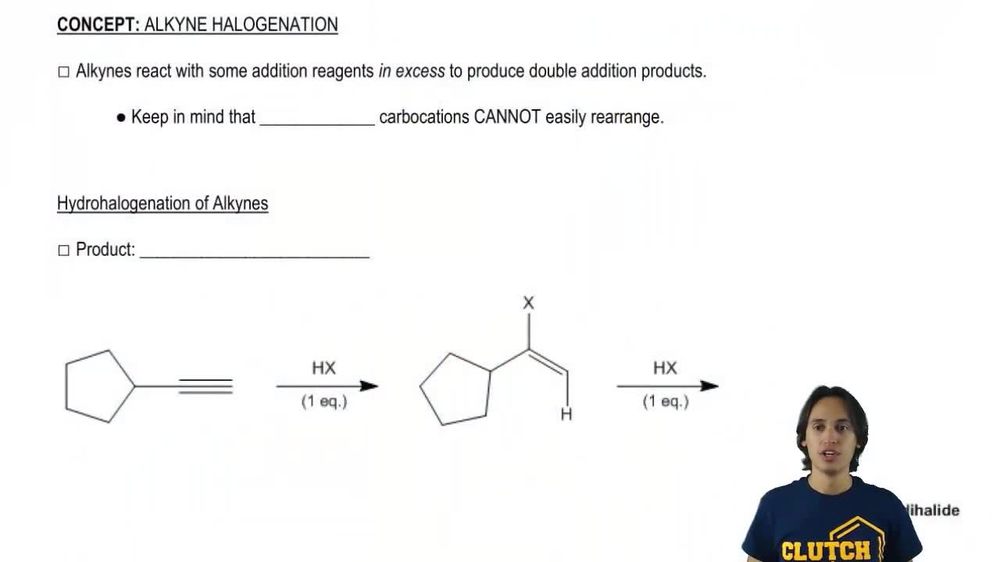
General properties of double addition reactions to alkynes.
Functional Group Transformations
Functional group transformations involve converting one functional group into another, which is a fundamental concept in organic synthesis. By understanding how to perform these transformations, chemists can design pathways to create desired compounds from simpler starting materials like ethyne. This includes reactions that add or remove functional groups, ultimately leading to the target compounds.

 1:39 minutes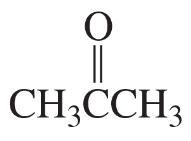
 Verified step by step guidance
 16:59
16:59