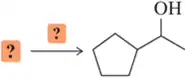
Suggest a reagent and a reactant that could be combined to make each of the following alcohols. (d)
Verified step by step guidance
1
Identify the starting material and the product. The starting material is cyclopropyl ethylene, and the product is cyclopropyl ethanol.
Recognize that the transformation involves the addition of an OH group to the terminal carbon of the alkene, indicating a hydration reaction.
Consider the Markovnikov addition of water across the double bond, which typically requires an acid catalyst. A common reagent for this transformation is dilute sulfuric acid (H₂SO₄) or phosphoric acid (H₃PO₄) in the presence of water.
Alternatively, consider using oxymercuration-demercuration, which involves the use of mercuric acetate (Hg(OAc)₂) followed by reduction with sodium borohydride (NaBH₄) to achieve Markovnikov hydration without rearrangement.
Ensure that the chosen method does not lead to rearrangement or side reactions, maintaining the integrity of the cyclopropyl ring structure in the product.
Verified video answer for a similar problem:
This video solution was recommended by our tutors as helpful for the problem above
Play a video:
0 Comments
Key Concepts
Here are the essential concepts you must grasp in order to answer the question correctly.
Alcohol Functional Group
Alcohols are organic compounds characterized by the presence of one or more hydroxyl (-OH) groups attached to a carbon atom. Understanding the structure and properties of alcohols is essential for identifying suitable reactants and reagents for their synthesis. The position of the hydroxyl group can significantly influence the reactivity and properties of the alcohol.
Reagents are substances that are added to a reaction to cause a chemical change. In the context of alcohol synthesis, common reagents include strong acids, bases, or specific nucleophiles that can facilitate the formation of the alcohol from a precursor. Knowing the appropriate reagents for different types of alcohols, such as primary, secondary, or tertiary, is crucial for successful synthesis.
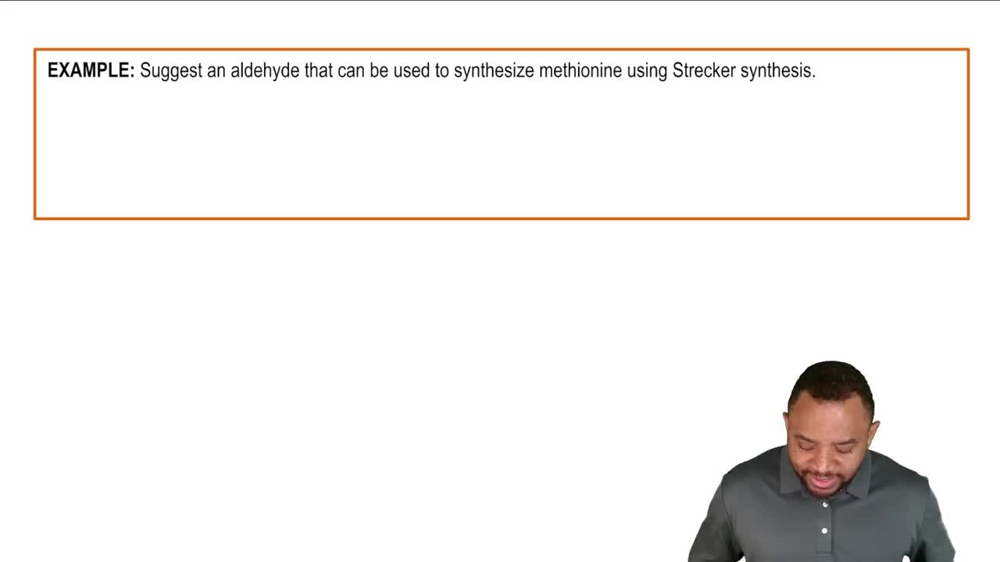
Synthesis of Amino Acids: Strecker Synthesis Example 1
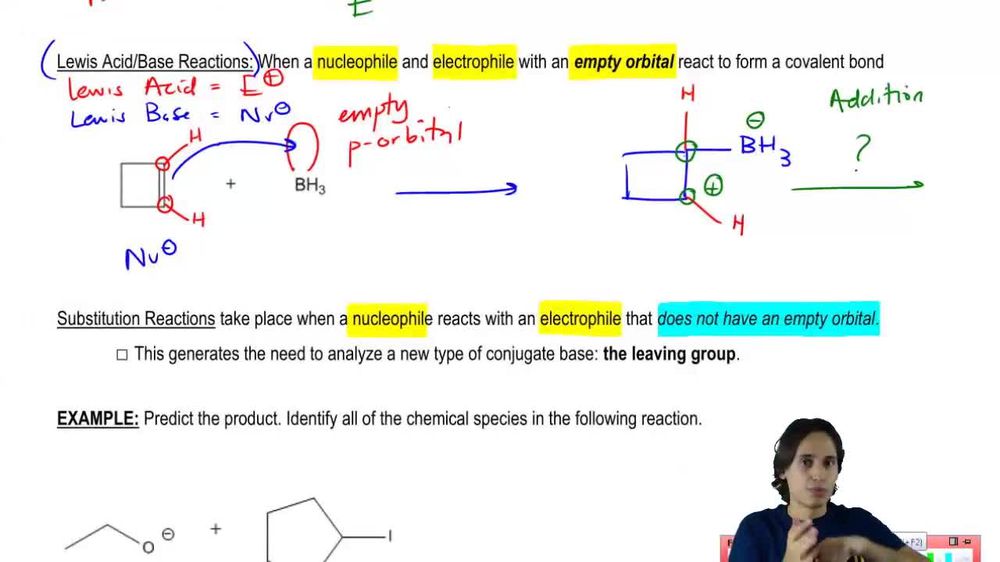
Nucleophilic Substitution Reactions
Nucleophilic substitution reactions are a fundamental type of reaction in organic chemistry where a nucleophile replaces a leaving group in a molecule. This concept is particularly relevant when synthesizing alcohols from alkyl halides or other electrophiles. Understanding the mechanisms of these reactions, including SN1 and SN2 pathways, helps in predicting the products and conditions needed for the desired alcohol.

 Verified step by step guidance
 02:36
02:36