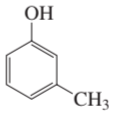
For each of the following compounds, indicate the ring carbon(s) that is/are nitrated when the compound is treated with HNO3/H2SO4: e. f.
Verified step by step guidance
1
Identify the functional groups and substituents present on the aromatic ring of each compound. Substituents can influence the reactivity and regioselectivity of electrophilic aromatic substitution reactions, such as nitration.
Determine whether the substituents are electron-donating groups (EDGs) or electron-withdrawing groups (EWGs). EDGs activate the ring and direct incoming electrophiles to ortho and para positions, while EWGs deactivate the ring and direct electrophiles to the meta position.
Analyze the steric hindrance around the ring. Even if a position is electronically favorable, steric hindrance from bulky substituents may prevent nitration at that site.
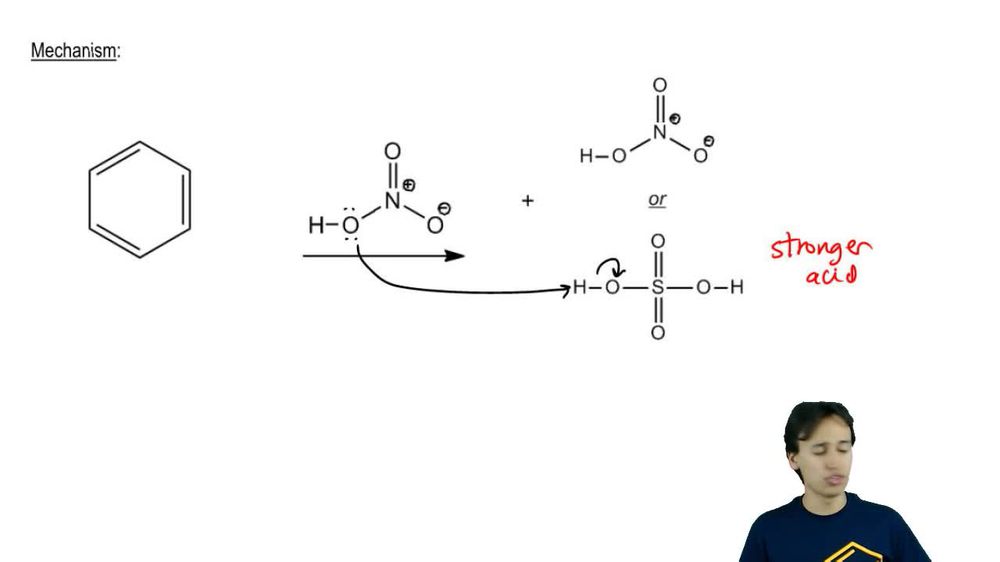
Use the nitration mechanism to predict the site of attack. The nitronium ion (NO₂⁺), generated from HNO₃ and H₂SO₄, acts as the electrophile and reacts with the most favorable position on the aromatic ring based on the electronic and steric factors.
For each compound, indicate the specific carbon(s) on the ring where nitration occurs, considering the directing effects of substituents and steric hindrance. Label these carbons clearly based on their position relative to the substituents (e.g., ortho, meta, or para).
Verified video answer for a similar problem:
This video solution was recommended by our tutors as helpful for the problem above
Video duration:
8m
Play a video:
0 Comments
Key Concepts
Here are the essential concepts you must grasp in order to answer the question correctly.
Electrophilic Aromatic Substitution
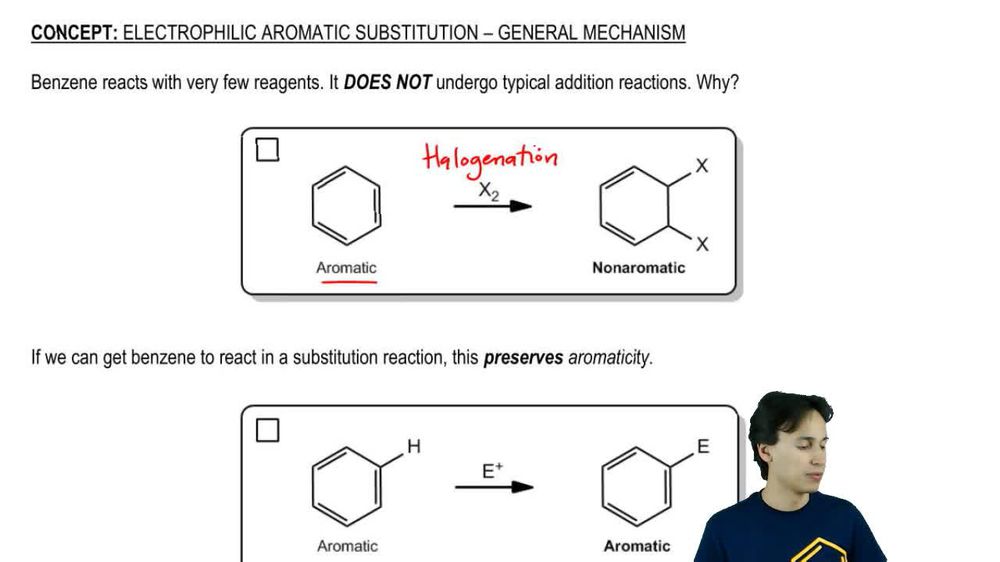
Electrophilic aromatic substitution (EAS) is a fundamental reaction in organic chemistry where an electrophile replaces a hydrogen atom on an aromatic ring. In the context of nitration, the electrophile is the nitronium ion (NO2+), generated from nitric acid and sulfuric acid. Understanding EAS is crucial for predicting which carbon atoms on the aromatic ring will be substituted during the reaction.
Aromaticity refers to the special stability and reactivity of certain cyclic compounds that have a planar structure and a continuous ring of p-orbitals, allowing for delocalized π-electrons. This property is essential for understanding why certain positions on the ring are more reactive towards electrophiles, as the stability of the aromatic system influences the site of substitution during nitration.
Regioselectivity in nitration describes the preference of the electrophile to attack specific positions on the aromatic ring, influenced by substituents already present. For example, electron-donating groups increase the electron density at ortho and para positions, making them more reactive, while electron-withdrawing groups direct substitution to the meta position. Recognizing these patterns is key to predicting the outcome of the nitration reaction.

 8:01 minutes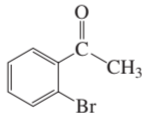
 Verified step by step guidance
 03:07
03:07