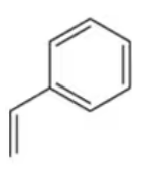
Predict the product(s) that would result when the following molecules are allowed to react under the following conditions: (v) H2O. If there is no reaction, write 'no reaction.' (a)
Verified step by step guidance
1
Step 1: Identify the functional groups present in the given molecule. Functional groups determine the reactivity and the type of reaction that can occur. For example, look for alkene, alkyne, carbonyl, or halide groups.
Step 2: Analyze the reaction conditions provided. In this case, the reagent is H₂O (water). Water typically participates in hydrolysis, hydration, or nucleophilic substitution reactions depending on the functional group present.
Step 3: Determine if the molecule has a functional group that can react with H₂O. For example, alkenes can undergo hydration in the presence of an acid catalyst, forming alcohols. Carbonyl compounds can undergo hydrolysis to form carboxylic acids or alcohols.
Step 4: Predict the product(s) based on the reaction mechanism. For instance, if the molecule contains an alkene, the addition of H₂O will follow Markovnikov's rule, where the hydroxyl group (-OH) attaches to the more substituted carbon.
Step 5: If the molecule does not contain a reactive functional group under the given conditions, conclude 'no reaction.' Ensure to justify this conclusion based on the chemical properties of the molecule and the reagent.
Verified video answer for a similar problem:
This video solution was recommended by our tutors as helpful for the problem above
Video duration:
2m
Play a video:
0 Comments
Key Concepts
Here are the essential concepts you must grasp in order to answer the question correctly.
Nucleophilic Substitution
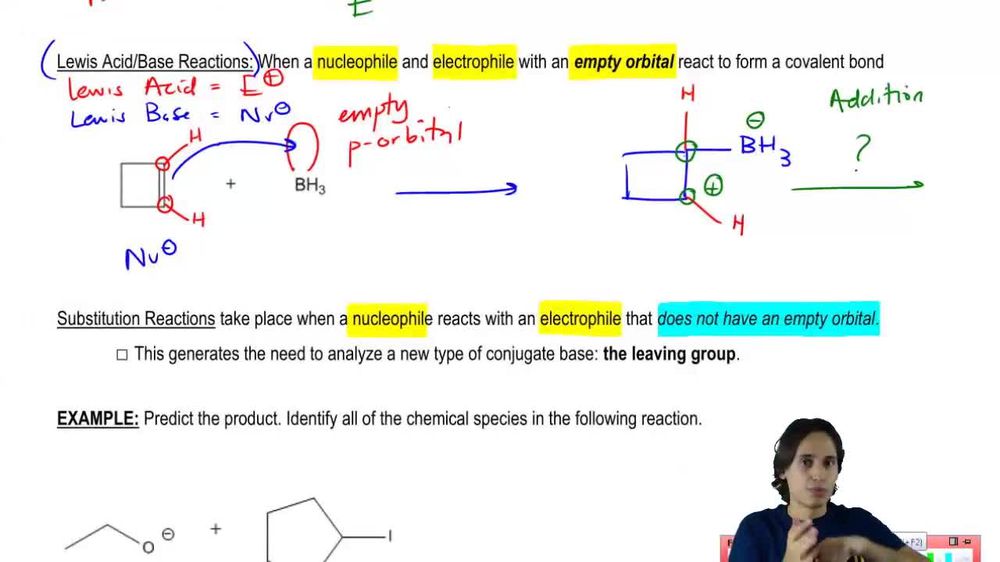
Nucleophilic substitution is a fundamental reaction in organic chemistry where a nucleophile attacks an electrophile, resulting in the replacement of a leaving group. This process is crucial for predicting the products of reactions involving water (H₂O), which can act as a nucleophile, especially in the presence of suitable electrophiles like alkyl halides.
Nucleophiles and Electrophiles can react in Substitution Reactions.
Hydrolysis
Hydrolysis is a chemical reaction involving the breaking of a bond in a molecule using water. In organic chemistry, hydrolysis often refers to the reaction of an ester or an amide with water, leading to the formation of an alcohol and a carboxylic acid or an amine, respectively. Understanding hydrolysis is essential for predicting the outcomes of reactions involving water.
Reaction conditions, such as temperature, solvent, and the presence of catalysts, significantly influence the course and outcome of chemical reactions. In the context of the question, the presence of water as a solvent can dictate whether a reaction occurs, how quickly it proceeds, and what products are formed, making it vital to consider these factors when predicting reaction products.