A chemist failed to generate the alcohol using the reaction shown here. (a) Suggest a reason why this reaction did not work as written.
Verified step by step guidance
1
Step 1: Analyze the reaction provided. Determine the type of reaction (e.g., reduction, substitution, addition) and identify the reagents and conditions used. This will help you understand the intended transformation and why the alcohol product was expected.
Step 2: Consider the mechanism of the reaction. For example, if the reaction involves reduction, check if the reducing agent is appropriate for the substrate. If the substrate is resistant to reduction under the given conditions, this could explain the failure.
Step 3: Evaluate the functional groups present in the substrate. Some functional groups may require specific conditions or catalysts to undergo transformation. For instance, if the substrate contains a carbonyl group, the choice of reducing agent and solvent can significantly impact the reaction outcome.
Step 4: Suggest a reason for the failure. Common issues include insufficient reactivity of the reagents, inappropriate solvent, or lack of a necessary catalyst. For example, if the reaction involves a carbonyl compound, the reducing agent might not be strong enough to reduce it to an alcohol.
Step 5: Propose general modifications to the reaction conditions. This could include using a stronger reducing agent (e.g., LiAlH₄ instead of NaBH₄), changing the solvent to one that better stabilizes intermediates, or adding a catalyst to facilitate the reaction. These adjustments can improve the likelihood of forming the desired alcohol product.
Verified video answer for a similar problem:
This video solution was recommended by our tutors as helpful for the problem above
Video duration:
3m
Play a video:
0 Comments
Key Concepts
Here are the essential concepts you must grasp in order to answer the question correctly.
Reaction Mechanism
A reaction mechanism outlines the step-by-step process by which reactants are converted into products. Understanding the mechanism is crucial for identifying potential issues in a reaction, such as the formation of intermediates or the need for specific catalysts. In this case, knowing the mechanism can help explain why the alcohol was not produced as expected.
Reaction conditions refer to the specific parameters under which a chemical reaction occurs, including temperature, pressure, solvent, and concentration of reactants. Modifying these conditions can significantly influence the reaction's outcome, potentially enhancing the yield of the desired product. Adjusting factors like temperature or using a different solvent may facilitate the formation of the alcohol.
Functional groups are specific groups of atoms within molecules that are responsible for the characteristic chemical reactions of those molecules. Recognizing the functional groups involved in the reaction is essential for predicting reactivity and understanding how to modify conditions to promote product formation. In this scenario, the nature of the functional groups in the reactants and products will guide the chemist in troubleshooting the reaction.

 3:18 minutes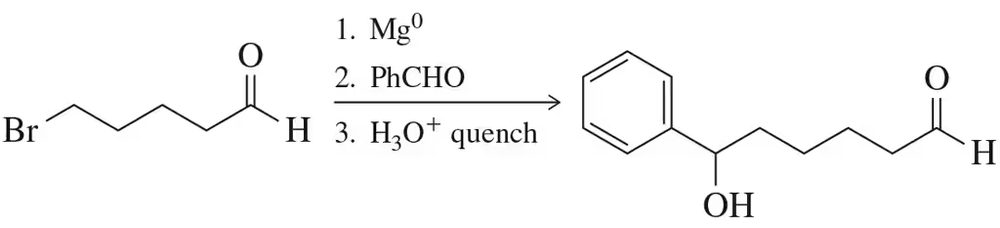
 Verified step by step guidance
 02:16
02:16