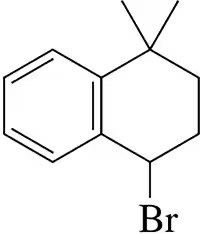
Suggest reagents and reaction conditions that would result in synthesis of the following bromoalkanes. (c)
Verified step by step guidance
1
Step 1: Identify the target bromoalkane structure. Determine the position of the bromine atom in the molecule and whether the reaction requires substitution, addition, or another mechanism.
Step 2: Choose an appropriate starting material. For example, if the target bromoalkane is a primary bromoalkane, consider using an alkane or an alcohol as the starting material.
Step 3: Select the reagent for bromination. Common reagents include Br₂ in the presence of light (hv) for free radical halogenation or PBr₃ for converting alcohols to bromoalkanes.
Step 4: Determine the reaction conditions. For free radical halogenation, use ultraviolet light (hv) or heat to initiate the reaction. For alcohol conversion, use PBr₃ under mild conditions.
Step 5: Consider regioselectivity and stereochemistry. If the reaction involves multiple possible products, ensure the conditions favor the formation of the desired bromoalkane (e.g., using selective reagents or controlling temperature).
Verified video answer for a similar problem:
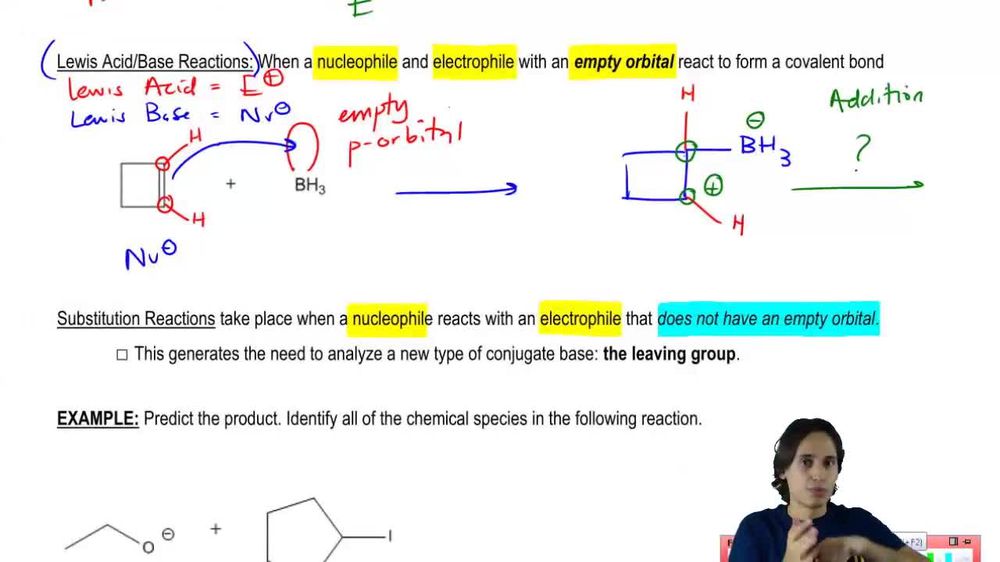
This video solution was recommended by our tutors as helpful for the problem above
Play a video:
0 Comments
Key Concepts
Here are the essential concepts you must grasp in order to answer the question correctly.
Nucleophilic Substitution
Nucleophilic substitution is a fundamental reaction in organic chemistry where a nucleophile replaces a leaving group in a molecule. This process can occur via two main mechanisms: SN1, which involves a two-step process with a carbocation intermediate, and SN2, which is a one-step process where the nucleophile attacks the substrate simultaneously as the leaving group departs. Understanding these mechanisms is crucial for predicting the outcome of reactions involving bromoalkanes.
Nucleophiles and Electrophiles can react in Substitution Reactions.
Reagents for Bromoalkane Synthesis
Common reagents used for the synthesis of bromoalkanes include alkyl halides, bromine (Br2), and phosphorus tribromide (PBr3). These reagents facilitate the introduction of bromine into organic molecules through various reaction pathways, such as electrophilic addition or substitution. Knowing the appropriate reagents and their reactivity is essential for successfully synthesizing the desired bromoalkanes.
Synthesis of Amino Acids: Strecker Synthesis Example 1
Reaction Conditions
Reaction conditions, including temperature, solvent, and concentration, play a critical role in the success of organic reactions. For the synthesis of bromoalkanes, conditions such as using polar aprotic solvents can enhance the nucleophilicity of the reagents and favor SN2 mechanisms. Additionally, controlling the temperature can influence the rate of reaction and the selectivity of the product formed, making it vital to optimize these conditions for effective synthesis.