Show how the following compounds can be synthesized from benzene: a.
Verified step by step guidance
1
Step 1: Begin with benzene as the starting material. Benzene is a simple aromatic compound with a six-membered ring and alternating double bonds.
Step 2: Perform a nitration reaction to introduce a nitro group (-NO₂) onto the benzene ring. This is achieved by treating benzene with a mixture of concentrated nitric acid (HNO₃) and concentrated sulfuric acid (H₂SO₄). The nitro group will attach to the benzene ring, forming nitrobenzene.
Step 3: Carry out a Friedel-Crafts acylation reaction to introduce the acetyl group (-COCH₃) onto the benzene ring. This is done by reacting nitrobenzene with acetyl chloride (CH₃COCl) in the presence of a Lewis acid catalyst, such as aluminum chloride (AlCl₃). The acetyl group will attach to the benzene ring, forming the desired compound.
Step 4: Ensure that the nitro group and acetyl group are positioned correctly on the benzene ring. The nitro group is meta-directing, meaning that the acetyl group will preferentially attach to the meta position relative to the nitro group during the Friedel-Crafts acylation.
Step 5: Verify the structure of the final product, which should be 3-nitroacetophenone. This compound has a nitro group (-NO₂) at the meta position and an acetyl group (-COCH₃) attached to the benzene ring.
Verified video answer for a similar problem:
This video solution was recommended by our tutors as helpful for the problem above
Video duration:
5m
Play a video:
0 Comments
Key Concepts
Here are the essential concepts you must grasp in order to answer the question correctly.
Electrophilic Aromatic Substitution
Electrophilic aromatic substitution (EAS) is a fundamental reaction in organic chemistry where an electrophile replaces a hydrogen atom on an aromatic ring, such as benzene. This process is crucial for synthesizing various compounds from benzene, as it allows for the introduction of different functional groups while preserving the aromaticity of the ring.
Different reagents and conditions are required for specific electrophilic aromatic substitution reactions. For example, the use of halogens with a Lewis acid catalyst can facilitate halogenation, while nitration requires a mixture of concentrated nitric and sulfuric acids. Understanding the appropriate reagents and conditions is essential for successfully synthesizing target compounds from benzene.
Functional group transformations involve converting one functional group into another through various chemical reactions. In the context of synthesizing compounds from benzene, this may include processes like reduction, oxidation, or rearrangement after initial substitution. Mastery of these transformations is vital for achieving the desired final products in organic synthesis.

 5:23 minutes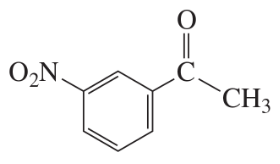
 Verified step by step guidance
 03:07
03:07