Show how you would accomplish the following synthetic conversions efficiently and in good yield. You may use any necessary additional reagents and solvents. (g)
Verified step by step guidance
1
Step 1: Begin by converting the carboxylic acid group (-COOH) into an acyl chloride (-COCl). This can be achieved using reagents such as thionyl chloride (SOCl₂) or oxalyl chloride in the presence of a base like pyridine. This step activates the carboxylic acid for further reaction.
Step 2: Once the acyl chloride is formed, perform a Friedel-Crafts acylation reaction. Use benzene (Ph-H) as the aromatic substrate and a Lewis acid catalyst such as aluminum chloride (AlCl₃) to facilitate the electrophilic aromatic substitution. This will introduce the phenyl group (Ph) onto the carbonyl carbon.
Step 3: After the Friedel-Crafts acylation, isolate and purify the product using standard organic workup techniques, such as washing with water, drying over anhydrous magnesium sulfate, and evaporating the solvent.
Step 4: Confirm the structure of the product using spectroscopic methods such as IR spectroscopy (to verify the presence of the carbonyl group) and NMR spectroscopy (to confirm the phenyl group and cyclopentyl structure).
Step 5: Optimize the reaction conditions (e.g., temperature, solvent choice) to ensure high yield and efficiency. For example, using a non-polar solvent like dichloromethane (CH₂Cl₂) can improve the reaction rate and yield in the Friedel-Crafts acylation step.
Verified video answer for a similar problem:
This video solution was recommended by our tutors as helpful for the problem above
Video duration:
2m
Play a video:
0 Comments
Key Concepts
Here are the essential concepts you must grasp in order to answer the question correctly.
Synthetic Pathways
Synthetic pathways refer to the series of chemical reactions that transform starting materials into desired products. Understanding these pathways is crucial for planning efficient syntheses, as it involves selecting appropriate reagents, conditions, and reaction mechanisms to achieve high yields and minimize by-products.
Energy Production In Biochemical Pathways Concept 1
Reagents and Solvents
Reagents are substances used to bring about a chemical reaction, while solvents are the mediums in which reactions occur. Choosing the right reagents and solvents is essential for optimizing reaction conditions, influencing factors such as solubility, reactivity, and selectivity, which ultimately affect the yield of the desired product.
Reaction mechanisms describe the step-by-step process by which reactants are converted into products. A thorough understanding of mechanisms helps predict the outcomes of reactions, identify potential side reactions, and guide the selection of conditions that favor the desired transformation, thereby improving overall efficiency and yield.

 2:14 minutes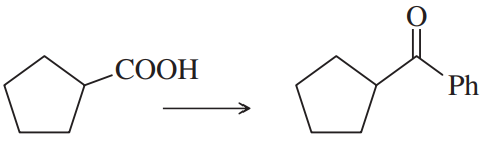
 Verified step by step guidance
 2:13
2:13