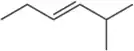
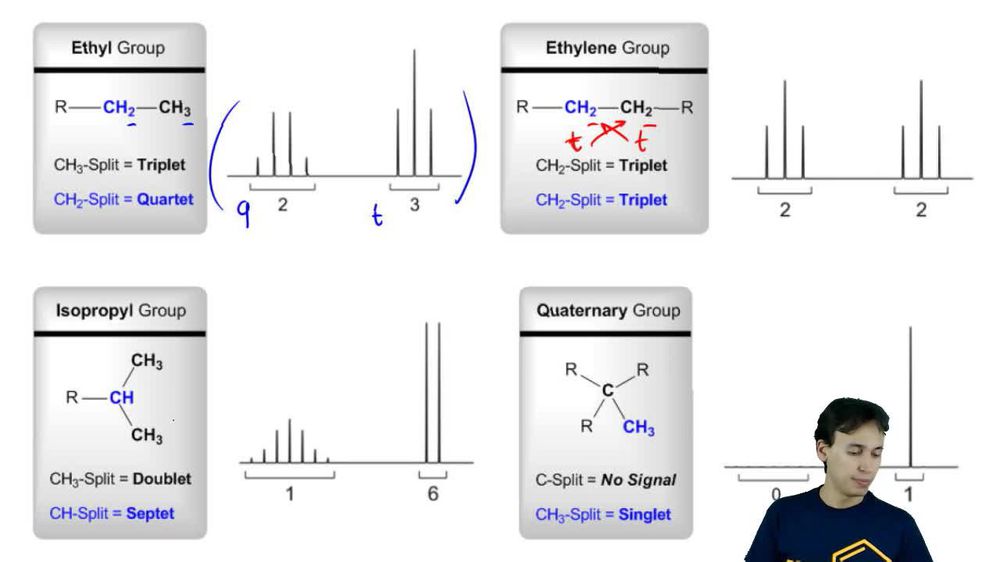
For each of the molecules shown, predict the structure of at least one major fragment in the mass spectrum. (e)
Verified step by step guidance
1
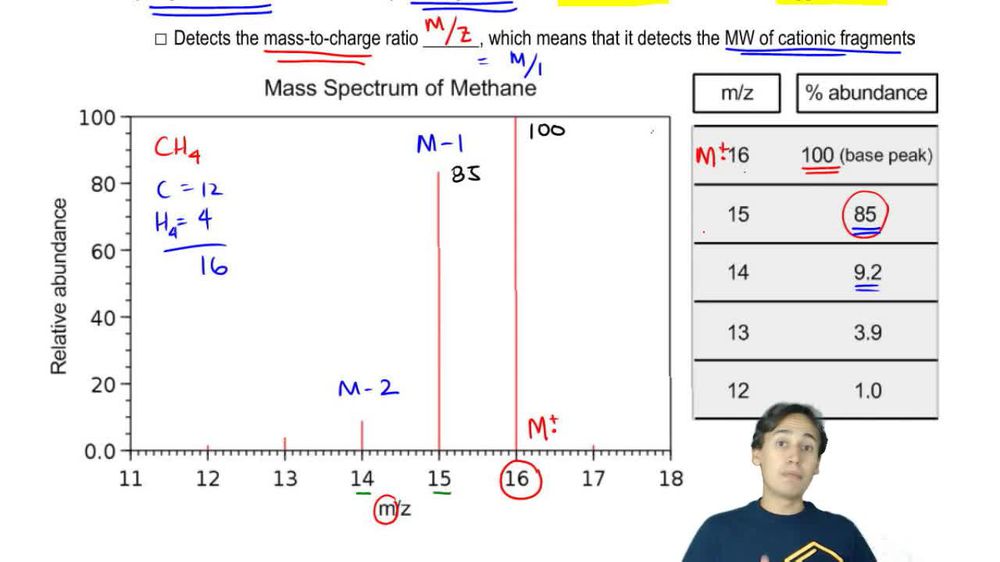
Identify the molecular ion peak (M+) in the mass spectrum, which corresponds to the molecular weight of the compound. This peak is crucial for determining the possible fragments.
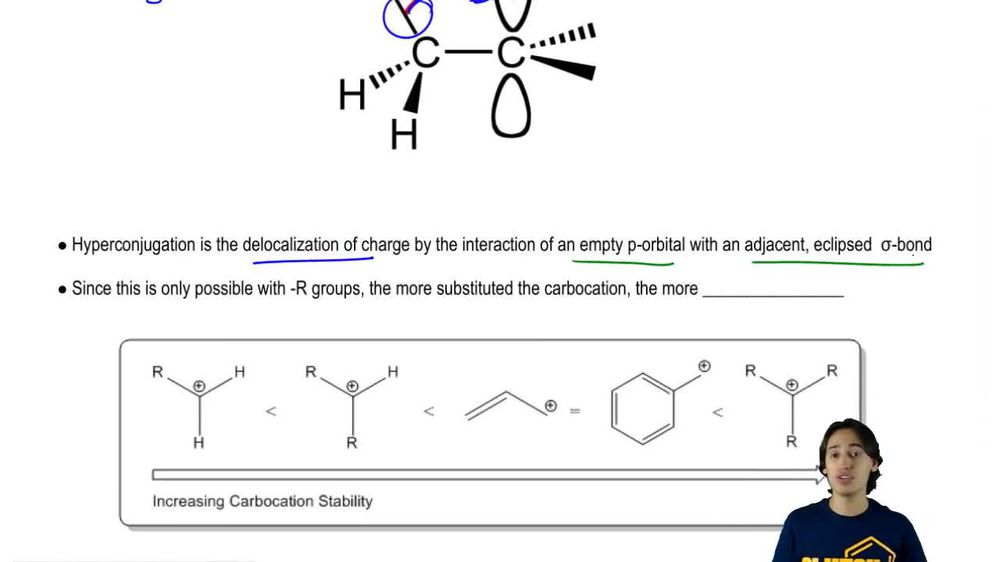
Consider the stability of potential carbocations that can form upon fragmentation. More stable carbocations (e.g., tertiary > secondary > primary) are more likely to appear as major fragments.
Look for common fragmentation patterns such as alpha cleavage, where a bond adjacent to a heteroatom or functional group is broken, leading to a stable cation and a neutral radical.
Consider the possibility of rearrangements, such as the McLafferty rearrangement, which involves a six-membered transition state and is common in carbonyl-containing compounds.
Analyze the mass-to-charge (m/z) ratios of the observed peaks in the spectrum to match them with possible fragment structures, taking into account isotopic patterns and the presence of elements like chlorine or bromine, which have characteristic isotope peaks.
Verified video answer for a similar problem:
This video solution was recommended by our tutors as helpful for the problem above
Play a video:
0 Comments
Key Concepts
Here are the essential concepts you must grasp in order to answer the question correctly.
Mass Spectrometry
Mass spectrometry is an analytical technique used to measure the mass-to-charge ratio of ions. It helps identify the composition of a sample by generating a mass spectrum, which displays the masses of fragments. Understanding how molecules break apart and form ions is crucial for predicting the major fragments in a mass spectrum.
Fragmentation patterns in mass spectrometry refer to the predictable ways in which molecules break apart into smaller ions. These patterns depend on the structure and stability of the molecule, with certain bonds more likely to break. Recognizing common fragmentation pathways, such as alpha cleavage or McLafferty rearrangement, aids in predicting major fragments.
The stability of carbocations plays a significant role in determining fragmentation patterns. More stable carbocations, such as tertiary over secondary or primary, are more likely to form during fragmentation. Understanding the factors that stabilize carbocations, like hyperconjugation and resonance, helps predict which fragments will be prominent in the mass spectrum.