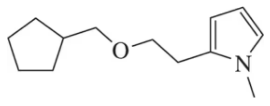
Two different Williamson ether syntheses can be used to make the compound in (a). Show them. The compound in (b), however, can only be made one way. Show it and explain why a second Williamson ether synthesis is not possible. (a)
Verified step by step guidance
1
Step 1: Understand the Williamson ether synthesis, which involves the reaction of an alkoxide ion with a primary alkyl halide to form an ether. The alkoxide ion is typically generated from an alcohol by deprotonation.
Step 2: Analyze the compound in image (a). It is an ether with two distinct alkyl groups attached to the oxygen atom: a cyclopentyl group and a 2-(N-methylpyrrole)ethyl group.
Step 3: Identify the two possible Williamson ether synthesis routes for the compound in (a). Route 1: Use cyclopentanol to form the cyclopentoxide ion, and react it with 2-(N-methylpyrrole)ethyl bromide. Route 2: Use 2-(N-methylpyrrole)ethanol to form the 2-(N-methylpyrrole)ethoxide ion, and react it with cyclopentyl bromide.
Step 4: Consider the compound in (b) (not shown here). Williamson ether synthesis requires a primary alkyl halide. If the compound in (b) has a secondary or tertiary alkyl halide, it may not be suitable for the synthesis due to steric hindrance or elimination reactions.
Step 5: Explain why a second Williamson ether synthesis is not possible for compound (b). If the alkyl halide is secondary or tertiary, the reaction may favor elimination over substitution, making the synthesis of the ether difficult or impossible.
Verified video answer for a similar problem:
This video solution was recommended by our tutors as helpful for the problem above
Play a video:
0 Comments
Key Concepts
Here are the essential concepts you must grasp in order to answer the question correctly.
Williamson Ether Synthesis
Williamson ether synthesis is a method for producing ethers through the reaction of an alkoxide ion with a primary alkyl halide. This reaction typically involves an SN2 mechanism, where the nucleophile attacks the electrophile, leading to the formation of the ether. Understanding this process is crucial for determining the different pathways to synthesize a given ether compound.
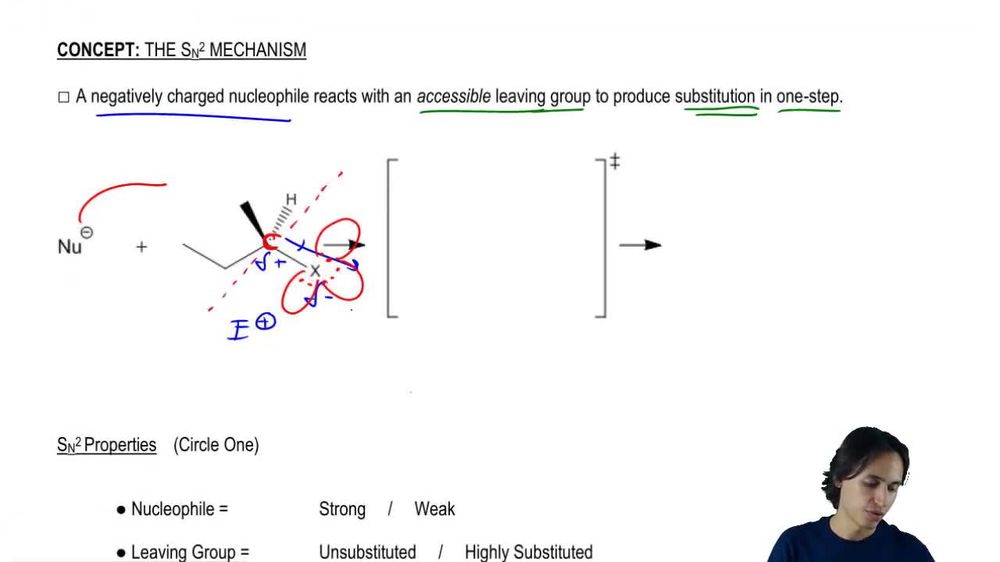
The SN2 mechanism is a type of nucleophilic substitution reaction characterized by a single concerted step where the nucleophile attacks the electrophile, displacing a leaving group. This mechanism is favored by primary substrates due to less steric hindrance, making it essential to recognize when analyzing the feasibility of different synthetic routes in ether formation.
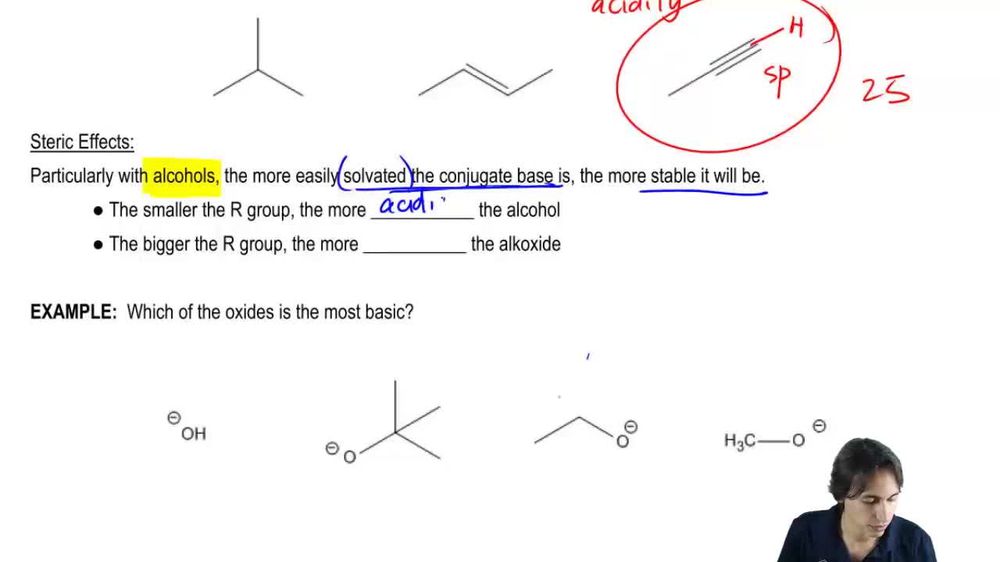
Steric hindrance refers to the prevention of reactions due to the spatial arrangement of atoms within a molecule. In the context of Williamson ether synthesis, secondary and tertiary alkyl halides are less reactive in SN2 reactions because their bulky groups hinder the approach of the nucleophile. This concept is vital for understanding why certain ethers can only be synthesized through specific pathways.

 Verified step by step guidance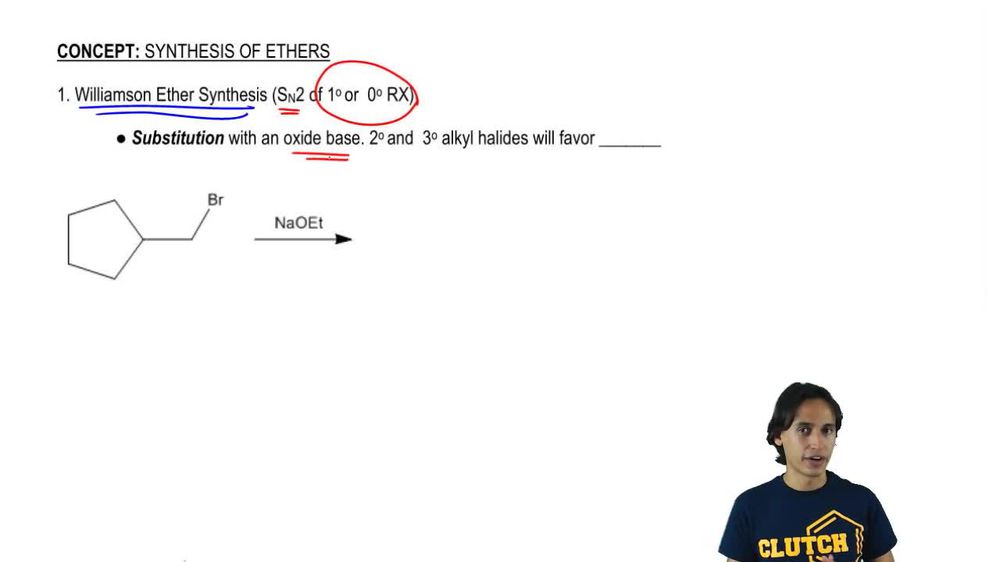
 03:50
03:50