In Chapter 12, we learned that crown ethers were used to increase the rate of SN2 reactions (Assessment 12.80). Suggest a synthesis of 15-crown-5 using the reactions learned here in Chapter 13.
Verified step by step guidance
1
Identify the structure of 15-crown-5, which consists of a cyclic ether with five ethylene oxide units. This means it has five oxygen atoms and a total of 15 atoms in the ring.
To synthesize 15-crown-5, start with ethylene glycol as the base unit. Ethylene glycol can be converted into ethylene oxide, which is a key building block for crown ethers.
Use a Williamson ether synthesis to link the ethylene oxide units. This involves deprotonating the hydroxyl group of ethylene glycol to form an alkoxide ion, which can then attack an ethylene oxide molecule to form an ether linkage.
Repeat the ether formation process to build the chain of ethylene oxide units. This step is crucial to form the linear precursor that will eventually be cyclized into the crown ether.
Finally, cyclize the linear polyether chain to form the cyclic structure of 15-crown-5. This can be achieved by using a suitable base to deprotonate the terminal hydroxyl group, allowing it to attack the other end of the chain and close the ring.
Verified video answer for a similar problem:
This video solution was recommended by our tutors as helpful for the problem above
Video duration:
4m
Play a video:
0 Comments
Key Concepts
Here are the essential concepts you must grasp in order to answer the question correctly.
Crown Ethers
Crown ethers are cyclic compounds that contain multiple ether groups, which can selectively bind cations due to their unique size and shape. The number in their name indicates the number of atoms in the ring, and their ability to form complexes with metal ions enhances solubility and reactivity in organic reactions, particularly in S_N2 mechanisms.
S_N2 (substitution nucleophilic bimolecular) reactions involve a nucleophile attacking an electrophile, resulting in the simultaneous displacement of a leaving group. This mechanism is characterized by a single concerted step, where the reaction rate depends on the concentration of both the nucleophile and the substrate, making it sensitive to steric hindrance.
Synthetic pathways refer to the series of chemical reactions and transformations used to construct a target molecule from simpler precursors. Understanding the functional groups, reaction conditions, and mechanisms involved is crucial for designing efficient syntheses, such as that of 15-crown-5, which may involve alkylation and etherification reactions.

 4:45 minutes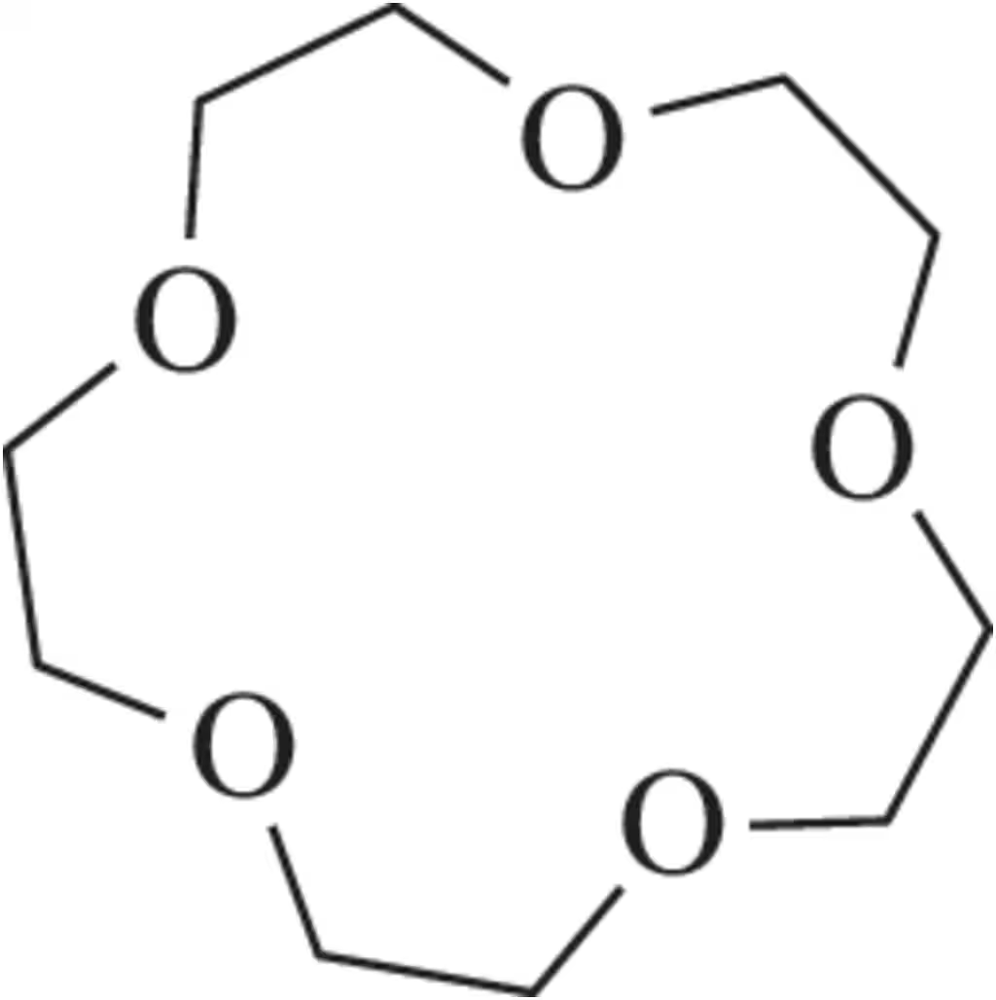
 Verified step by step guidance
 04:22
04:22