Predict the product of the following haloalkane syntheses. (a)
Verified step by step guidance
1
Step 1: Analyze the given molecule, which is a cyclohexene derivative with a double bond. The reactions provided involve halogenation and hydrohalogenation, which target the double bond.
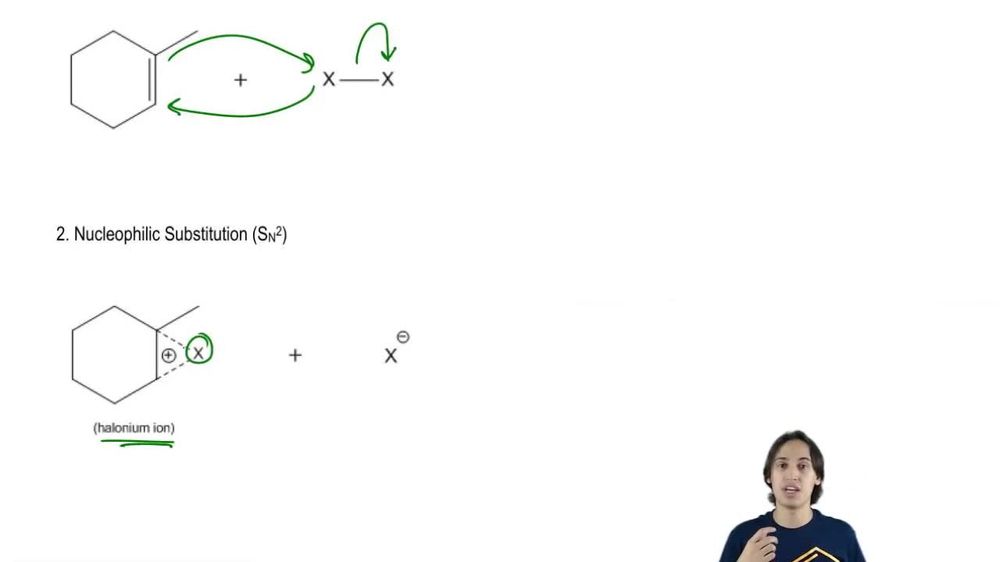
Step 2: For reaction (a) with Br₂, the double bond undergoes electrophilic addition. Bromine adds across the double bond, forming a vicinal dibromide. The stereochemistry of the product depends on anti-addition due to the bromonium ion intermediate.
Step 3: For reaction (b) with HBr, the double bond undergoes hydrohalogenation. According to Markovnikov's rule, the bromine atom will add to the more substituted carbon of the double bond, forming a bromoalkane.
Step 4: For reaction (c) with HBr and H₂O₂, the reaction follows anti-Markovnikov addition due to the presence of peroxides. Bromine adds to the less substituted carbon of the double bond, forming a bromoalkane.
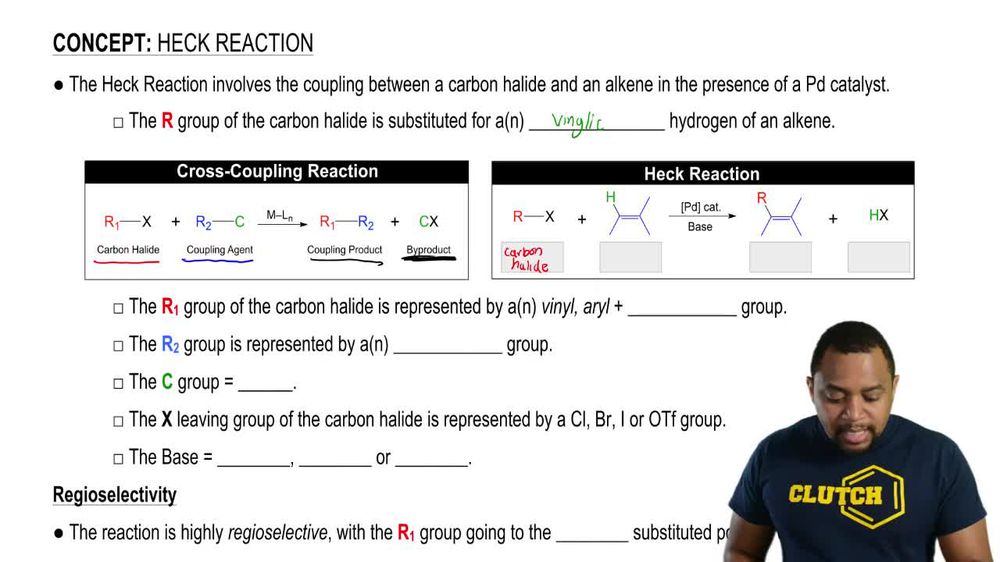
Step 5: For reaction (d) with Cl₂, the double bond undergoes electrophilic addition similar to reaction (a). Chlorine adds across the double bond, forming a vicinal dichloride with anti-addition stereochemistry.
Verified video answer for a similar problem:
This video solution was recommended by our tutors as helpful for the problem above
Video duration:
3m
Play a video:
0 Comments
Key Concepts
Here are the essential concepts you must grasp in order to answer the question correctly.
Electrophilic Addition Reactions
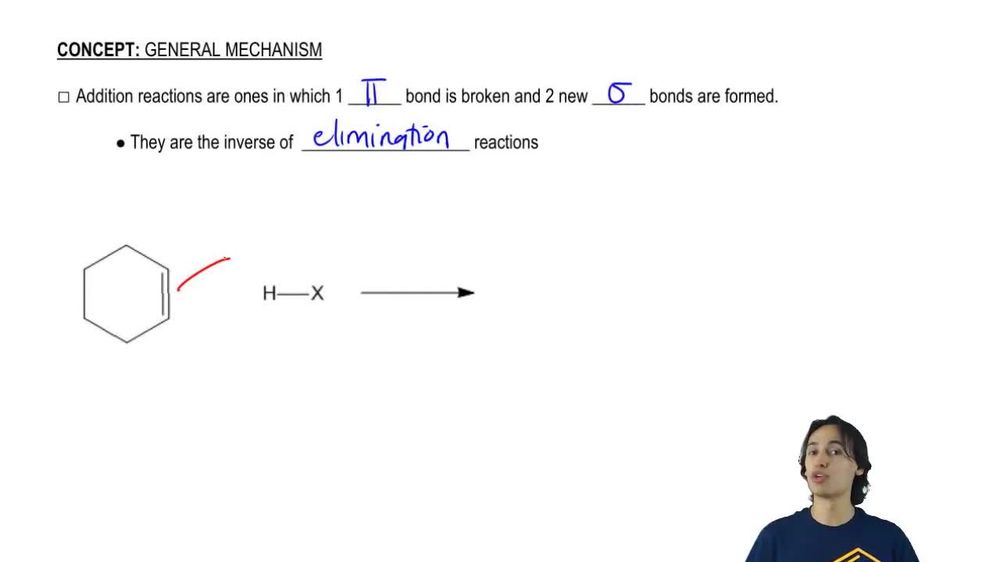
Electrophilic addition reactions are a fundamental type of reaction in organic chemistry where an electrophile reacts with a nucleophile, typically involving alkenes or alkynes. In the context of haloalkanes, these reactions often lead to the formation of haloalkanes from alkenes by adding halogens or hydrogen halides across the double bond.
Regioselectivity refers to the preference of a chemical reaction to yield one structural isomer over others when multiple products are possible. In the case of haloalkane syntheses, the regioselectivity can be influenced by the stability of the carbocation intermediate formed during the reaction, which determines the major product.
The mechanism of halogenation involves the addition of halogens (like Br2 or Cl2) to alkenes, resulting in the formation of vicinal dihalides. This process typically proceeds through a cyclic halonium ion intermediate, which is crucial for understanding the stereochemistry and regioselectivity of the products formed in the reaction.

 3:24 minutes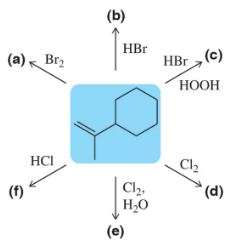
 Verified step by step guidance
 05:39
05:39