For each synthesis, start with bromocyclohexane and predict the products. Assume that an excess of each reactant is added so that all possible reactions that can happen will happen. (a)
Verified step by step guidance
1
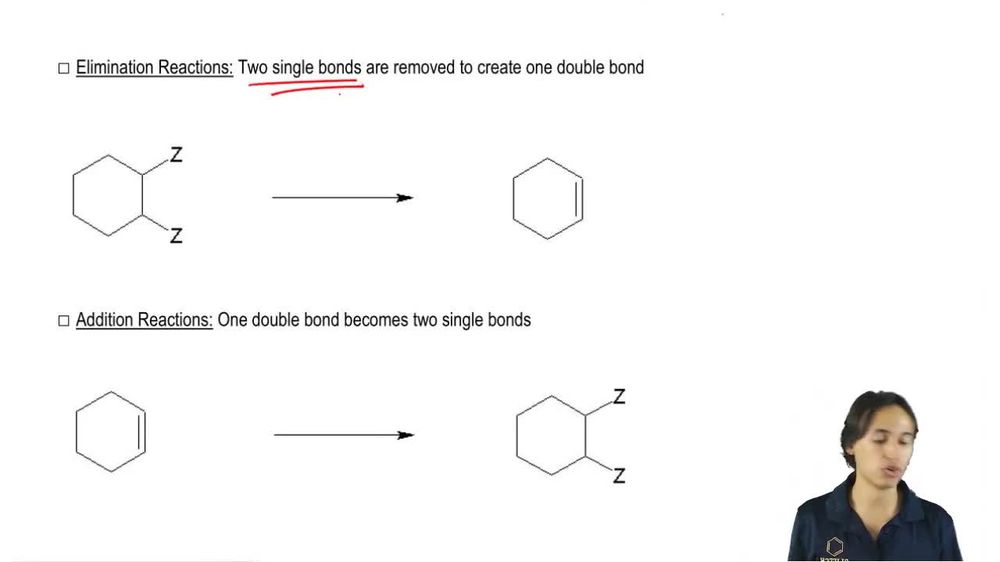
Step 1: Analyze the first reaction. Bromocyclohexane reacts with KOH in ethanol under heat (Δ). This is an elimination reaction (E2 mechanism), where the bromine atom is removed, and a double bond is formed in the cyclohexane ring, resulting in cyclohexene (compound A).
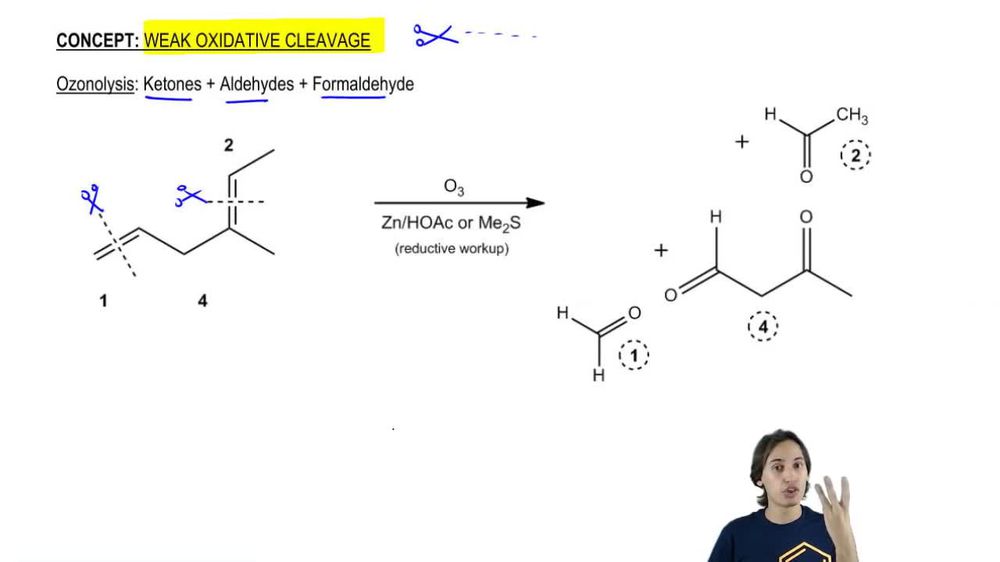
Step 2: Examine the second reaction. Cyclohexene undergoes ozonolysis with ozone (O₃) at -78°C, followed by reduction with dimethyl sulfide (Me₂S) and water. This cleaves the double bond in cyclohexene, producing two carbonyl compounds (aldehydes or ketones, depending on the structure). These products are compound B.
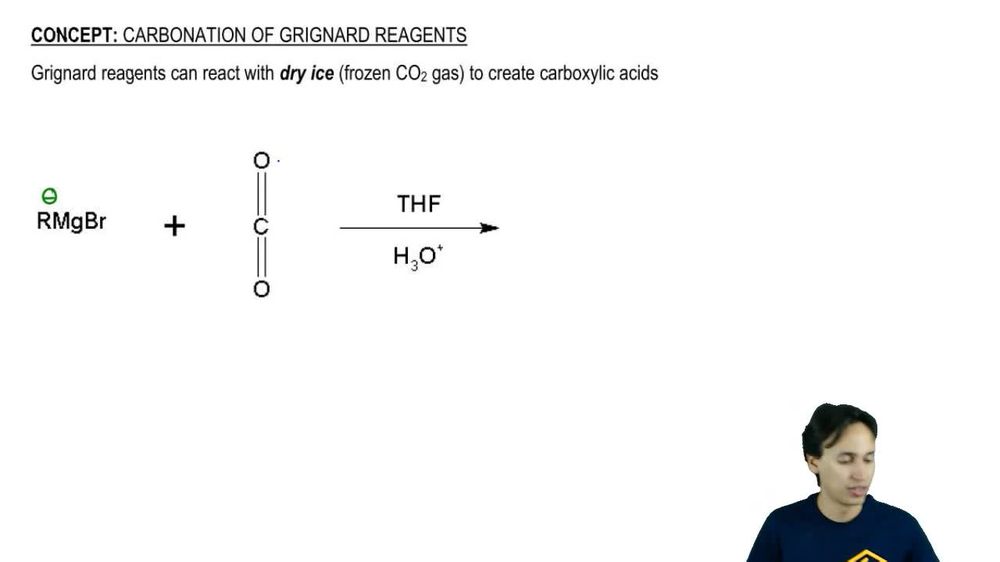
Step 3: Consider the third reaction. One of the carbonyl compounds from the ozonolysis step reacts with ethylmagnesium bromide (Grignard reagent) to form an alcohol. The Grignard reagent adds to the carbonyl group, creating a new C-C bond.
Step 4: The reaction is completed by hydrolysis with H₃O⁺, which protonates the intermediate formed in the Grignard reaction, yielding the final alcohol product (compound C).
Step 5: Summarize the transformations. Bromocyclohexane undergoes elimination to form cyclohexene, ozonolysis to produce carbonyl compounds, and finally Grignard addition followed by hydrolysis to yield the alcohol product.
Verified video answer for a similar problem:
This video solution was recommended by our tutors as helpful for the problem above
Video duration:
11m
Play a video:
0 Comments
Key Concepts
Here are the essential concepts you must grasp in order to answer the question correctly.
Elimination Reactions
Elimination reactions involve the removal of a small molecule from a larger one, resulting in the formation of a double bond. In this synthesis, the treatment of bromocyclohexane with KOH in ethanol leads to the formation of an alkene through an E2 elimination mechanism. Understanding the conditions and mechanisms of elimination reactions is crucial for predicting the formation of product A.
Ozonolysis is a reaction where alkenes are cleaved by ozone (O3) to form carbonyl compounds. In the synthesis, product A undergoes ozonolysis followed by workup with dimethyl sulfide and water to yield product B. This reaction is significant for understanding how to manipulate alkenes to create specific carbonyl-containing products.
Grignard reagents are organomagnesium compounds that react with carbonyls to form alcohols. In this synthesis, product B reacts with a Grignard reagent (MgBr) to produce product C after hydrolysis. Knowledge of Grignard chemistry is essential for predicting the final product and understanding the reactivity of carbonyl compounds in organic synthesis.