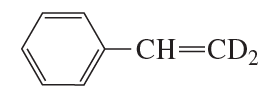
When the following compound is hydrated in the presence of acid, the unreacted alkene is found to have retained the deuterium atoms. What does this tell you about the mechanism for hydration?
Verified step by step guidance
1
Analyze the problem: The hydration of an alkene in the presence of acid typically follows a Markovnikov addition mechanism. The observation that the unreacted alkene retains the deuterium atoms suggests that the mechanism does not involve a free rotation or scrambling of the double bond during the reaction.
Step 1: Recall the mechanism of acid-catalyzed hydration. The first step involves protonation of the alkene to form a carbocation intermediate. This step is regioselective, favoring the formation of the more stable carbocation.
Step 2: Consider the retention of deuterium atoms. If the deuterium atoms are retained, it implies that the reaction does not involve a step where the double bond is broken and reformed in a way that would allow the deuterium atoms to exchange positions.
Step 3: Evaluate the possibility of carbocation rearrangement. If a carbocation intermediate forms, it could lead to scrambling of the deuterium atoms. The retention of deuterium suggests that the reaction may proceed through a concerted mechanism or a mechanism that avoids free carbocation formation.
Step 4: Conclude the likely mechanism. The retention of deuterium atoms indicates that the hydration likely proceeds through a mechanism such as a concerted electrophilic addition or a pathway involving a cyclic intermediate (e.g., a mercurinium ion in oxymercuration-demercuration), rather than a free carbocation intermediate.
Verified video answer for a similar problem:
This video solution was recommended by our tutors as helpful for the problem above
Video duration:
8m
Play a video:
0 Comments
Key Concepts
Here are the essential concepts you must grasp in order to answer the question correctly.
Markovnikov's Rule
Markovnikov's Rule states that in the addition of HX to an alkene, the hydrogen atom will attach to the carbon with the greater number of hydrogen atoms already attached. This principle helps predict the major product of hydration reactions, indicating how the alkene will react with water in the presence of an acid.
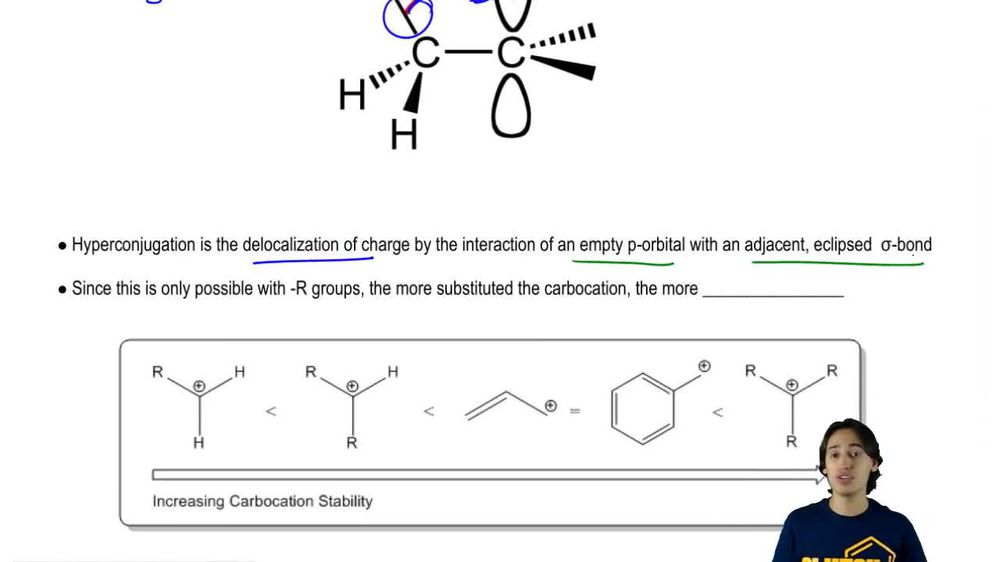
Carbocation stability is crucial in understanding reaction mechanisms involving alkenes. More stable carbocations (tertiary > secondary > primary) are favored during reactions, influencing the pathway of hydration. The formation of a stable carbocation intermediate is key to determining the outcome of the reaction.
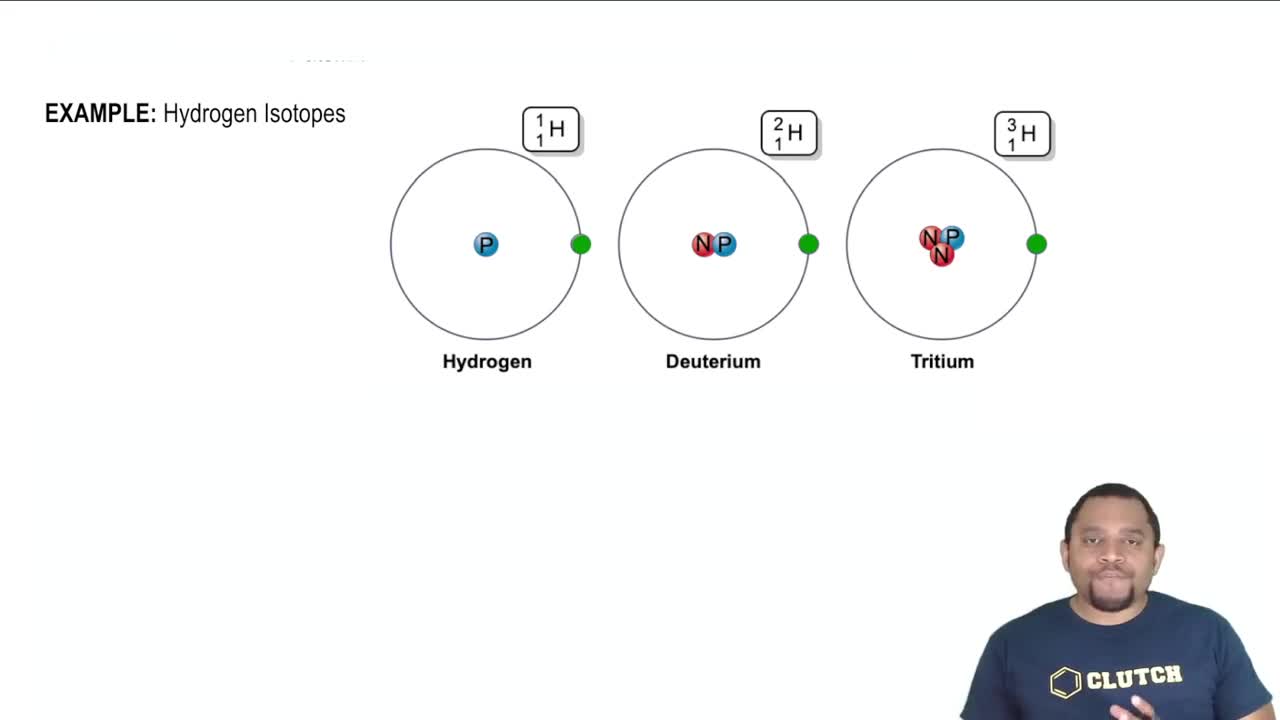
Deuterium labeling is a technique used to track the movement of atoms in a chemical reaction. In this context, the retention of deuterium atoms in the unreacted alkene suggests that the alkene does not undergo rearrangement during the hydration process, indicating a specific mechanism that preserves the original structure of the alkene.