Step 1: Identify the functional group in the structure. The molecule contains an oxygen atom within a ring structure, indicating that it is an ether. Specifically, it is a cyclic ether known as an epoxide.
Step 2: Determine the size of the ring. The ring consists of three atoms: two carbon atoms and one oxygen atom, making it a three-membered ring.
Step 3: Analyze the substituents attached to the ring. There are two methyl groups attached to one of the carbon atoms in the ring, and an ethyl group attached to the other carbon atom.
Step 4: Assign the locants for the substituents. The numbering starts at the oxygen atom and proceeds around the ring. The substituents are located on the two carbon atoms in the ring.
Step 5: Combine the information to name the compound. Use the IUPAC naming conventions for epoxides and include the substituents with their locants in the name.
Verified video answer for a similar problem:
This video solution was recommended by our tutors as helpful for the problem above
Video duration:
1m
Play a video:
0 Comments
Key Concepts
Here are the essential concepts you must grasp in order to answer the question correctly.
Functional Groups
Functional groups are specific groups of atoms within molecules that are responsible for the characteristic chemical reactions of those molecules. Understanding functional groups is essential for naming organic compounds, as they dictate the compound's reactivity and properties. Common examples include hydroxyl (-OH), carboxyl (-COOH), and amino (-NH2) groups.
The International Union of Pure and Applied Chemistry (IUPAC) nomenclature is a systematic method for naming organic chemical compounds. It provides rules for naming based on the structure of the molecule, including the longest carbon chain, the presence of functional groups, and the position of substituents. Mastery of IUPAC rules is crucial for accurately identifying and communicating about organic compounds.
Structural isomers are compounds that have the same molecular formula but different structural arrangements of atoms. This concept is important in organic chemistry as it highlights how variations in connectivity can lead to different chemical properties and reactivities. Recognizing structural isomers is key to understanding the diversity of organic compounds and their behaviors.

 1:25 minutes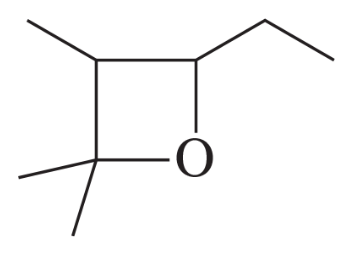
 Verified step by step guidance
 02:36
02:36