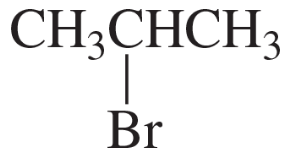
Describe the proton-coupled 13C NMR spectra for compound 3 in Problem 41, indicating the relative positions of the signals. 3.
Verified step by step guidance
1
Identify the structure of compound 3 from Problem 41. Analyze the molecular structure to determine the number of unique carbon environments. Each unique carbon environment corresponds to a distinct signal in the 13C NMR spectrum.
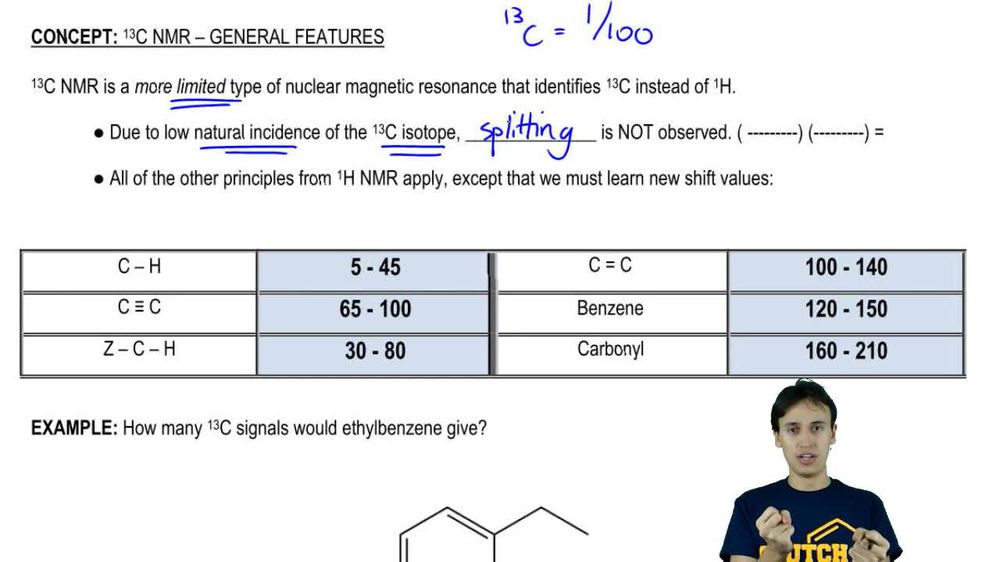
Determine the hybridization and bonding environment of each carbon atom in the molecule. For example, sp³ carbons (alkyl groups), sp² carbons (aromatic or alkene groups), and sp carbons (alkyne groups) will have different chemical shifts.
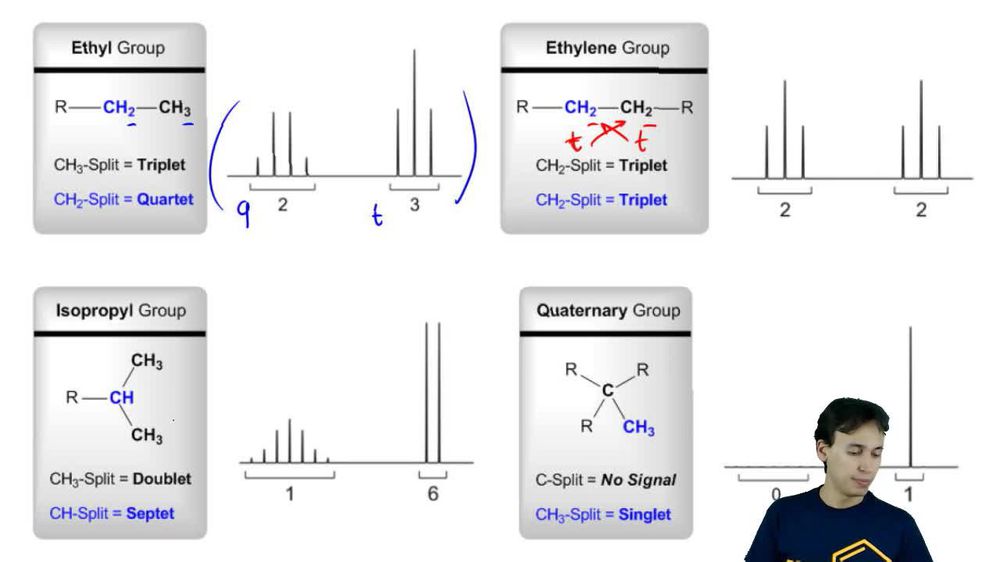
Consider the effects of proton coupling on the 13C NMR spectrum. In proton-coupled 13C NMR, each carbon signal is split into a multiplet based on the number of directly bonded hydrogens. Use the n+1 rule, where n is the number of hydrogens attached to the carbon, to predict the splitting pattern (e.g., singlet, doublet, triplet, etc.).
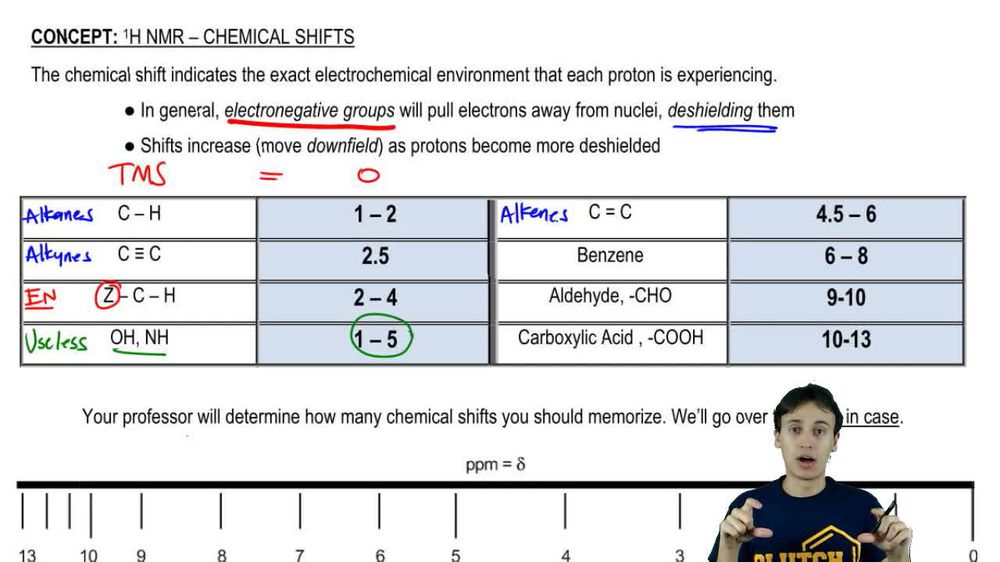
Analyze the relative positions of the signals in the spectrum. Electronegative groups, conjugation, or aromaticity can deshield carbons, causing downfield shifts (higher δ values). Conversely, alkyl groups or electron-donating groups can shield carbons, causing upfield shifts (lower δ values).
Summarize the expected 13C NMR spectrum by listing the approximate chemical shift ranges for each unique carbon, the splitting patterns due to proton coupling, and the relative intensities of the signals (if applicable).
Verified video answer for a similar problem:
This video solution was recommended by our tutors as helpful for the problem above
Video duration:
6m
Play a video:
0 Comments
Key Concepts
Here are the essential concepts you must grasp in order to answer the question correctly.
Proton-Coupled 13C NMR Spectroscopy
Proton-coupled 13C NMR spectroscopy is a technique that provides information about the carbon environment in organic compounds by observing how carbon signals are influenced by nearby protons. In this method, the coupling between protons and carbon atoms leads to splitting patterns in the NMR signals, which can reveal the number of protons attached to each carbon and their spatial arrangement.
Chemical shift in NMR spectroscopy refers to the position of a signal in the spectrum, which is influenced by the electronic environment surrounding the nucleus. In 13C NMR, different functional groups and hybridization states of carbon atoms result in distinct chemical shifts, allowing chemists to deduce structural information about the compound being analyzed.
Signal splitting patterns in NMR arise from the interaction of nuclear spins, particularly between protons and carbons. The number of peaks in a signal corresponds to the number of equivalent protons on adjacent carbons, following the n+1 rule, where n is the number of neighboring protons. Understanding these patterns is crucial for interpreting the complexity of the NMR spectrum and deducing the molecular structure.