For the following partial structures, the bond is shown. Add the indicated number of bonds, being sure to specify the orientation (that is, x, y, or z axis) of the p orbitals used. (c)
Verified step by step guidance
1
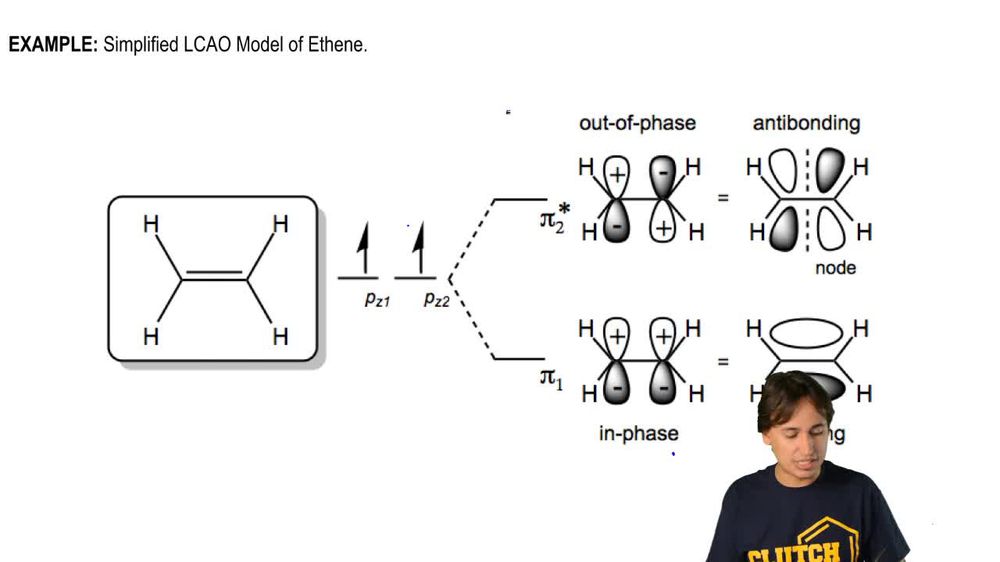
Examine the given partial structure and identify the atoms involved in the bond where the π bond is to be added. Recall that π bonds are formed by the sideways overlap of p orbitals.
Determine the orientation of the p orbitals that will overlap to form the π bond. The orientation can be along the x, y, or z axis, depending on the spatial arrangement of the atoms in the molecule.
Ensure that the p orbitals involved in the π bond are unhybridized. For example, in sp² hybridized atoms, one p orbital remains unhybridized and is available for π bonding.
Add the π bond by specifying the overlap of the unhybridized p orbitals. For instance, if the p orbitals overlap along the y-axis, the π bond is oriented in the y direction.
Verify that the addition of the π bond does not violate the octet rule or any other bonding rules for the atoms involved. Ensure the structure remains chemically valid.
Verified video answer for a similar problem:
This video solution was recommended by our tutors as helpful for the problem above
Video duration:
4m
Play a video:
0 Comments
Key Concepts
Here are the essential concepts you must grasp in order to answer the question correctly.
Pi Bonds
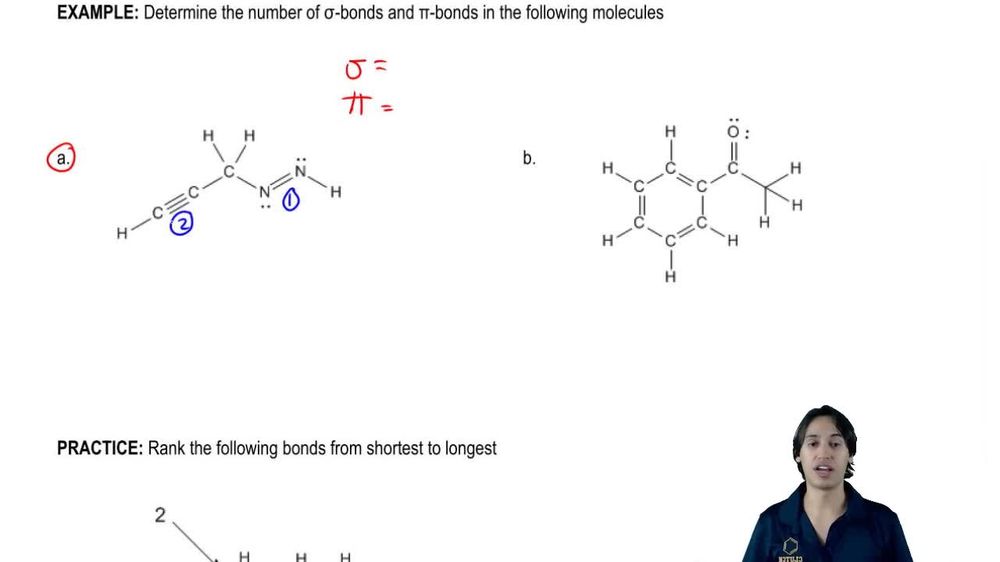
A pi bond is a type of covalent bond that occurs when two lobes of an orbital on one atom overlap with two lobes of an orbital on another atom. This bond is formed from the side-to-side overlap of p orbitals, which allows for the sharing of electrons. Pi bonds are typically found in double and triple bonds, where they accompany sigma bonds, and they play a crucial role in the geometry and reactivity of organic molecules.
The orientation of orbitals refers to the spatial arrangement of atomic orbitals in relation to each other. In the context of pi bonds, p orbitals can align along different axes (x, y, or z) to form the bond. Understanding the orientation is essential for predicting molecular geometry and the resulting physical and chemical properties of the compound.
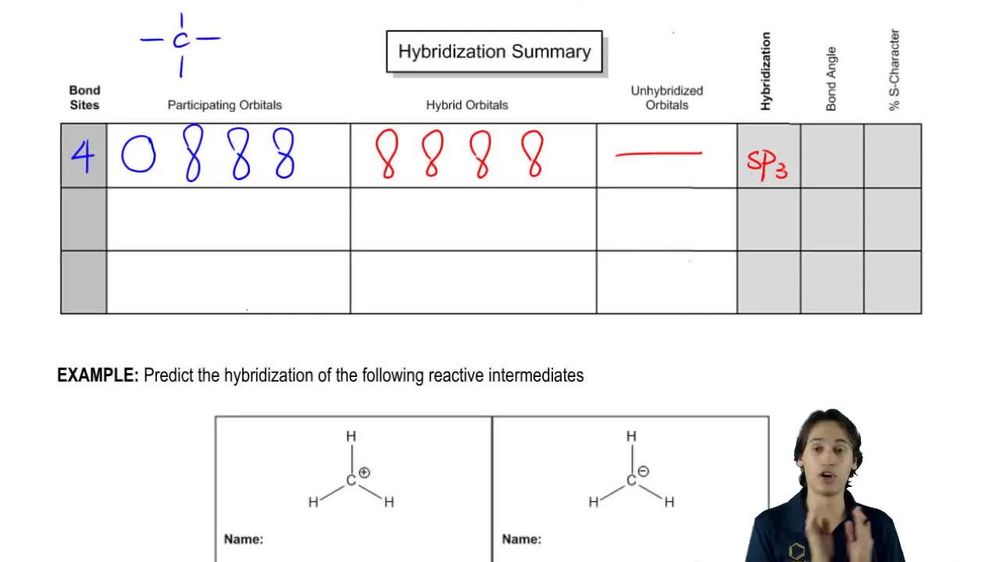
Hybridization is the concept of mixing atomic orbitals to create new hybrid orbitals that can form bonds with specific geometries. In organic chemistry, hybridization helps explain the bonding and shape of molecules. For example, sp2 hybridization involves one s and two p orbitals, leading to the formation of a trigonal planar structure, which is relevant when considering the formation of pi bonds in alkenes.

 4:31 minutes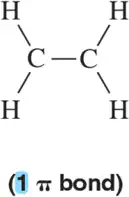
 Verified step by step guidance
 01:05
01:05