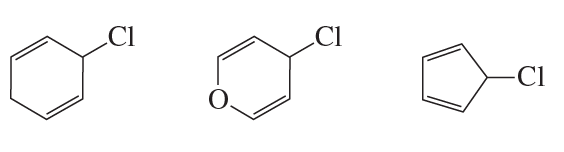
Rank the following from most reactive to least reactive in an SN1 reaction:
Verified step by step guidance
1
Step 1: Recall the mechanism of an SN1 reaction. SN1 reactions proceed via a two-step mechanism where the rate-determining step is the formation of a carbocation intermediate. The stability of the carbocation formed is the key factor in determining the reactivity of the substrate.
Step 2: Analyze the structure of compound I (2-bromobutane). When the bromine leaves, a secondary carbocation is formed. Secondary carbocations are moderately stable, but less stable than tertiary carbocations.
Step 3: Analyze the structure of compound II ((bromomethyl)benzene). When the bromine leaves, a benzyl carbocation is formed. Benzyl carbocations are highly stabilized due to resonance with the aromatic ring, making them very reactive in SN1 reactions.
Step 4: Analyze the structure of compound III ((1-bromoethyl)benzene). When the bromine leaves, a benzylic carbocation is formed, which is also stabilized by resonance with the aromatic ring. However, this carbocation is secondary, making it slightly less stable than the benzyl carbocation formed in compound II.
Step 5: Rank the compounds based on the stability of their carbocations and thus their reactivity in SN1 reactions. Compound II (benzyl carbocation) is the most reactive, followed by compound III (secondary benzylic carbocation), and finally compound I (secondary carbocation).
Verified video answer for a similar problem:
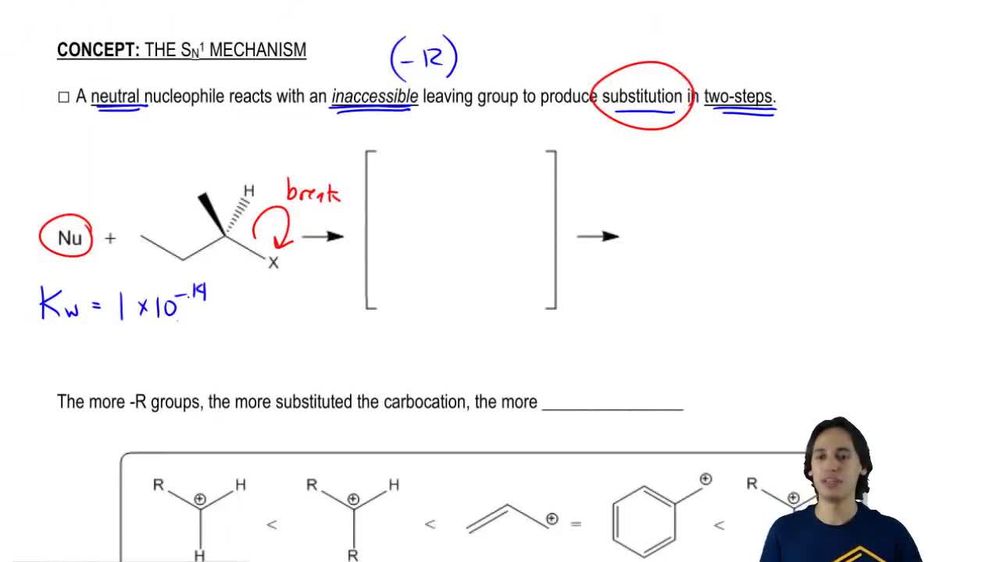
This video solution was recommended by our tutors as helpful for the problem above
Video duration:
5m
Play a video:
0 Comments
Key Concepts
Here are the essential concepts you must grasp in order to answer the question correctly.
SN1 Reaction Mechanism
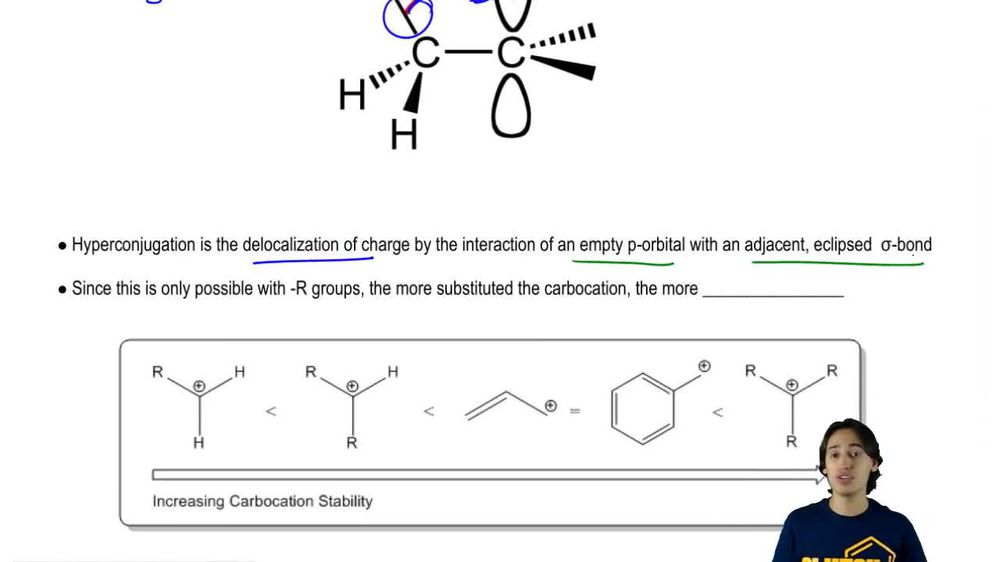
The SN1 (nucleophilic substitution unimolecular) reaction mechanism involves two main steps: the formation of a carbocation intermediate and the subsequent nucleophilic attack. The rate of the reaction depends solely on the concentration of the substrate, as the first step is the rate-determining step. The stability of the carbocation significantly influences the reactivity, with tertiary carbocations being more stable and reactive than secondary or primary ones.
Carbocation stability is a crucial factor in determining the reactivity of substrates in SN1 reactions. Tertiary carbocations are the most stable due to hyperconjugation and inductive effects from surrounding alkyl groups, followed by secondary and primary carbocations. The presence of resonance, such as in benzylic or allylic carbocations, can also enhance stability, making these substrates more reactive in SN1 processes.
The presence of substituents on the aromatic ring or alkyl chain can significantly affect the reactivity of compounds in SN1 reactions. Electron-donating groups stabilize the carbocation, increasing reactivity, while electron-withdrawing groups can destabilize it. In the context of the provided compounds, the position of the bromine atom and the nature of the substituents will influence the overall reactivity ranking in the SN1 mechanism.