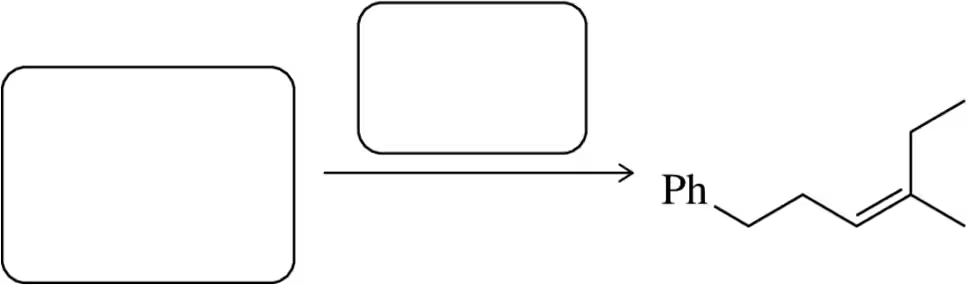
Suggest a bromoalkane and the conditions necessary to produce the alkenes shown. (b)
Verified step by step guidance
1
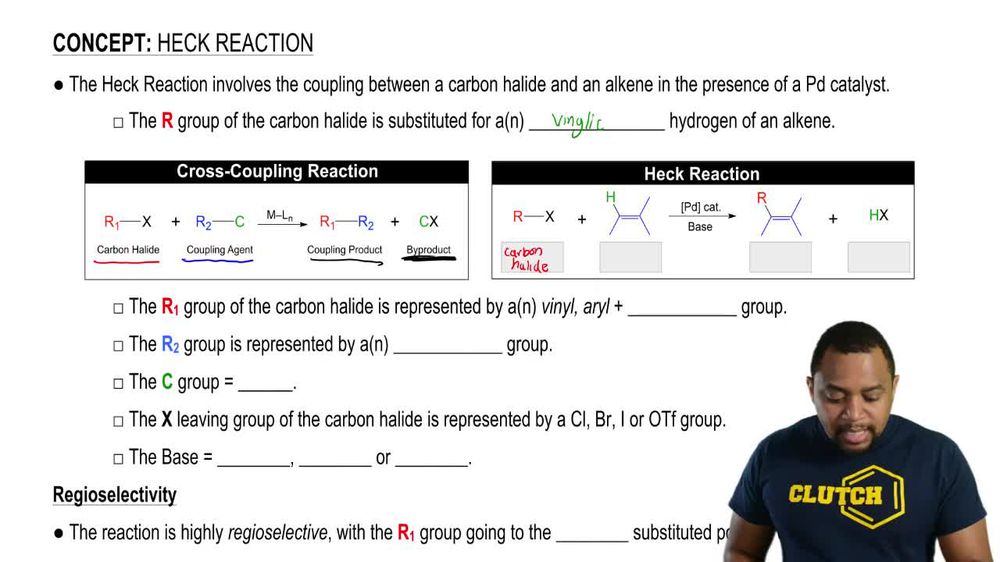
Analyze the product structure: The product is an alkene with a phenyl group (Ph) attached to the carbon chain. The double bond is located between two carbons in the chain.
Determine the precursor: To form this alkene, a bromoalkane with the bromine atom attached to the carbon adjacent to the double bond in the product is required. This is because elimination reactions typically occur at the β-hydrogen relative to the halogen.
Select the reaction type: The formation of alkenes from bromoalkanes is commonly achieved through an elimination reaction, such as an E2 mechanism. This requires a strong base to abstract a β-hydrogen and promote the elimination of the bromine atom.
Choose the conditions: Use a strong base like potassium tert-butoxide (K⁺[CH₃]₃CO⁻) in a polar aprotic solvent such as dimethyl sulfoxide (DMSO) or ethanol. Heat is often applied to favor elimination over substitution.
Verify regioselectivity: The reaction conditions should favor the formation of the more substituted alkene (Zaitsev's rule), which is the major product in elimination reactions. Ensure the base and solvent are chosen to promote this outcome.
Verified video answer for a similar problem:
This video solution was recommended by our tutors as helpful for the problem above
Play a video:
0 Comments
Key Concepts
Here are the essential concepts you must grasp in order to answer the question correctly.
Bromoalkanes
Bromoalkanes are organic compounds containing a bromine atom attached to an alkane chain. They are often used as intermediates in organic synthesis, particularly in reactions that form alkenes through elimination processes. Understanding the structure and reactivity of bromoalkanes is crucial for predicting the products of reactions involving them.
Elimination Reactions
Elimination reactions involve the removal of atoms or groups from a molecule, resulting in the formation of a double bond. In the context of bromoalkanes, these reactions typically occur under conditions such as heating with a strong base, leading to the formation of alkenes. The mechanism can be either E1 or E2, depending on the substrate and conditions.
Regioselectivity refers to the preference of a chemical reaction to yield one structural isomer over others. In the formation of alkenes from bromoalkanes, the regioselectivity can be influenced by the stability of the resulting double bond and the sterics of the substituents. Understanding regioselectivity is essential for predicting the major products in elimination reactions.

 Verified step by step guidance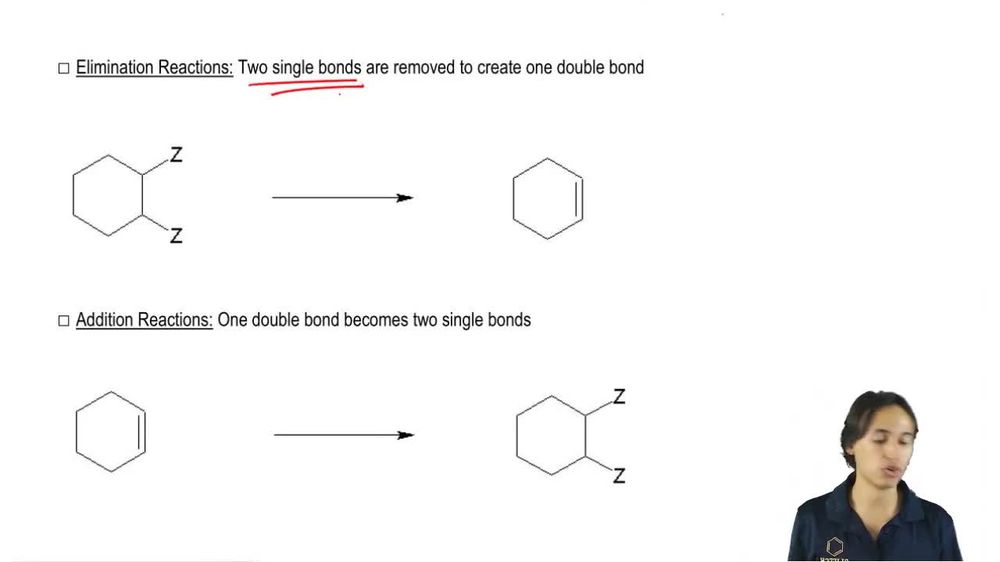
 00:40
00:40