The following compound can become protonated on any of the three nitrogen atoms. One of these nitrogens is much more basic than the others, however. a. Draw the important resonance forms of the products of protonation on each of the three nitrogen atoms.
Verified step by step guidance
1
Identify the three nitrogen atoms in the compound: N1 (leftmost), N2 (rightmost), and N3 (top). Each nitrogen can potentially be protonated.
Consider protonation at N1: Add a proton (H⁺) to N1, forming a positive charge on N1. Draw resonance structures by moving the lone pair electrons from N1 to form a double bond with the adjacent carbon, and adjust the electrons on the other atoms accordingly.
Consider protonation at N2: Add a proton (H⁺) to N2, forming a positive charge on N2. Draw resonance structures by moving the lone pair electrons from N2 to form a double bond with the adjacent carbon, and adjust the electrons on the other atoms accordingly.
Consider protonation at N3: Add a proton (H⁺) to N3, forming a positive charge on N3. Draw resonance structures by moving the lone pair electrons from N3 to form a double bond with the adjacent carbon, and adjust the electrons on the other atoms accordingly.
Evaluate the stability of the resonance structures: The nitrogen with the most stable resonance forms upon protonation is the most basic. Consider factors such as the ability to delocalize the positive charge and the electronegativity of the atoms involved.
Verified video answer for a similar problem:
This video solution was recommended by our tutors as helpful for the problem above
Video duration:
8m
Play a video:
0 Comments
Key Concepts
Here are the essential concepts you must grasp in order to answer the question correctly.
Basicity of Nitrogen Atoms
Basicity refers to the ability of a compound to accept protons (H+). In the context of nitrogen atoms, their basicity is influenced by factors such as hybridization, steric hindrance, and the presence of electron-donating or withdrawing groups. In the given compound, the nitrogen atom that is more basic can accept a proton more readily due to its electronic environment.
Protonation is the addition of a proton to a molecule, which can significantly alter its structure and reactivity. In the case of nitrogen atoms, protonation can lead to the formation of positively charged ammonium ions. The resonance forms of these products illustrate how the positive charge can be delocalized across different nitrogen atoms, affecting the stability and reactivity of the resulting species.
Resonance structures are different ways of drawing a molecule that represent the same compound, showing the delocalization of electrons. For the compound in question, drawing resonance forms after protonation on each nitrogen atom helps visualize how the positive charge can be distributed among the nitrogens, which is crucial for understanding the stability and reactivity of the protonated species.

 8:00 minutes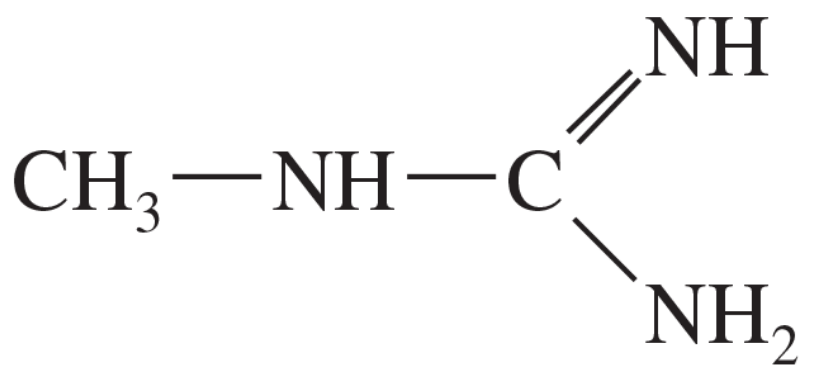
 Verified step by step guidance
 1:45
1:45