The reaction of (Z)-2-pentene with water and a trace of H2SO4 forms two products. Identify the products from their mass spectra. <IMAGE>
Verified step by step guidance
1
Step 1: Recognize the reaction type. The reaction of (Z)-2-pentene with water in the presence of a trace of H2SO4 is an example of an acid-catalyzed hydration reaction. This reaction adds a water molecule (H and OH) across the double bond of the alkene.
Step 2: Determine the regioselectivity of the reaction. According to Markovnikov's rule, the hydrogen atom (H⁺) from water will add to the carbon of the double bond that already has more hydrogen atoms, while the hydroxyl group (OH⁻) will add to the carbon with fewer hydrogen atoms.
Step 3: Analyze the stereochemistry. Since the starting material is (Z)-2-pentene, the addition of water can lead to the formation of two stereoisomers (enantiomers) due to the creation of a new chiral center at the carbon where the OH group is added.
Step 4: Predict the products. The two products will be 2-pentanol, with the hydroxyl group attached to the second carbon. These products will be enantiomers: (R)-2-pentanol and (S)-2-pentanol.
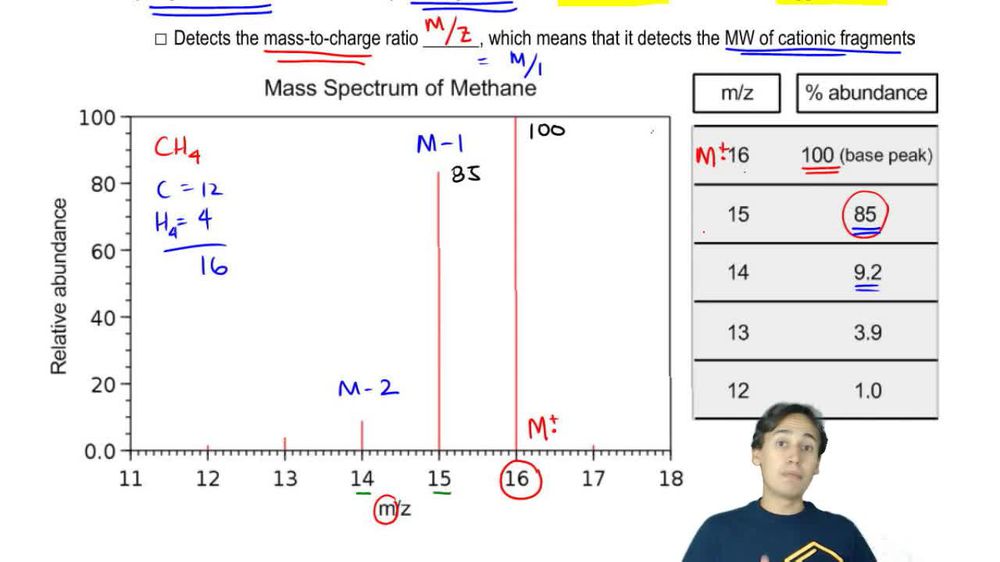
Step 5: Use mass spectrometry to identify the products. The mass spectra of the products will show a molecular ion peak at m/z = 88 (the molecular weight of 2-pentanol). Fragmentation patterns, such as the loss of water (m/z = 70) or alkyl groups, can help confirm the structure of the products.
Verified video answer for a similar problem:
This video solution was recommended by our tutors as helpful for the problem above
Play a video:
0 Comments
Key Concepts
Here are the essential concepts you must grasp in order to answer the question correctly.
Electrophilic Addition
Electrophilic addition is a fundamental reaction mechanism in organic chemistry where an electrophile reacts with a nucleophile, leading to the formation of a more saturated product. In the case of (Z)-2-pentene reacting with water in the presence of H2SO4, the double bond of the alkene acts as a nucleophile, attacking the electrophilic hydrogen from the acid, facilitating the addition of water across the double bond.
Markovnikov's Rule states that in the addition of HX to an alkene, the hydrogen atom will attach to the carbon with the greater number of hydrogen atoms already attached. This principle helps predict the major product of the reaction between (Z)-2-pentene and water, as the hydroxyl group will preferentially bond to the more substituted carbon, leading to the formation of specific alcohol products.
Mass spectrometry is an analytical technique used to measure the mass-to-charge ratio of ions. It provides information about the molecular weight and structure of compounds. In the context of the reaction products from (Z)-2-pentene, mass spectra can help identify the resulting alcohols by analyzing their fragmentation patterns and molecular ions, allowing for the differentiation between the products formed.

 Verified step by step guidance
 09:23
09:23