 Back
BackCarbohydrate, Lipid, and Protein Metabolism: Pathways and Regulation
Study Guide - Smart Notes
 Tailored notes based on your materials, expanded with key definitions, examples, and context.
Carbohydrate, Lipid, and Protein Metabolism
Overview of Metabolic Pathways
Metabolism encompasses the chemical reactions that sustain life, including the breakdown (catabolism) and synthesis (anabolism) of carbohydrates, lipids, and proteins. These pathways are interconnected and regulated to meet the energy and biosynthetic needs of the cell.
Carbohydrate Metabolism
Digestion and Absorption of Carbohydrates
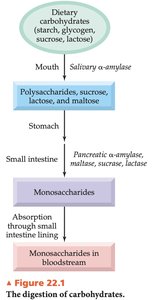
Dietary carbohydrates are digested into monosaccharides, which are absorbed into the bloodstream for cellular metabolism.
Polysaccharides (starch, glycogen) are broken down by amylases into disaccharides and monosaccharides.
Monosaccharides are absorbed through the small intestine lining into the bloodstream.
Glycolysis: The Central Pathway of Glucose Catabolism
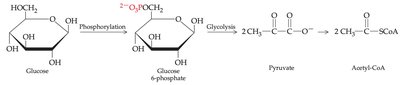
Glycolysis is a ten-step pathway that converts glucose into pyruvate, generating ATP and NADH. It occurs in the cytosol and is the primary pathway for energy production from glucose.
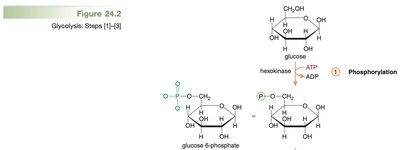
Step 1: Phosphorylation – Glucose is phosphorylated to glucose-6-phosphate by hexokinase, using ATP. This step is irreversible and traps glucose inside the cell.
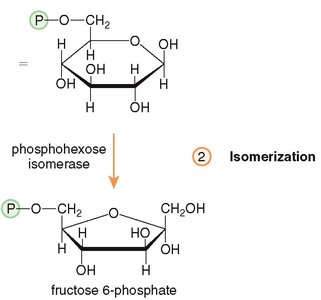
Step 2: Isomerization – Glucose-6-phosphate is converted to fructose-6-phosphate by phosphohexose isomerase.
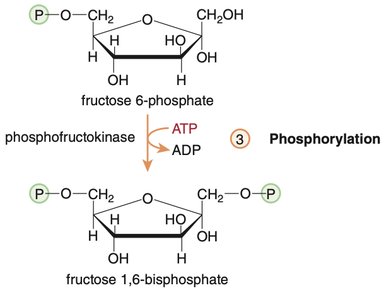
Step 3: Phosphorylation – Fructose-6-phosphate is phosphorylated to fructose-1,6-bisphosphate by phosphofructokinase, using ATP.
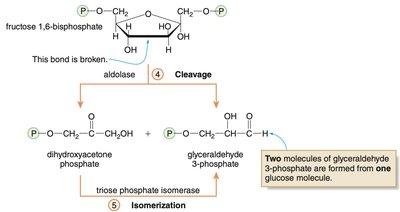
Step 4: Cleavage – Aldolase splits fructose-1,6-bisphosphate into two three-carbon molecules: dihydroxyacetone phosphate and glyceraldehyde-3-phosphate.
Step 5: Isomerization – Triose phosphate isomerase converts dihydroxyacetone phosphate to glyceraldehyde-3-phosphate.
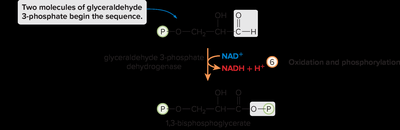
Step 6: Oxidation and Phosphorylation – Glyceraldehyde-3-phosphate is oxidized and phosphorylated to 1,3-bisphosphoglycerate, producing NADH.
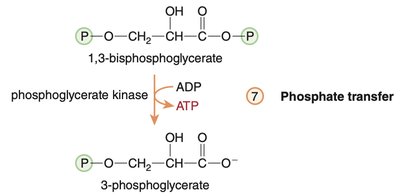
Step 7: Phosphate Transfer – 1,3-bisphosphoglycerate donates a phosphate to ADP, forming ATP and 3-phosphoglycerate.
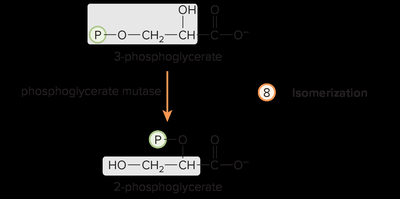
Step 8: Isomerization – 3-phosphoglycerate is converted to 2-phosphoglycerate by phosphoglycerate mutase.
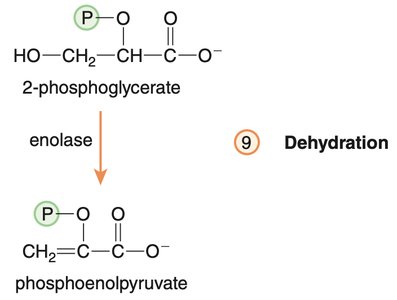
Step 9: Dehydration – 2-phosphoglycerate is dehydrated to phosphoenolpyruvate by enolase.
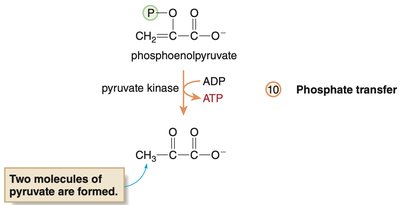
Step 10: Phosphate Transfer – Phosphoenolpyruvate donates a phosphate to ADP, forming ATP and pyruvate.
Net Reaction:

Net Yield: 2 ATP, 2 NADH, and 2 pyruvate per glucose molecule.
Entry of Other Monosaccharides into Glycolysis
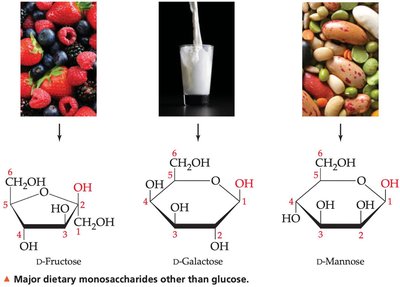
Other dietary monosaccharides such as fructose, galactose, and mannose are converted into glycolytic intermediates before entering the pathway.
Fructose is converted to fructose-6-phosphate (muscle) or glyceraldehyde-3-phosphate (liver).
Galactose is converted to glucose-6-phosphate.
Mannose is converted to mannose-6-phosphate, then to fructose-6-phosphate.
Fate of Pyruvate
Pyruvate, the end product of glycolysis, has several metabolic fates depending on cellular conditions:
Aerobic conditions: Pyruvate is oxidized to acetyl-CoA, which enters the citric acid cycle.
Anaerobic conditions: Pyruvate is reduced to lactate (in animals) or converted to ethanol and CO2 (in yeast).
Pyruvate can also be converted back to glucose via gluconeogenesis.
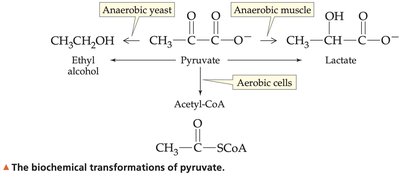
Pyruvate to Acetyl-CoA:

Pyruvate to Lactate:
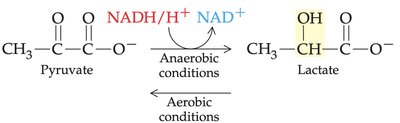
Pyruvate to Ethanol (Alcoholic Fermentation):

ATP Yield from Glucose Catabolism
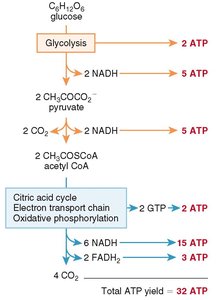
The complete oxidation of one glucose molecule through glycolysis, the citric acid cycle, and oxidative phosphorylation yields approximately 32 ATP molecules.
Regulation of Blood Glucose Metabolism
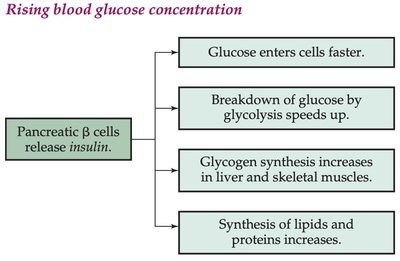
Blood glucose levels are tightly regulated by the hormones insulin and glucagon, both produced by the pancreas.
Insulin is released when blood glucose is high, promoting glucose uptake, glycolysis, glycogen synthesis, and lipid/protein synthesis.
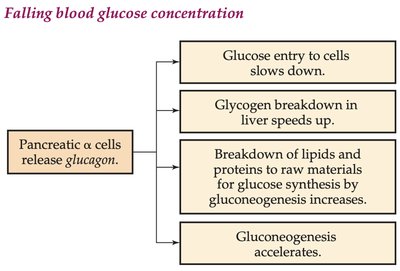
Glucagon is released when blood glucose is low, stimulating glycogen breakdown, gluconeogenesis, and mobilization of lipids and proteins.
Gluconeogenesis
Gluconeogenesis is the anabolic pathway that synthesizes glucose from noncarbohydrate precursors such as lactate, amino acids, and glycerol. It is essential during fasting or intense exercise.
Occurs mainly in the liver.
Shares several steps with glycolysis but uses unique enzymes to bypass irreversible glycolytic steps.

The Cori Cycle
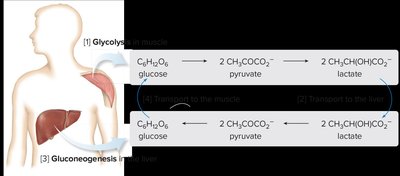
The Cori cycle describes the metabolic pathway in which lactate produced by anaerobic glycolysis in muscles is transported to the liver, converted back to glucose, and returned to the muscles.
Lipid Metabolism
Catabolism of Triacylglycerols
Triacylglycerols (fats) are hydrolyzed to glycerol and fatty acids, which are then metabolized for energy or storage.
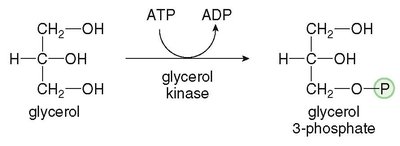
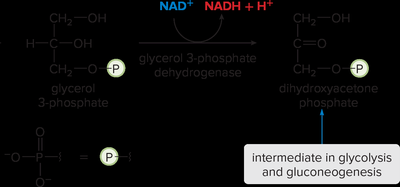
Glycerol is phosphorylated to glycerol-3-phosphate, then oxidized to dihydroxyacetone phosphate (DHAP), an intermediate in glycolysis and gluconeogenesis.
Fatty acids are converted to acetyl-CoA via β-oxidation.
Fate of Dietary Triacylglycerols
Fatty acids and glycerol from dietary triacylglycerols can be used for energy production, gluconeogenesis, or resynthesized for storage.
Fatty Acid Catabolism by β-Oxidation
β-Oxidation is the process by which fatty acids are broken down in the mitochondria to generate acetyl-CoA, NADH, and FADH2.
Activation: Fatty acids are converted to fatty acyl-CoA in the cytosol.
Transport: Fatty acyl-CoA is transported into the mitochondrial matrix.
β-Oxidation: Sequential removal of two-carbon units as acetyl-CoA.

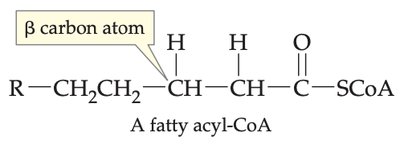
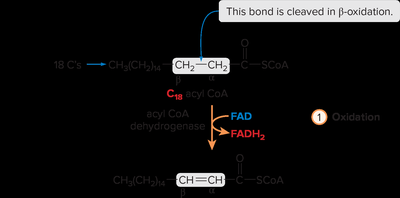
Step 1: Oxidation – Acyl-CoA dehydrogenase forms a double bond between the α and β carbons, producing FADH2.
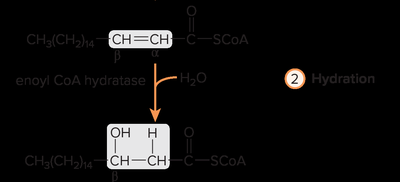
Step 2: Hydration – Enoyl CoA hydratase adds water across the double bond.
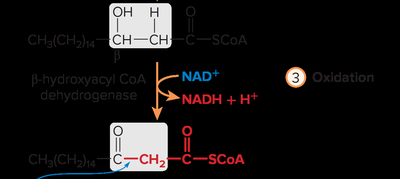
Step 3: Oxidation – β-hydroxyacyl CoA dehydrogenase oxidizes the β-hydroxyl group to a carbonyl, producing NADH.
Step 4: Cleavage – Acyl CoA acyltransferase cleaves the bond between the α and β carbons, releasing acetyl-CoA and a shortened acyl-CoA.
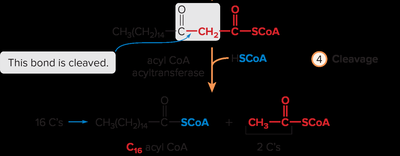
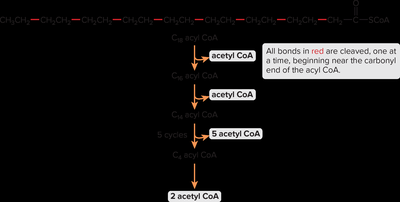
Complete β-oxidation of an 18-carbon fatty acid yields 9 acetyl-CoA, 8 NADH, and 8 FADH2.
ATP Yield from Fatty Acid Oxidation
Fatty acids yield significantly more ATP per gram than carbohydrates due to their highly reduced state.
1 mole of glucose (180 g) yields 32 ATP (0.18 ATP/g).
1 mole of stearic acid (284 g) yields 120 ATP (0.42 ATP/g).
Fat produces about 2.3 times more ATP per gram than glucose.
Ketone Bodies and Ketogenesis
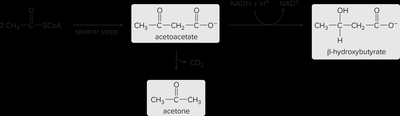
When carbohydrate availability is low, excess acetyl-CoA from fatty acid oxidation is converted into ketone bodies (acetoacetate, β-hydroxybutyrate, and acetone) in the liver. Ketone bodies serve as alternative energy sources for tissues such as the brain during fasting or diabetes.
Protein and Amino Acid Metabolism
Digestion and Absorption of Proteins
Proteins are hydrolyzed into amino acids, which are absorbed and used for biosynthesis or energy production.
Amino Acid Catabolism
The catabolism of amino acids involves removal of the amino group (transamination and deamination) and utilization of the carbon skeleton for energy or biosynthesis.
Transamination: The amino group is transferred to an α-keto acid (often α-ketoglutarate), forming glutamate and a new α-keto acid.
Oxidative Deamination: Glutamate is deaminated to regenerate α-ketoglutarate and release NH4+, which enters the urea cycle for excretion.
The carbon skeletons of amino acids are converted to pyruvate, acetyl-CoA, or citric acid cycle intermediates.
Ketogenic amino acids yield acetoacetyl-CoA or acetyl-CoA (can form ketone bodies).
Glucogenic amino acids yield intermediates that can be used for gluconeogenesis.
Essential and Nonessential Amino Acids
Essential amino acids cannot be synthesized by the body and must be obtained from the diet.
Nonessential amino acids can be synthesized by the body.
