 Back
BackCarboxylic Acid Derivatives: Nucleophilic Acyl Substitution Reactions
Study Guide - Smart Notes
 Tailored notes based on your materials, expanded with key definitions, examples, and context.
Carboxylic Acid Derivatives: Structures and Nomenclature
Overview of Carboxylic Acid Derivatives
Carboxylic acid derivatives are compounds in which the hydroxyl group of a carboxylic acid is replaced by another group (halide, alkoxy, amide, etc.). The main classes include acid halides, acid anhydrides, esters, and amides. These derivatives are central to organic synthesis due to their reactivity and versatility.
Acid Halides (RCOX): Replace the –ic acid or –oic acid suffix with –oyl halide (e.g., acetyl chloride).
Acid Anhydrides (RCO2COR’): Replace 'acid' with 'anhydride' (e.g., acetic anhydride).
Esters (RCO2R’): Name the alkyl group attached to oxygen first, then the acid with –ate ending (e.g., ethyl acetate).
Amides (RCONH2): Replace –ic acid or –oic acid with –amide (e.g., acetamide).
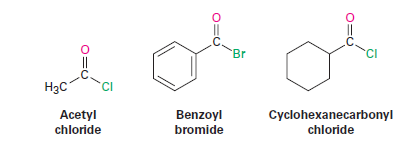
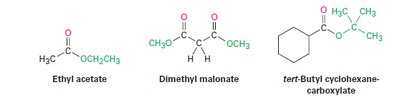
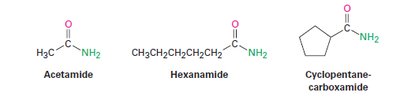
Naming Summary Table
Functional Group | Structure | Name Ending |
|---|---|---|
Carboxylic Acid | RCOOH | -ic acid / -carboxylic acid |
Acid Anhydride | RCOOCOR' | anhydride |
Ester | RCOOR' | -ate / -carboxylate |
Acid Halide | RCOX | -oyl halide / -carbonyl halide |
Amide | RCONH2 | -amide / -carboxamide |
Nucleophilic Acyl Substitution: Mechanism and Comparison
Mechanism of Nucleophilic Acyl Substitution
Nucleophilic acyl substitution is the characteristic reaction of carboxylic acid derivatives. It involves nucleophilic attack on the carbonyl carbon, forming a tetrahedral intermediate, followed by elimination of a leaving group (-Y), regenerating the carbonyl.
Step 1: Nucleophile attacks the electrophilic carbonyl carbon.
Step 2: Tetrahedral intermediate forms.
Step 3: Leaving group is expelled, restoring the carbonyl and substituting the nucleophile.
This mechanism differs from the SN2 reaction, which is concerted and does not involve a tetrahedral intermediate.
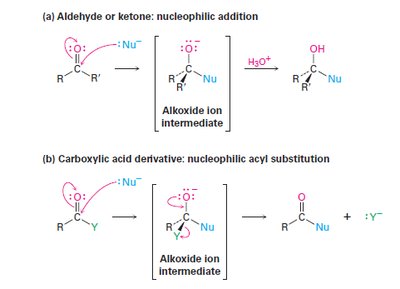
Reactivity of Carboxylic Acid Derivatives
Factors Affecting Reactivity
The reactivity of carboxylic acid derivatives toward nucleophilic acyl substitution depends on both electronic and steric factors:
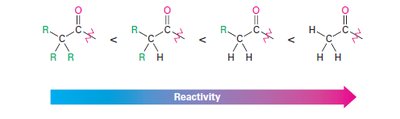
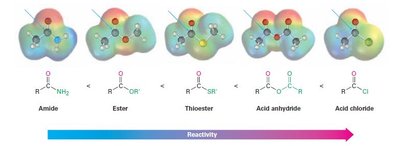
Electronic Effects: More polarized (electron-deficient) carbonyls are more reactive.
Steric Effects: Less hindered derivatives react faster with nucleophiles.
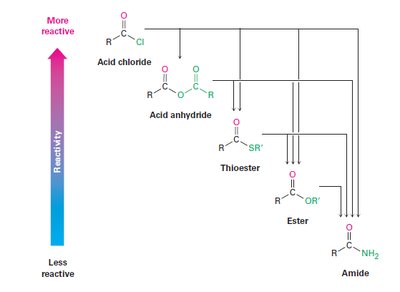
The general order of reactivity is:
Acid chlorides > Acid anhydrides > Esters ≈ Thioesters > Amides
Transformations of Carboxylic Acid Derivatives
General Reactions
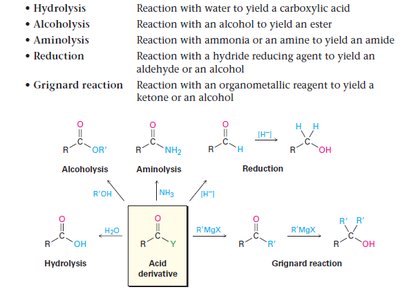
Carboxylic acid derivatives undergo several important transformations:
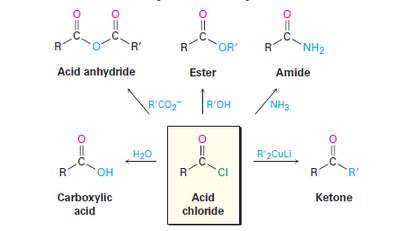
Hydrolysis: Reaction with water to yield a carboxylic acid.
Alcoholysis: Reaction with an alcohol to yield an ester.
Aminolysis: Reaction with ammonia or an amine to yield an amide.
Reduction: Reaction with a hydride reducing agent to yield an aldehyde or alcohol.
Grignard Reaction: Reaction with an organometallic reagent to yield a ketone or alcohol.
Preparation and Interconversion of Derivatives
Acid Chlorides: Prepared from carboxylic acids using SOCl2 or PBr3.
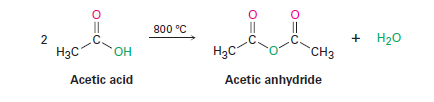
Acid Anhydrides: Prepared by dehydration of carboxylic acids or by reaction of acid chlorides with carboxylates.
Esters: Prepared by Fischer esterification (acid-catalyzed reaction of acids with alcohols) or by reaction of acid chlorides with alcohols.
Amides: Prepared by reaction of acid chlorides or esters with ammonia or amines.

Reduction and Grignard Reactions
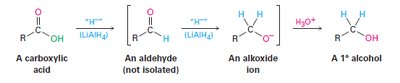
Reduction: Carboxylic acids and derivatives can be reduced to primary alcohols using LiAlH4.
Grignard Reaction: Acid chlorides react with Grignard reagents to give tertiary alcohols (after two additions).
Summary of Acid Chloride Reactions
Spectroscopy of Carboxylic Acid Derivatives
Infrared (IR) Spectroscopy
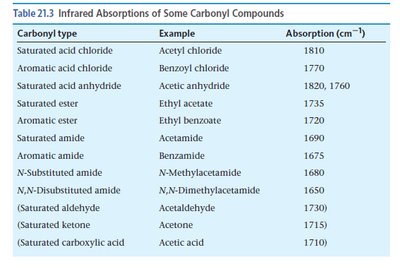
The carbonyl (C=O) stretch in IR spectroscopy is a key diagnostic feature for carboxylic acid derivatives. The absorption frequency varies depending on the derivative:
Carbonyl Type | Example | Absorption (cm-1) |
|---|---|---|
Saturated acid chloride | Acetyl chloride | 1810 |
Aromatic acid chloride | Benzoyl chloride | 1770 |
Saturated acid anhydride | Acetic anhydride | 1820, 1760 |
Saturated ester | Ethyl acetate | 1735 |
Aromatic ester | Ethyl benzoate | 1720 |
Saturated amide | Acetamide | 1690 |
Aromatic amide | Benzanilide | 1675 |
N-Substituted amide | N-Methylacetamide | 1680 |
N,N-Disubstituted amide | N,N-Dimethylacetamide | 1650 |
Saturated aldehyde | Acetaldehyde | 1730 |
Saturated ketone | Acetone | 1715 |
Saturated carboxylic acid | Acetic acid | 1710 |
13C NMR Spectroscopy
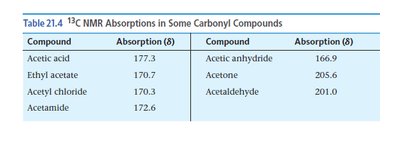
In 13C NMR, the carbonyl carbon of carboxylic acid derivatives absorbs in the range of 160–180 ppm, with specific values depending on the functional group:
Compound | Absorption (δ) | Compound | Absorption (δ) |
|---|---|---|---|
Acetic acid | 177.3 | Acetic anhydride | 166.9 |
Ethyl acetate | 170.7 | Acetone | 205.6 |
Acetyl chloride | 170.3 | Acetaldehyde | 201.0 |
Acetamide | 172.6 |
Additional info: The IR and NMR data are essential for identifying and distinguishing between different carboxylic acid derivatives in laboratory analysis.
