 Back
BackComprehensive Study Notes for College Organic Chemistry
Study Guide - Smart Notes
 Tailored notes based on your materials, expanded with key definitions, examples, and context.
Structure and Bonding in Organic Chemistry
Introduction to Organic Chemistry
Organic chemistry is the study of carbon-containing compounds, including their structure, properties, and reactions. Carbon's unique ability to form four covalent bonds leads to a vast diversity of molecular structures, which is the foundation of organic chemistry.
Organic compounds are primarily composed of carbon and hydrogen, but may also contain oxygen, nitrogen, sulfur, and other elements.
Organic molecules are essential for life, forming the basis of biomolecules such as proteins, nucleic acids, carbohydrates, and lipids.
Atomic Structure and Hybridization
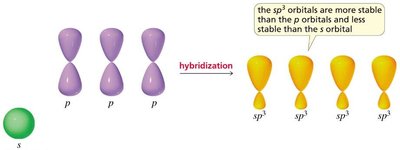
The electronic configuration of carbon is , allowing it to form four bonds through hybridization of its orbitals.
sp3 hybridization: Four equivalent orbitals, tetrahedral geometry, bond angle 109.5° (e.g., methane, ethane).
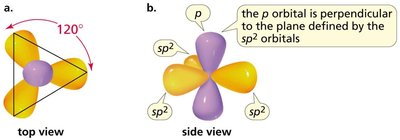
sp2 hybridization: Three equivalent orbitals, trigonal planar geometry, bond angle 120° (e.g., ethene).
sp hybridization: Two equivalent orbitals, linear geometry, bond angle 180° (e.g., ethyne).

Bonding and Molecular Structure
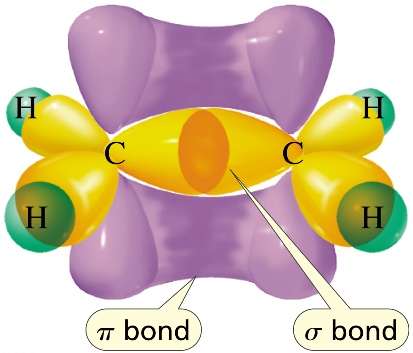
Carbon forms single, double, and triple bonds, which influence molecular geometry and reactivity.
Single bonds (sigma, ): Free rotation, found in alkanes.
Double bonds (one , one ): Restricted rotation, found in alkenes.
Triple bonds (one , two ): Linear geometry, found in alkynes.
Functional Groups and Nomenclature
Functional Groups
Functional groups are specific groups of atoms within molecules that determine the chemical reactivity and properties of those molecules.
Alkanes: Saturated hydrocarbons, single bonds only.
Alkenes: Contain at least one carbon-carbon double bond.
Alkynes: Contain at least one carbon-carbon triple bond.
Alcohols: Contain a hydroxyl group (-OH).
Ethers: Contain an oxygen atom connected to two alkyl or aryl groups (R-O-R').
Amines: Contain a nitrogen atom bonded to carbon and/or hydrogen.
Carboxylic acids: Contain a carboxyl group (-COOH).
Esters: Derived from carboxylic acids and alcohols (R-COOR').
Amides: Contain a carbonyl group bonded to nitrogen (R-CONH2).
Aldehydes and Ketones: Contain a carbonyl group (C=O), with aldehydes at the end of a chain and ketones within the chain.
Aromatic compounds: Contain benzene rings or related structures.
IUPAC Nomenclature
The International Union of Pure and Applied Chemistry (IUPAC) provides systematic rules for naming organic compounds to ensure clarity and uniformity.
Identify the longest continuous carbon chain (parent chain).
Number the chain to give substituents the lowest possible numbers.
Name and number substituents, listing them alphabetically.
Apply appropriate suffixes for functional groups (e.g., -ol for alcohols, -al for aldehydes, -one for ketones).
Isomerism in Organic Chemistry
Types of Isomerism
Isomers are compounds with the same molecular formula but different structures or spatial arrangements.
Structural (constitutional) isomers: Differ in the connectivity of atoms.
Stereoisomers: Same connectivity, different spatial arrangement.
Conformational isomers: Differ by rotation around single bonds.
Cis-trans (geometric) isomers: Differ in the arrangement around double bonds or rings.
Enantiomers: Non-superimposable mirror images (chiral molecules).
Diastereomers: Stereoisomers that are not mirror images.
Chirality and Optical Activity
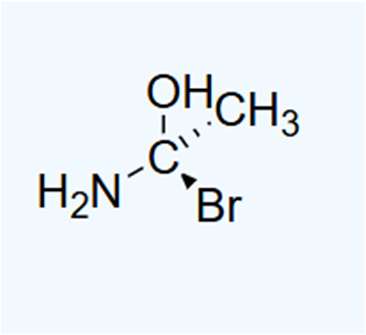
A molecule is chiral if it cannot be superimposed on its mirror image. Chirality is important in biological systems, as enantiomers can have different biological activities.
Chiral center: A carbon atom bonded to four different groups.
Optical activity: Chiral compounds rotate plane-polarized light; enantiomers rotate light in opposite directions.
R/S nomenclature: Assign priorities to substituents and determine configuration using Cahn-Ingold-Prelog rules.
Physical Properties of Organic Molecules
Intermolecular Forces
The physical properties of organic molecules, such as boiling point, melting point, and solubility, are influenced by intermolecular forces.
Van der Waals (London dispersion) forces: Weak interactions present in all molecules, stronger in larger and more polarizable molecules.
Dipole-dipole interactions: Occur between polar molecules.
Hydrogen bonding: Strong dipole-dipole interaction involving H bonded to N, O, or F.
Boiling and Melting Points
Boiling point increases with molecular weight and stronger intermolecular forces.
Branching lowers boiling point due to decreased surface area.
Melting point trends are less regular but increase with symmetry and stronger intermolecular forces.
Solubility
"Like dissolves like": Polar compounds dissolve in polar solvents; nonpolar compounds dissolve in nonpolar solvents.
Hydrogen bonding increases solubility in water.
Acids, Bases, and Reactivity
Brønsted-Lowry Acids and Bases
Acids are proton donors, and bases are proton acceptors. The strength of an acid is measured by its acid dissociation constant () and its value.
Strong acids: Low values, dissociate completely in water.
Weak acids: Higher values, partially dissociate.
Conjugate acid-base pairs: Related by the gain or loss of a proton.
The equilibrium of acid-base reactions favors the formation of the weaker acid and base.
Factors Affecting Acidity
Electronegativity: More electronegative atoms stabilize negative charge, increasing acidity.
Resonance: Delocalization of charge stabilizes conjugate bases, increasing acidity.
Inductive effects: Electron-withdrawing groups stabilize negative charge through sigma bonds.
Hybridization: Greater s-character increases acidity (sp > sp2 > sp3).
Reactivity: Nucleophiles, Electrophiles, and Reaction Types
Nucleophiles and Electrophiles
Nucleophiles: Electron-rich species that donate an electron pair to form a bond (e.g., OH-, NH3).
Electrophiles: Electron-deficient species that accept an electron pair (e.g., carbocations, carbonyl carbons).
Types of Organic Reactions
Addition reactions: Atoms are added to a double or triple bond.
Elimination reactions: Atoms are removed, forming double or triple bonds.
Substitution reactions: One atom or group is replaced by another.
Rearrangement reactions: The structure of the molecule is reorganized.
Polymers and Macromolecules
Definition and Types of Polymers
Polymers are large molecules composed of repeating structural units (monomers) connected by covalent bonds.
Addition polymers: Formed by the addition of monomers with double bonds (e.g., polyethylene, polystyrene).
Condensation polymers: Formed by the reaction of monomers with the elimination of a small molecule (e.g., nylon, polyester).
Physical Properties and Applications
Properties depend on crystallinity, molecular weight, and intermolecular forces.
Applications include plastics, fibers, adhesives, and biomedical materials.
Summary Table: Hybridization and Bond Properties
Molecule | Hybridization of Carbon | Bond Angles | Bond Length (C-H, Å) | Bond Strength (C-H, kcal/mol) |
|---|---|---|---|---|
Ethane | sp3 | 109.5° | 1.10 | 101.1 |
Ethene | sp2 | 120° | 1.08 | 110.7 |
Ethyne | sp | 180° | 1.06 | 133.3 |
Conclusion
This guide covers the foundational concepts of organic chemistry, including structure and bonding, functional groups, nomenclature, isomerism, physical properties, reactivity, and polymers. Mastery of these topics is essential for further study and application in organic and bio-organic chemistry.
