 Back
BackIntroduction to Organic Chemistry: Structure, Hybridisation, and Functional Groups
Study Guide - Smart Notes
 Tailored notes based on your materials, expanded with key definitions, examples, and context.
Introduction to Organic Chemistry
What is Organic Chemistry?
Organic chemistry is the study of carbon-based compounds, which form the foundation of all life and many materials. This field explores the structure, properties, and reactions of molecules containing carbon, often in combination with hydrogen, oxygen, nitrogen, and other elements.
Importance: Organic chemistry underpins molecular sciences, pharmaceuticals, materials (such as OLEDs), and biochemistry (e.g., amino acids and enzymes).
Applications: Organic compounds are found in medicines, plastics, dyes, and biological molecules.
Course Structure and Assessment
Lecture and Tutorial Overview
The course is divided into fundamentals, stereochemistry, synthesis and mechanisms, and spectroscopy. Tutorials reinforce lecture content and are closely linked to assessment.
Lectures: Cover basics, stereochemistry, mechanisms, and spectroscopy.
Tutorials: Formative exercises to prepare for coursework and exams.
Assessment: 30% coursework, 70% exam (multiple choice and short answer questions).
Atomic Structure and Hybridisation
Electronic Configuration and Valency of Carbon
Carbon has an electronic configuration of 1s2 2s2 2p2, giving it a valency of 4. This allows carbon to form four bonds, which is central to the diversity of organic molecules.
Saturated Carbon: Forms four sigma (σ) bonds (e.g., methane, ethane). The carbon is sp3 hybridised.
Unsaturated Carbon:
Double bonds (alkenes, e.g., ethene): Three σ-bonds and one pi (π) bond; carbon is sp2 hybridised.
Triple bonds (alkynes, e.g., ethyne/acetylene): Two σ-bonds and two π-bonds; carbon is sp hybridised.
Hybridisation and Bond Angles
The hybridisation state of an atom determines its geometry and bond angles:
Bonding | Hybridisation | Bond Angles |
|---|---|---|
Single bonds only | sp3 | 109° |
Double bond present | sp2 | 120° |
Triple bond present | sp | 180° |
Hybridisation of Heteroatoms
Heteroatoms (atoms other than carbon and hydrogen) in functional groups also follow hybridisation rules:
Alcohol oxygen: sp3 hybridised (single bonds only).
Ketone oxygen: sp2 hybridised (double bond present).
Nitrile nitrogen: sp hybridised (triple bond present).
Functional Groups in Organic Chemistry
Definition and Importance
Functional groups are specific groups of atoms within molecules that are responsible for the characteristic chemical reactions of those molecules. Most functional groups contain heteroatoms such as oxygen, nitrogen, halogens, sulfur, or phosphorus.
Examples: Alcohols, ketones, nitriles, alkenes, alkynes.
Role: Functional groups determine the reactivity and properties of organic molecules.
Representing Molecular Structure
Wedges and Dashes
Wedges and dashes are used in structural formulas to represent three-dimensionality:
Solid wedge: Bond coming out of the plane towards the viewer.
Dashed wedge: Bond going behind the plane away from the viewer.
This notation is essential for understanding stereochemistry and the spatial arrangement of atoms in molecules.
Examples and Applications
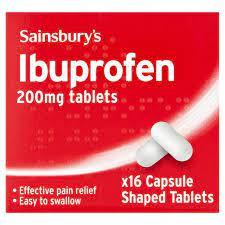
Ibuprofen: A common pharmaceutical that demonstrates the importance of stereochemistry and functional groups in drug design.
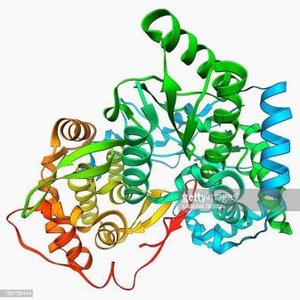
Amino acids and enzymes: Biological molecules with diverse functional groups and complex three-dimensional structures.
Summary Table: Hybridisation States
Atom Type | Bonding | Hybridisation | Bond Angle |
|---|---|---|---|
Carbon (alkane) | 4 single bonds | sp3 | 109° |
Carbon (alkene) | 2 single, 1 double | sp2 | 120° |
Carbon (alkyne) | 1 single, 1 triple | sp | 180° |
Oxygen (alcohol) | 2 single bonds | sp3 | 109° |
Oxygen (ketone) | 1 double bond | sp2 | 120° |
Nitrogen (nitrile) | 1 triple bond | sp | 180° |
Key Equations
Hybridisation and Bonding:
Further Reading
Chemistry3 (Burrows et al.)
Organic Chemistry (Clayden, Greeves, Warren)
Additional info: For more advanced topics, refer to chapters on molecular representations, analytical techniques, and reaction mechanisms in the recommended textbooks.
