 Back
BackMetabolism and Energy Production in Organic Chemistry
Study Guide - Smart Notes
 Tailored notes based on your materials, expanded with key definitions, examples, and context.
Metabolism: Overview and Key Concepts
Definitions and Types of Metabolic Processes
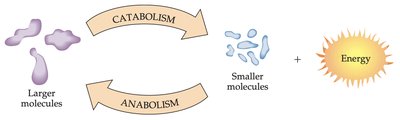
Metabolism encompasses all chemical reactions occurring within an organism, divided into two main categories: catabolism and anabolism. Catabolism involves the breakdown of large molecules into smaller ones, releasing energy, while anabolism is the synthesis of larger molecules from smaller precursors, requiring energy input.
Catabolism: Breakdown of complex molecules; energy is released.
Anabolism: Synthesis of complex molecules; energy is absorbed.
Metabolic Pathways: Series of consecutive reactions, either linear or cyclic, that transform molecules within the cell.
Types of Metabolic Pathways
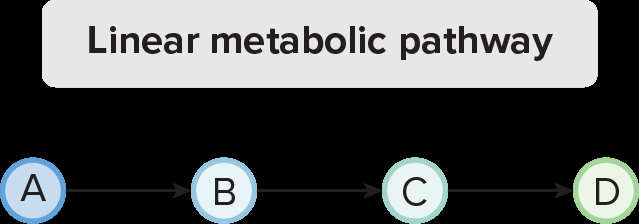
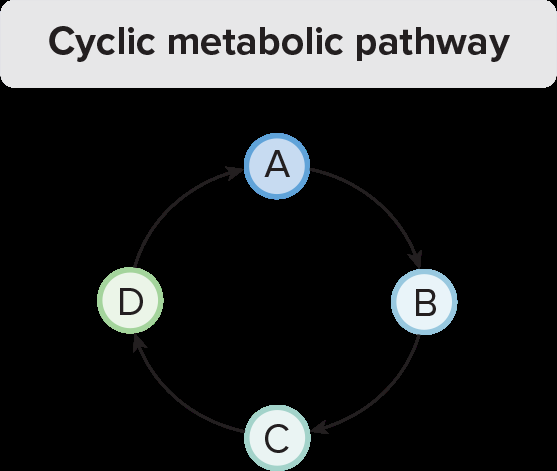
Metabolic pathways can be classified as linear or cyclic. Linear pathways generate a final product distinct from the reactants, while cyclic pathways regenerate the initial reactant, forming a closed loop.
Linear Pathway: Reactants are converted stepwise to a final product.
Cyclic Pathway: The pathway regenerates the starting molecule, as seen in the citric acid cycle.
Cellular Structures Involved in Metabolism
Mitochondria: The Site of Energy Production
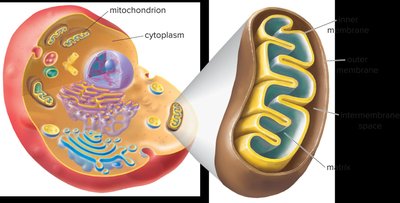
Mitochondria are specialized organelles within the cytoplasm responsible for energy production. They possess an outer membrane, an inner membrane with folds (cristae), an intermembrane space, and a matrix where metabolic reactions occur.
Outer membrane: Encloses the organelle.
Inner membrane: Highly folded, increases surface area for reactions.
Intermembrane space: Area between membranes.
Matrix: Site of the citric acid cycle and other metabolic processes.
Stages of Metabolism
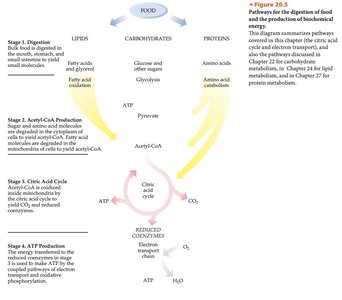
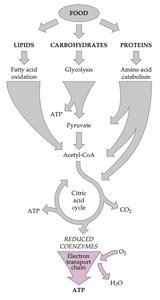
Stage 1: Digestion
Large biomolecules are broken down into smaller units by enzymes in the digestive system. Carbohydrates become glucose and other sugars, proteins become amino acids, and lipids become glycerol and fatty acids.
Stage 2: Acetyl-CoA Production
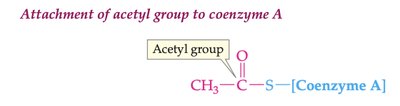
Small molecules from digestion are further degraded to produce acetyl-coenzyme A (acetyl-CoA), a central intermediate in metabolism. Sugars and amino acids are processed in the cytoplasm, while fatty acids are processed in mitochondria.
Stage 3: Citric Acid Cycle
Acetyl-CoA enters the citric acid cycle (Krebs cycle), where it is oxidized to produce carbon dioxide and reduced coenzymes (NADH, FADH2).
Stage 4: ATP Production
Energy stored in reduced coenzymes is used to synthesize ATP via electron transport and oxidative phosphorylation.
ATP: The Energy Currency of the Cell
Structure and Hydrolysis of ATP
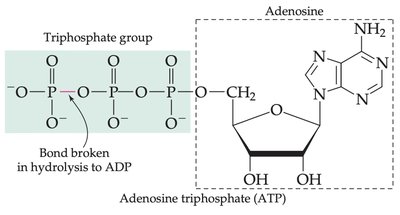
ATP (adenosine triphosphate) consists of adenosine and three phosphate groups. Hydrolysis of ATP to ADP releases energy used for cellular processes.
ATP Hydrolysis:
Free Energy Change:
Free Energies of Hydrolysis
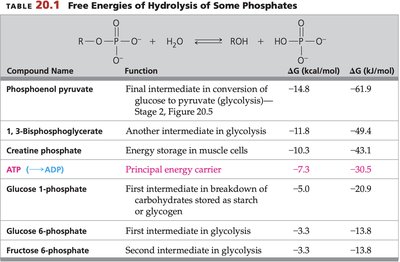
Different phosphate-containing compounds have varying free energies of hydrolysis, which determines their role in energy transfer.
Compound Name | Function | ΔG (kcal/mol) | ΔG (kJ/mol) |
|---|---|---|---|
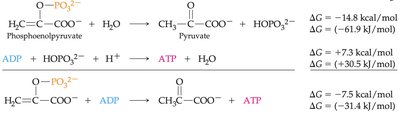
Phosphoenol pyruvate | Intermediate in glycolysis | -14.8 | -61.9 |
1,3-Bisphosphoglycerate | Intermediate in glycolysis | -11.8 | -49.4 |
Creatine phosphate | Energy storage in muscle cells | -10.3 | -43.1 |
ATP (→ADP) | Principal energy carrier | -7.3 | -30.5 |
Glucose 1-phosphate | Intermediate in carbohydrate breakdown | -5.0 | -20.9 |
Glucose 6-phosphate | Intermediate in glycolysis | -3.3 | -13.8 |
Fructose 6-phosphate | Intermediate in glycolysis | -3.3 | -13.8 |
Coupled Reactions in Metabolism
Coupling Unfavorable and Favorable Reactions
Many metabolic reactions are energetically unfavorable and require coupling with favorable reactions, such as ATP hydrolysis, to proceed.
Example: Glucose phosphorylation is coupled with ATP hydrolysis to make the overall reaction favorable.
Net Reaction:
Net ΔG: (favorable)

Coenzymes and Oxidation-Reduction Reactions
Coenzymes: NAD+, FAD, FMN
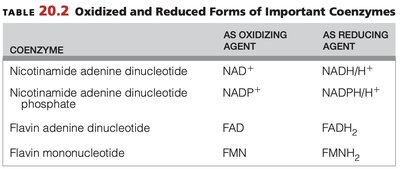
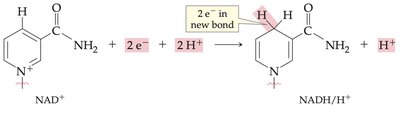
Coenzymes are essential for oxidation-reduction reactions in metabolism. They exist in oxidized and reduced forms, facilitating electron transfer.
Coenzyme | Oxidizing Agent | Reducing Agent |
|---|---|---|
NAD+ | NAD+ | NADH/H+ |
NADP+ | NADP+ | NADPH/H+ |
FAD | FAD | FADH2 |
FMN | FMN | FMNH2 |
Oxidation and Reduction in Organic Chemistry
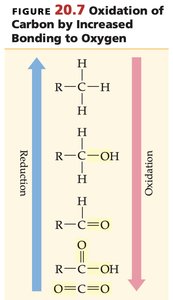
Oxidation involves loss of electrons, loss of hydrogen, or addition of oxygen, while reduction involves gain of electrons, gain of hydrogen, or loss of oxygen.
NAD+/NADH Mechanism
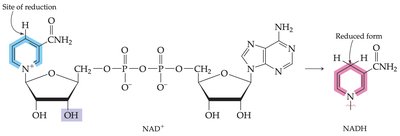
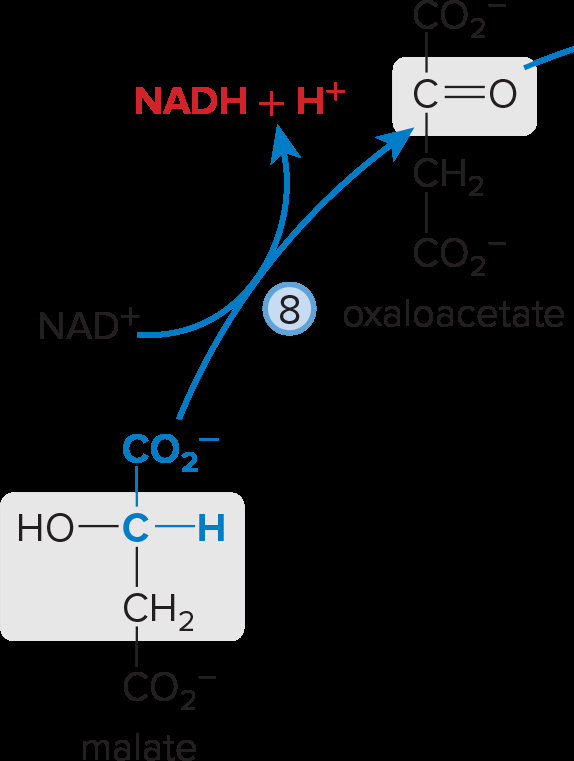
NAD+ is reduced to NADH during metabolic reactions, such as those catalyzed by malate dehydrogenase.

The Citric Acid Cycle (Krebs Cycle)
Overview and Steps
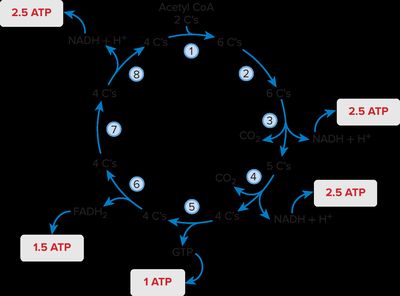
The citric acid cycle is a cyclic pathway that oxidizes acetyl-CoA to CO2, producing reduced coenzymes and GTP (converted to ATP). Each step is catalyzed by a specific enzyme and involves distinct chemical transformations.
Step 1: Acetyl-CoA + oxaloacetate → citrate (enzyme: citrate synthase)
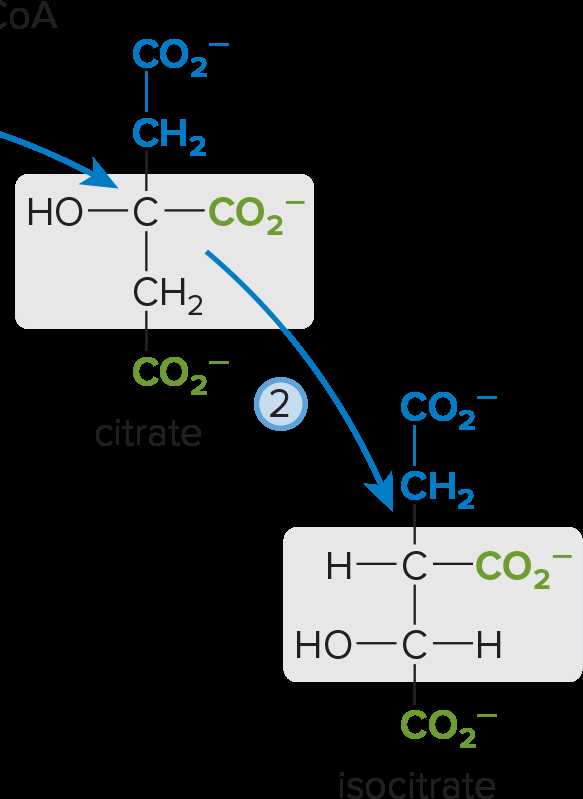
Step 2: Citrate → isocitrate (enzyme: aconitase)
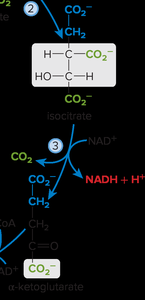
Step 3: Isocitrate → α-ketoglutarate + CO2 (enzyme: isocitrate dehydrogenase, NAD+ reduced to NADH)
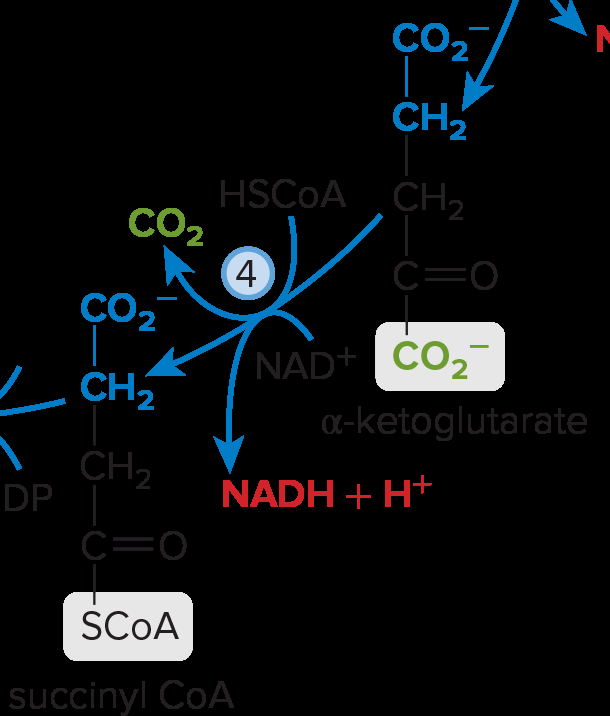
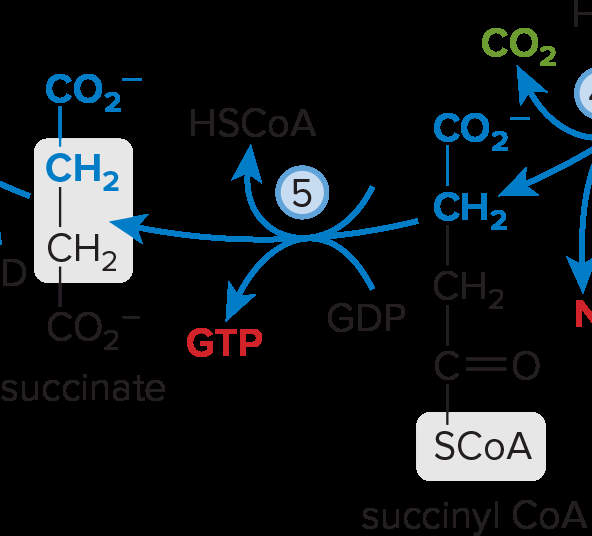
Step 4: α-Ketoglutarate → succinyl-CoA + CO2 (enzyme: α-ketoglutarate dehydrogenase, NAD+ reduced to NADH)
Step 5: Succinyl-CoA → succinate + GTP (enzyme: succinyl-CoA synthetase)
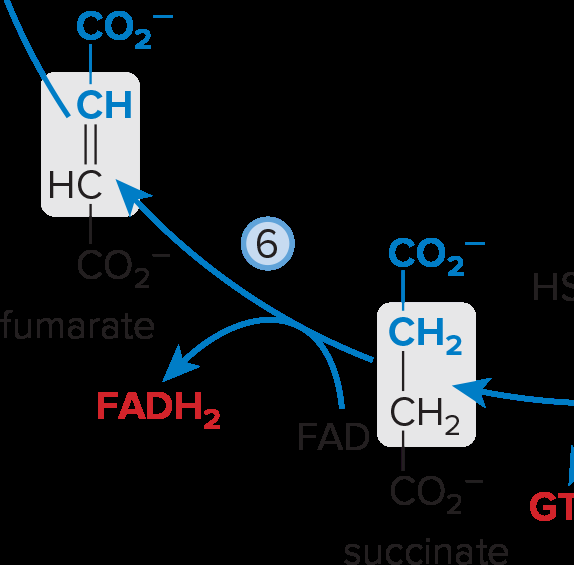
Step 6: Succinate → fumarate (enzyme: succinate dehydrogenase, FAD reduced to FADH2)
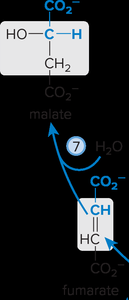
Step 7: Fumarate → malate (enzyme: fumarase)
Step 8: Malate → oxaloacetate (enzyme: malate dehydrogenase, NAD+ reduced to NADH)
Net Result of the Citric Acid Cycle
The overall reaction for one turn of the citric acid cycle is:
Produces four reduced coenzymes (3 NADH, 1 FADH2), two CO2, and one GTP (converted to ATP).
Main function: generation of reduced coenzymes for ATP production.
Electron Transport Chain and Oxidative Phosphorylation
Mechanism and Structure
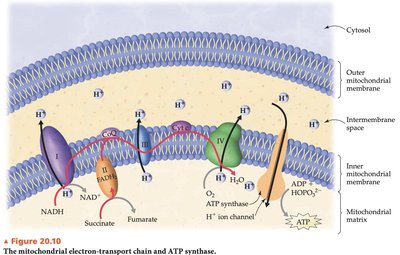
The electron transport chain consists of four enzyme complexes embedded in the mitochondrial inner membrane. Reduced coenzymes (NADH, FADH2) donate electrons, which are passed through the complexes, generating a proton gradient across the membrane.
Complexes I-IV: Sequential electron transfer and proton pumping.
ATP Synthase: Utilizes the proton gradient to synthesize ATP from ADP and inorganic phosphate.
Aerobic Process: Oxygen is the final electron acceptor, forming water.
ATP Yield from Oxidative Phosphorylation
The entry point of electrons into the electron transport chain determines ATP yield:
Each NADH produces 2.5 ATP.
Each FADH2 produces 1.5 ATP.
Citric acid cycle yields: 7.5 ATP (from NADH), 1.5 ATP (from FADH2), 1 ATP (from GTP), totaling 10 ATP per cycle.
Summary Diagram of Metabolic Pathways
The flow of food through digestion, acetyl-CoA production, citric acid cycle, and electron transport chain is summarized in the following diagram:
Additional info: These notes provide a comprehensive overview of metabolism, focusing on the organic chemistry of energy production, coenzyme function, and the citric acid cycle, suitable for college-level organic chemistry students.
