 Back
BackRadical Reactions in Organic Chemistry: Mechanisms, Thermodynamics, and Applications
Study Guide - Smart Notes
 Tailored notes based on your materials, expanded with key definitions, examples, and context.
Radical Reactions
Introduction to Radicals
Radical reactions are a fundamental class of organic reactions involving species with unpaired electrons, known as free radicals. These reactions are characterized by homolytic bond cleavage and unique mechanistic patterns distinct from ionic processes.
Radical Structure and Geometry
Hybridization and Geometry of Radicals
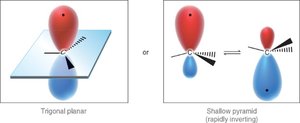
Organic radicals typically exhibit either trigonal planar (sp2 hybridized) or shallow trigonal pyramidal (rapidly inverting sp3 hybridized) geometries. The geometry depends on the nature of the radical and its environment.
Trigonal planar: The unpaired electron occupies a p orbital perpendicular to the plane of the molecule.
Shallow pyramidal: The radical center is slightly pyramidal but rapidly inverts, making it appear nearly planar on average.
Stability of Free Radicals
Although radicals are neutral, they are electron-deficient and follow similar stability trends as carbocations:
Stability order: 3° > 2° > 1° > methyl
Bond Dissociation Energy (BDE): The weaker the C–H bond, the more stable the resulting radical. Thus, more substituted radicals are formed more easily.
Resonance Stabilization
Radicals are stabilized by resonance delocalization, similar to carbocations. The more resonance forms available, the greater the stability:
Benzylic radicals (adjacent to aromatic rings) are more stable than allylic radicals (adjacent to double bonds) due to greater delocalization.
Vinylic radicals (directly on a double bond) are especially unstable.
Patterns in Radical Mechanisms
Arrow-Pushing Patterns
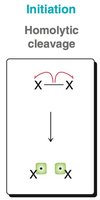
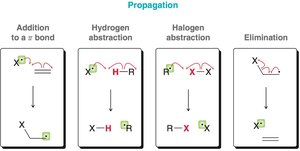
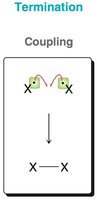
Radical mechanisms use fishhook arrows to indicate the movement of single electrons. There are six key patterns:
Homolytic cleavage (initiation)
Addition to a π bond
Hydrogen abstraction
Halogen abstraction
Elimination
Coupling (termination)
Stages of Radical Mechanisms
Initiation: Formation of radicals from non-radical species (often via homolytic cleavage induced by heat or light).
Propagation: Radicals react with non-radicals to form new radicals, sustaining the chain reaction.
Termination: Two radicals combine to form a non-radical, ending the chain process.
Chlorination of Methane: A Case Study
Mechanism Overview
The chlorination of methane is a classic example of a radical chain reaction, consisting of initiation, propagation, and termination steps:
Initiation:
Propagation:
Termination: (or other radical combinations)
Polychlorination is difficult to prevent; excess methane is used to favor monochlorination.
Radical Initiators and Inhibitors
Initiators: Compounds with weak bonds (e.g., peroxides) that cleave homolytically to generate radicals.
Inhibitors: Compounds (e.g., oxygen, hydroquinone) that react with radicals to prevent chain propagation.
Thermodynamics of Halogenation
Free Energy and Enthalpy
To determine if halogenation is product-favored, consider the sign of . In these reactions, entropy is negligible, so (enthalpy) is the main factor:
can be estimated using bond dissociation energies (BDEs):
Chlorination and bromination are exothermic overall, but the first step of bromination is endothermic, making bromination slower and more selective.
Regioselectivity and Stereochemistry in Halogenation
Regioselectivity
Chlorination: Less selective, forms significant amounts of all possible monohalogenation products.
Bromination: More selective, favors abstraction at the most stable (usually most substituted) carbon radical site.
Fluorination: Fastest and least selective.
The Hammond Postulate explains why bromination is more regioselective: the transition state for bromination resembles the radical intermediate more closely, so stability differences are amplified.
Stereochemistry
Halogenation at a chiral center leads to racemization, as the radical intermediate is planar or rapidly inverting, allowing attack from either side.
Multiple stereoisomers may be formed if the substrate contains stereocenters.
Allylic Halogenation
Allylic Selectivity
Alkenes undergo selective halogenation at the allylic position (adjacent to the double bond) due to the low BDE and resonance stabilization of the resulting radical. NBS (N-bromosuccinimide) is often used to generate low concentrations of Br2 and favor allylic bromination over addition to the double bond.
Atmospheric Chemistry: Ozone and Chlorofluorocarbons
Ozone Depletion
Ozone (O3) is both created and destroyed in the upper atmosphere via radical processes.
Chlorofluorocarbons (CFCs) release chlorine radicals under UV light, which catalyze the destruction of ozone.
Hydrofluoroalkanes (HFAs) are less harmful alternatives but still act as greenhouse gases.
Autooxidation and Antioxidants
Autooxidation Mechanism
Autooxidation is the slow reaction of organic compounds with atmospheric oxygen, forming hydroperoxides. This process is especially relevant for ethers and unsaturated fatty acids, leading to spoilage and toxicity.
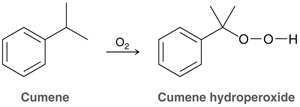
Initiation: Formation of a radical (often by light or heat).
Propagation: Radical reacts with O2 to form a peroxy radical, which abstracts hydrogen to form a hydroperoxide.
Termination: Combination of two radicals.
Ethers are particularly susceptible, and their hydroperoxides can be explosive. Storing in dark containers reduces risk.
Antioxidants
Radical inhibitors (e.g., BHT, vitamin E, vitamin C) prevent autooxidation by scavenging radicals.
These compounds are essential in food preservation and biological systems to prevent oxidative damage.
Radical Addition of HBr to Alkenes
Anti-Markovnikov Addition
In the presence of peroxides, HBr adds to alkenes via a radical mechanism, resulting in anti-Markovnikov regioselectivity:
Initiation: Peroxide decomposes to form radicals, which generate Br radicals from HBr.
Propagation: Br radical adds to the less substituted carbon, forming the more stable carbon radical, which then abstracts H from HBr.
Termination: Combination of two radicals.
This reaction is generally spontaneous for HBr but not for HCl or HI.
Radical Polymerization
Mechanism and Applications
Radical polymerization is a chain reaction that joins monomers (often ethylene derivatives) into long-chain polymers:
Initiation: Formation of a radical that adds to a monomer.
Propagation: Growing polymer radical adds to more monomers.
Termination: Two polymer radicals combine.
Chain branching: Leads to different polymer properties (e.g., flexible vs. rigid polyethylene).
Synthetic Utility of Halogenation
Functionalization of Alkanes
Halogenation is a valuable method for introducing functional groups into otherwise unreactive alkanes, enabling further synthetic transformations. Bromination is preferred for selectivity when multiple products are possible.
Summary Table: Key Features of Radical Halogenation
Halogen | Relative Rate | Selectivity |
|---|---|---|
Fluorine | Very fast | Low |
Chlorine | Moderate | Moderate |
Bromine | Slow | High |
Additional info: This guide covers the essential concepts, mechanisms, and applications of radical reactions as presented in a standard organic chemistry curriculum, with expanded academic context for clarity and completeness.
