 Back
BackSynthesis of Solids: Dry Methods in Materials Chemistry
Study Guide - Smart Notes
 Tailored notes based on your materials, expanded with key definitions, examples, and context.
Synthesis of Solids: Dry Methods
Introduction to Solid Synthesis
The synthesis of solid materials is a foundational aspect of materials chemistry, underpinning the development of advanced materials for electronics, construction, catalysis, and more. Dry synthesis methods are particularly important for producing inorganic solids with controlled properties and structures. This section reviews the main dry synthesis techniques, their mechanisms, applications, and advantages/disadvantages.
Solid State Reactions
Principles of Solid State Reactions
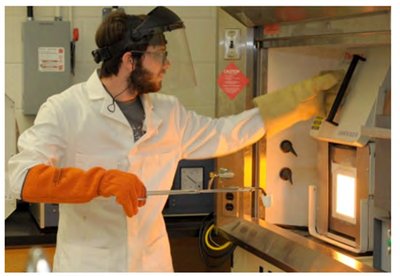
Solid state reactions, also known as "shake and bake" or "heat and beat" methods, involve mixing solid precursors in stoichiometric ratios and heating them to induce reaction. These reactions are typically slow due to limited diffusion in the solid state, requiring high temperatures (500–2000°C) and long reaction times (12–24 hours).
Key Steps: Finely grind precursors, mix thoroughly, and heat in a suitable crucible.
Crucibles: Materials such as silica (up to 1400°C) or zirconia (up to 2000°C) are used to withstand high temperatures.
Atmosphere: Reactions can be performed in air or in sealed tubes to control the atmosphere or contain volatile components.
Enhancements: Precipitation or sol-gel methods can be used to prepare finer precursor powders, increasing reaction rates.

Example: Synthesis of Ferroelectric BaTiO3
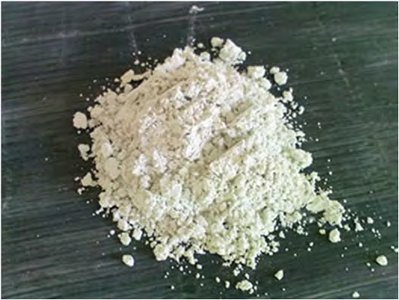
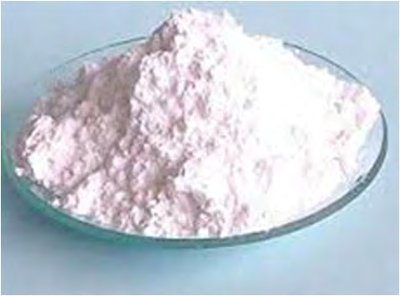
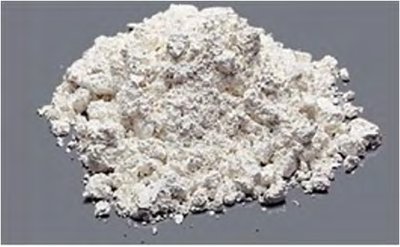
Barium titanate (BaTiO3) is a technologically important ferroelectric material used in capacitors and piezoelectric devices. It is commonly synthesized via the solid state reaction:
Precursors are ball-milled for homogeneity, then calcined at 1150°C for several hours.
For finer products, a precursor can be precipitated before calcination.


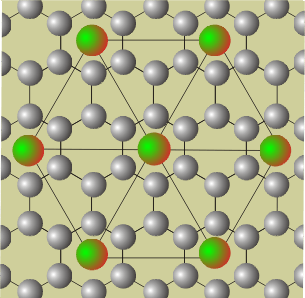
Phase Diagrams and Structure
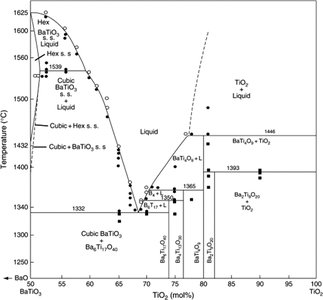
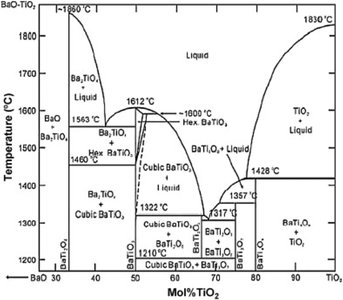
Phase diagrams are essential for determining the correct synthesis conditions and understanding the stability of different phases.
Applications and Scale
BaTiO3 is produced on a scale of ~10 million tonnes per year, mainly for multilayer ceramic capacitors.
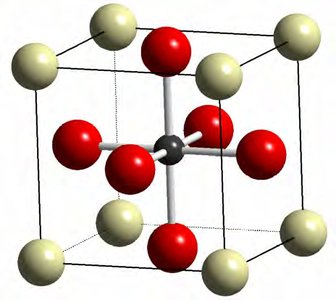
Its perovskite structure is crucial for its ferroelectric and piezoelectric properties.
Calcination: Cement Production
Calcination Process
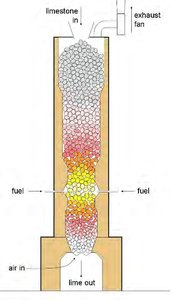
Calcination refers to heating a solid to high temperatures to induce thermal decomposition. In cement production, limestone (CaCO3) is decomposed to lime (CaO) and CO2:
Cement production is a major industrial process, responsible for significant CO2 emissions globally.
Further reactions with silica, alumina, or iron oxides produce various cement phases.

Vapour Transport and Sealed Tube Reactions
Principles and Applications
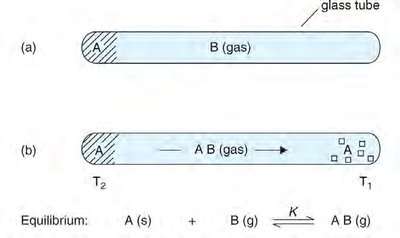
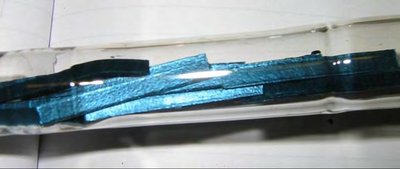
Vapour transport methods use volatile intermediates to accelerate solid-state reactions. Reagents are sealed in a tube and heated asymmetrically, creating a thermal gradient that drives the transport of volatile species.
Example: Van Arkel process for metal purification (e.g., Cr, Ti, Zr, Hf):
(exothermic)
Nickel purification via the Mond process:

Mechanosynthesis
Mechanochemical Synthesis
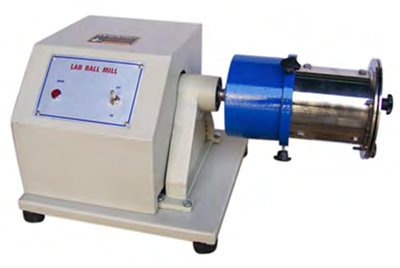
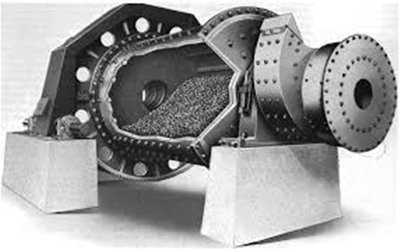
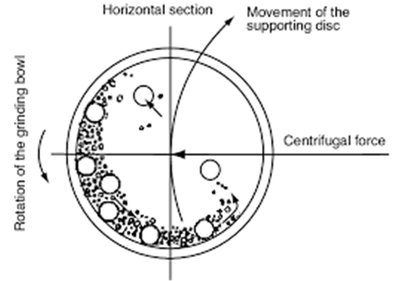
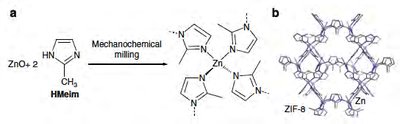
Mechanosynthesis involves applying mechanical stress (e.g., ball milling) to solid reactants, promoting reactions at lower temperatures and shorter times compared to conventional solid-state methods. This approach can yield metastable products and reduce the need for solvents, making it a greener alternative.
Example: in 1 hour at room temperature, compared to 20 hours at 1150°C by conventional methods.
Risk of contamination from milling media (zirconia, steel, ceramic).
Combustion and Flame Synthesis
Combustion Synthesis (SHS/SSM)
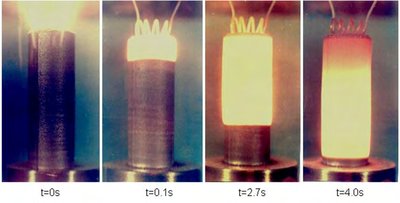
Combustion synthesis, also known as self-propagating high-temperature synthesis (SHS) or solid-state metathesis (SSM), uses exothermic reactions to rapidly produce inorganic solids. The reaction is initiated by ignition and propagates through the reactant mixture in seconds to minutes.
Commonly used for ceramics, intermetallics, and electronic materials.
Example: Synthesis of spinel ferrite by mixing metal nitrates (oxidants) with urea (fuel) and heating to 600°C.
Flame Synthesis (Flame Spray Pyrolysis)
Flame synthesis produces small particles (5–100 nm) by reacting volatile precursors in a high-temperature flame. This method is widely used for producing oxides (e.g., TiO2, SiO2, ZnO) and carbon black on an industrial scale.
Precursors are evaporated or aerosolized and combusted with a fuel/oxidant mixture.
Products are often agglomerated and may be crystalline or amorphous.
Used for pigments, fillers, and catalysts.

Industrial Example: Chloride Process for TiO2
The chloride process is a flame synthesis route for high-quality rutile TiO2:
This process is efficient and produces less waste than the sulphate process, but requires careful control.
Summary Table: Synthesis Methods and Applications
Scale | Application | Key Property | Structure | Example | Method |
|---|---|---|---|---|---|
64M tonne/yr | Aircraft | Specific strength | CCP Al | Al alloys | Melt |
$10B /yr | Electronics | Semiconductor | Diamond | Silicon | Czochralski |
>2000 tonne/yr | Watches | Piezoelectric | α-quartz | Quartz | Solvothermal |
10M tonne/yr | Paint | Optical pigment | Anatase/Rutile | TiO2 | Precipitation |
$10B /yr | Chromatography | Surface area | Amorphous | Silica | Sol-gel |
10M tonne/yr | Capacitors | Ferroelectric | Perovskite | BaTiO3 | Solid state reaction |
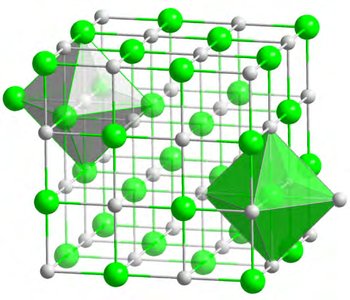
5000M tonne/yr ($400B /yr) | Construction | Mechanical | Rock salt | Cement (CaO) | Calcination |
2.5M tonne/yr | Chemical industry | Corrosion resistance | CCP Ni | Nickel | Vapour Transport |
$1.8B /yr | Transformer | Magnetism | Spinel (ferrite) | Ni0.5Zn0.5Fe2O4 | Combustion |
10M tonne/yr | Paint | Optical pigment | Rutile | TiO2 | Flame synthesis |
$2B /yr | LEDs | Semiconductor | Wurtzite | GaN | CVD |
Conclusion: Materials Chemistry and Sustainability
Dry synthesis methods are essential for producing advanced materials at industrial scales. These processes are central to modern technology but also present challenges for sustainability, particularly regarding energy use and CO2 emissions. Ongoing improvements in materials chemistry are crucial for achieving sustainable development goals.
