Ch. 18 - Reactions of Benzene and Substituted Benzenes
Bruice - Organic Chemistry 8th Edition
Bruice8th EditionOrganic ChemistryISBN: 9780135213711Not the one you use?Change textbook
Chapter 19, Problem 101b

Tyramine is an alkaloid found in mistletoe and ripe cheese. Dopamine is a neurotransmitter involved in the regulation of the central nervous system.
b. How can dopamine be prepared from tyramine?

Verified step by step guidance
1
Step 1: Analyze the structures of tyramine and dopamine. Tyramine has a single hydroxyl group (-OH) attached to the benzene ring, while dopamine has two hydroxyl groups (-OH) on the benzene ring in the ortho position. The rest of the structure, including the ethylamine side chain, remains unchanged.
Step 2: Recognize that the conversion of tyramine to dopamine involves the addition of a hydroxyl group to the benzene ring. This type of reaction is typically achieved through electrophilic aromatic substitution, where a hydroxyl group is introduced to the aromatic ring.
Step 3: Identify the reagents required for hydroxylation. A common method to introduce a hydroxyl group onto an aromatic ring is through the use of oxidizing agents or hydroxylating agents such as hydrogen peroxide (H₂O₂) in the presence of a catalyst like iron (Fe²⁺) or copper (Cu²⁺).
Step 4: Consider the reaction conditions. The hydroxylation reaction should be carried out under controlled conditions to ensure selective addition of the hydroxyl group to the ortho position relative to the existing hydroxyl group on the benzene ring.
Step 5: After the reaction, verify the product structure. Ensure that the resulting compound has two hydroxyl groups in the ortho position on the benzene ring, along with the unchanged ethylamine side chain, confirming the formation of dopamine from tyramine.

Key Concepts

Here are the essential concepts you must grasp in order to answer the question correctly.

Alkaloids

Alkaloids are a class of naturally occurring organic compounds that mostly contain basic nitrogen atoms. They are derived from plant sources and often have significant pharmacological effects. Tyramine, found in foods like ripe cheese and mistletoe, is an example of an alkaloid that can influence neurotransmitter activity in the body.

Neurotransmitters

Neurotransmitters are chemical messengers that transmit signals across synapses from one neuron to another. Dopamine is a key neurotransmitter involved in many functions, including mood regulation, reward, and motor control. Understanding the role of neurotransmitters is essential for grasping how compounds like tyramine can affect brain chemistry.
Recommended video:
Guided course
09:04
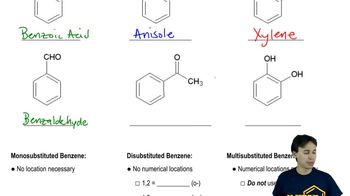
Benzene Nomenclature

Biochemical Conversion

Biochemical conversion refers to the process by which one chemical compound is transformed into another through enzymatic reactions. In the case of preparing dopamine from tyramine, the conversion involves the enzymatic hydroxylation of tyramine, which adds a hydroxyl group to the aromatic ring, resulting in dopamine. This process is crucial in understanding metabolic pathways in organic chemistry.
Recommended video:
1:08
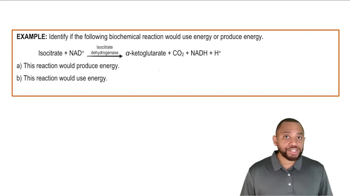
Energy Production In Biochemical Pathways Example 1