Ch. 21 - Amino Acids, Peptides, and Proteins
Bruice - Organic Chemistry 8th Edition
Bruice8th EditionOrganic ChemistryISBN: 9780135213711Not the one you use?Change textbook
Chapter 22, Problem 71

Glycine has pKa values of 2.3 and 9.6. Do you expect the pKa values of glycylglycine to be higher or lower than these values?

Verified step by step guidance
1
Understand the structure of glycylglycine: Glycylglycine is a dipeptide formed by two glycine molecules linked by a peptide bond. This structural change affects the ionizable groups compared to free glycine.
Identify the ionizable groups in glycylglycine: The molecule has an N-terminal amino group, a C-terminal carboxylic acid group, and an amide bond. The amide bond is not ionizable, but the amino and carboxylic acid groups are.
Compare the environment of the ionizable groups: In glycylglycine, the amino group is adjacent to the amide bond, and the carboxylic acid group is part of the peptide structure. These changes alter the electronic environment, which can influence the pKa values.
Predict the effect on the pKa of the carboxylic acid group: The electron-withdrawing effect of the amide bond stabilizes the conjugate base of the carboxylic acid, making it easier to lose a proton. This typically lowers the pKa of the carboxylic acid group compared to free glycine.
Predict the effect on the pKa of the amino group: The amide bond reduces the electron-donating ability of the amino group, making it less basic. This typically raises the pKa of the amino group compared to free glycine.

Verified video answer for a similar problem:

This video solution was recommended by our tutors as helpful for the problem above.
Video duration:
7m
Was this helpful?

Key Concepts

Here are the essential concepts you must grasp in order to answer the question correctly.

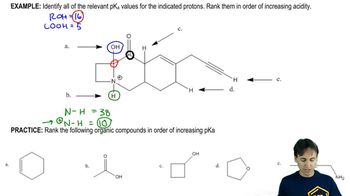
pKa and Acid-Base Chemistry

pKa is a measure of the acidity of a compound, indicating the strength of an acid in solution. Lower pKa values correspond to stronger acids, while higher values indicate weaker acids. Understanding pKa is essential for predicting the protonation states of amino acids and peptides at different pH levels.
Recommended video:
Guided course
07:45
Identifying pKa values

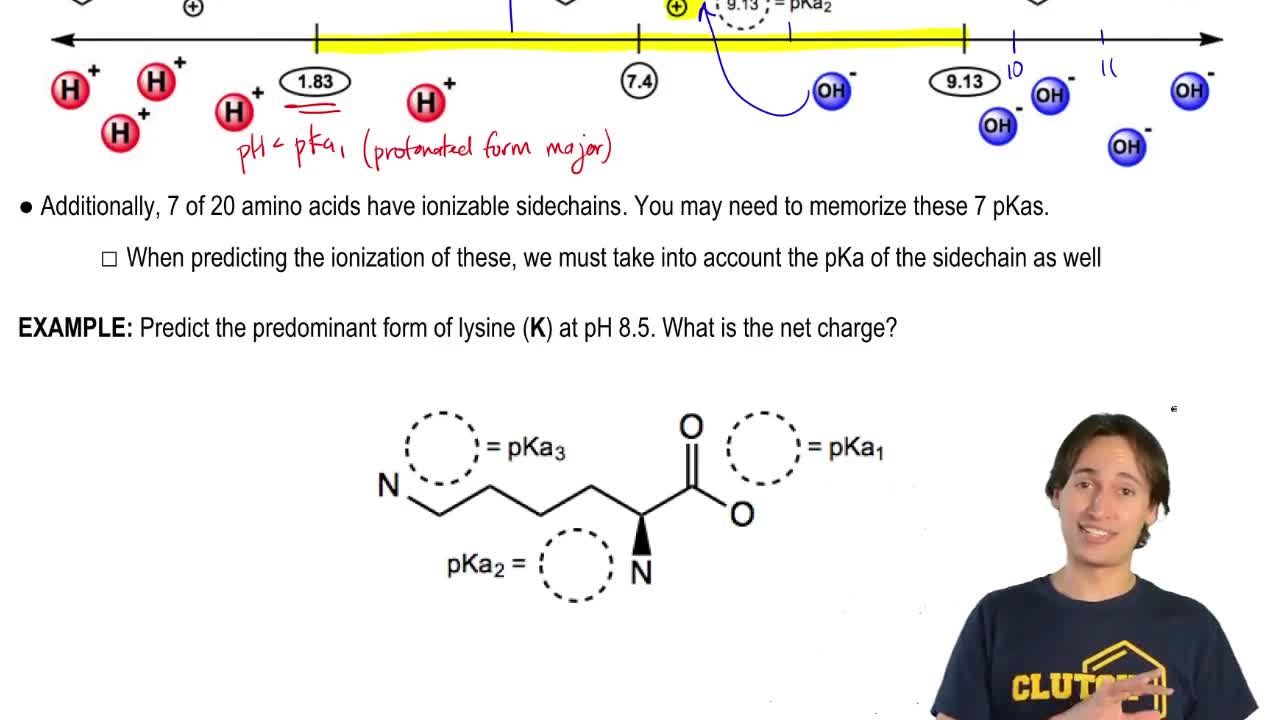
Amino Acid Structure and Properties

Amino acids, like glycine, contain both an amino group and a carboxyl group, allowing them to act as both acids and bases. The pKa values of these functional groups determine the ionization state of the amino acid at a given pH, which is crucial for understanding their behavior in biological systems and during peptide formation.
Recommended video:
Guided course
04:10
The 7 Ionizable Amino Acids

Peptide Bond Formation and Stability

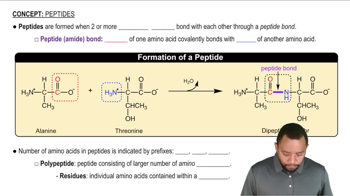
Glycylglycine is a dipeptide formed from two glycine molecules. The formation of peptide bonds can influence the pKa values of the constituent amino acids due to changes in the electronic environment and steric factors. Generally, the pKa values of peptides can be affected by the neighboring amino acids, leading to shifts in acidity compared to the free amino acids.
Recommended video:
3:07
Peptides Concept 1