Ch. 3 - An Introduction to Organic Compounds:Nomenclature, Physical Properties, and Structure
Bruice - Organic Chemistry 8th Edition
Bruice8th EditionOrganic ChemistryISBN: 9780135213711Not the one you use?Change textbook
Chapter 4, Problem 28a,b

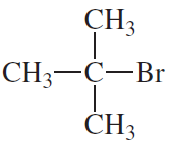
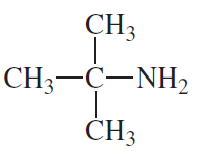
Are the following compounds primary, secondary, or tertiary?
a. Structural formula of a carbon compound with bromine and four methyl groups, indicating possible functional group classification.
b. Structural formula of a carbon atom bonded to two methyl groups and an amine group, indicating functional group classification.

Verified step by step guidance
1
Step 1: Understand the classification of primary, secondary, and tertiary compounds. These classifications depend on the number of carbon atoms directly attached to the functional group (e.g., -OH or -NH2).
Step 2: Analyze compound A. The functional group is -OH (hydroxyl group). Look at the carbon atom attached to the -OH group and count how many other carbon atoms are directly bonded to it.
Step 3: For compound A, the carbon attached to the -OH group is bonded to three other carbon atoms. This makes the compound tertiary because a tertiary alcohol has the hydroxyl group attached to a carbon bonded to three other carbons.
Step 4: Analyze compound B. The functional group is -NH2 (amino group). Look at the carbon atom attached to the -NH2 group and count how many other carbon atoms are directly bonded to it.
Step 5: For compound B, the carbon attached to the -NH2 group is bonded to two other carbon atoms. This makes the compound secondary because a secondary amine has the amino group attached to a carbon bonded to two other carbons.

Verified video answer for a similar problem:

This video solution was recommended by our tutors as helpful for the problem above.
Video duration:
4m
Was this helpful?

Key Concepts

Here are the essential concepts you must grasp in order to answer the question correctly.

Primary, Secondary, and Tertiary Carbons

In organic chemistry, the classification of carbon atoms as primary, secondary, or tertiary is based on the number of other carbon atoms bonded to them. A primary carbon is attached to one other carbon, a secondary carbon to two, and a tertiary carbon to three. This classification is crucial for understanding the reactivity and properties of organic compounds.
Recommended video:
2:07
Tertiary Protein Structure Concept 1

Functional Groups

Functional groups are specific groups of atoms within molecules that are responsible for the characteristic chemical reactions of those molecules. In the compounds shown, the hydroxyl group (-OH) in compound A and the amino group (-NH2) in compound B are functional groups that influence the compounds' properties and classifications.
Recommended video:
Guided course
02:36
Identifying Functional Groups

Structural Representation of Organic Compounds

The structural representation of organic compounds, such as the images provided, illustrates how atoms are connected within a molecule. Understanding these structures helps in identifying the type of carbon atoms present and the overall classification of the compound, which is essential for determining whether they are primary, secondary, or tertiary.
Recommended video:
Guided course
01:40
Defining meso compounds.