Ch. 6 - The Reactions of Alkenes • The Stereochemistry of Addition Reactions
Bruice - Organic Chemistry 8th Edition
Bruice8th EditionOrganic ChemistryISBN: 9780135213711Not the one you use?Change textbook
Chapter 7, Problem 103b

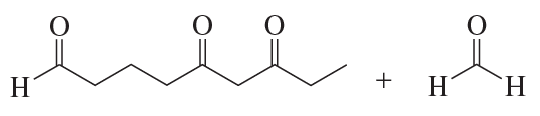
Ozonolysis of an alkene, followed by treatment with dimethyl sulfide, forms the following product(s). Identify the alkene in each case.
b. Ozonolysis reaction showing an alkene structure and products formed with dimethyl sulfide.

Verified step by step guidance
1
Step 1: Understand the reaction. Ozonolysis is a reaction where an alkene reacts with ozone (O₃) to form an ozonide intermediate. This intermediate is then reduced using a reducing agent, such as dimethyl sulfide (DMS), to yield carbonyl compounds (aldehydes or ketones).
Step 2: Analyze the given product(s). Identify the carbonyl compounds (aldehydes or ketones) formed after the ozonolysis and reduction steps. These products will help you deduce the structure of the original alkene.
Step 3: Reconstruct the alkene. Combine the carbonyl compounds by 'reversing' the cleavage process. Connect the carbon atoms of the carbonyl groups at the positions where the double bond was originally present in the alkene.
Step 4: Ensure the correct structure. Verify that the reconstructed alkene has the correct number of carbons and matches the connectivity implied by the carbonyl products. Also, ensure that the stereochemistry (if applicable) is consistent with the reaction conditions.
Step 5: Confirm the answer. Double-check the reaction mechanism to ensure that the proposed alkene would indeed produce the given carbonyl products upon ozonolysis followed by reduction with dimethyl sulfide.

Verified video answer for a similar problem:

This video solution was recommended by our tutors as helpful for the problem above.
Video duration:
2m
Was this helpful?

Key Concepts

Here are the essential concepts you must grasp in order to answer the question correctly.

Ozonolysis

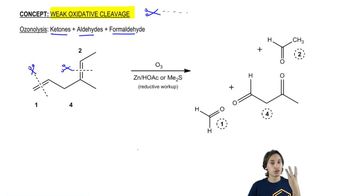
Ozonolysis is a reaction involving the cleavage of alkenes using ozone (O3) to form ozonides, which can then be further reduced. This reaction typically results in the formation of carbonyl compounds, such as aldehydes or ketones, depending on the structure of the alkene. Understanding ozonolysis is crucial for predicting the products formed from specific alkenes.
Recommended video:
Guided course
06:30
General properties of ozonolysis.

Dimethyl Sulfide (DMS) Reduction

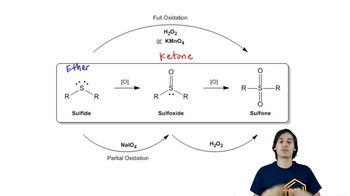
Dimethyl sulfide (DMS) is commonly used as a reducing agent in organic chemistry, particularly in the reduction of ozonides formed during ozonolysis. The treatment of ozonides with DMS converts them into more stable carbonyl compounds, allowing for the identification of the original alkene. Recognizing the role of DMS is essential for understanding the final products of ozonolysis.
Recommended video:
Guided course
03:51
Reagents used to oxidize Sulfides.

Alkene Structure and Reactivity

The structure of alkenes, characterized by a carbon-carbon double bond, significantly influences their reactivity in reactions like ozonolysis. Factors such as substitution patterns (e.g., whether the alkene is terminal or internal) affect the products formed during ozonolysis. A solid grasp of alkene structures is necessary to deduce the original alkene from the products generated in the reaction.
Recommended video:
1:59
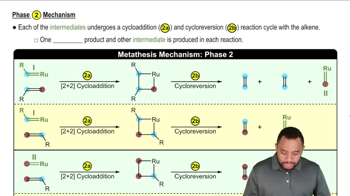
Alkene Metathesis Concept 5