Skip to main content
Personal Health
My Course
Learn
Exam Prep
AI Tutor
Study Guides
Flashcards
Try the app
My Course
Learn
Exam Prep
AI Tutor
Study Guides
Flashcards
Try the app
Back
Treatment and Recovery definitions
You can tap to flip the card.
Addiction
You can tap to flip the card.
👆
Addiction
A chronic condition marked by compulsive substance use despite harmful consequences, often requiring structured intervention for improvement.
Track progress
Control buttons has been changed to "navigation" mode.
1/15
Related flashcards
Related practice
Recommended videos
Treatment and Recovery quiz
Treatment and Recovery
20 Terms
Treatment and Recovery
Ch.9 Drugs
5 problems
Topic
Laura
Drug Interactions
Ch.9 Drugs
2 problems
Topic
Laura
Ch.9 Drugs
5 topics
13 problems
Chapter
Laura
Guided course
1:05
Treatment for Addiction Example 2
39
views
Guided course
3:09
Intervention Concept 2
37
views
Guided course
3:53
Treatment for Addiction Concept 3
44
views
Terms in this set (15)
Hide definitions
Addiction
A chronic condition marked by compulsive substance use despite harmful consequences, often requiring structured intervention for improvement.
Abstinence
Complete cessation of substance use, serving as a critical initial step in breaking the cycle of dependency.
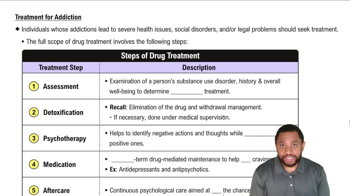
Detoxification
Physical elimination of a substance from the body, often accompanied by management of withdrawal symptoms under supervision.
Withdrawal
Physical and psychological symptoms experienced when discontinuing an addictive substance, ranging from irritability to nausea.
Relapse
Return to substance use after a period of abstinence, potentially occurring at any stage of the recovery process.
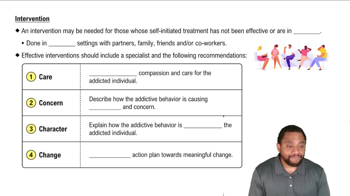
Intervention
A structured group effort, often involving professionals and loved ones, designed to motivate an individual toward treatment.
Assessment
Comprehensive evaluation of substance use history, mental and physical health, guiding the selection of appropriate treatment.
Psychotherapy
Therapeutic approach focused on identifying negative patterns and reinforcing positive behaviors to support recovery.
Medication
Pharmacological support, such as nicotine replacement or disulfiram, used to reduce cravings and manage withdrawal effects.
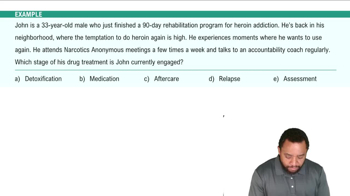
Aftercare
Ongoing psychological support, including group meetings and coaching, aimed at maintaining recovery and preventing relapse.
Nicotine Replacement Therapy
Treatment using patches, gums, or lozenges to reduce cravings and withdrawal symptoms associated with smoking cessation.
Disulfiram
Medication that induces unpleasant reactions when combined with alcohol, discouraging consumption and supporting abstinence.
Buspirone
Pharmaceutical agent used to alleviate cravings and irritability in individuals recovering from marijuana addiction.
Triggers
People, places, or situations that increase the risk of returning to substance use, often targeted for avoidance in recovery.
Rehabilitation
Structured program providing medical, psychological, and social support to individuals seeking recovery from addiction.
 BackBack
 1:05
1:05