Skip to main content
Personal Health
My Course
Learn
Exam Prep
AI Tutor
Study Guides
Flashcards
Try the app
My Course
Learn
Exam Prep
AI Tutor
Study Guides
Flashcards
Try the app
Back
Treatment and Recovery quiz
You can tap to flip the card.
What is addiction characterized by?
You can tap to flip the card.
👆
What is addiction characterized by?
Addiction is characterized by compulsive behaviors and substance abuse, often despite negative consequences.
Track progress
Control buttons has been changed to "navigation" mode.
1/20
Related flashcards
Related practice
Recommended videos
Treatment and Recovery definitions
Treatment and Recovery
15 Terms
Treatment and Recovery
Ch.9 Drugs
5 problems
Topic
Laura
Drug Interactions
Ch.9 Drugs
2 problems
Topic
Laura
Ch.9 Drugs
5 topics
13 problems
Chapter
Laura
Guided course
1:05
Treatment for Addiction Example 2
39
views
Guided course
3:09
Intervention Concept 2
37
views
Guided course
3:53
Treatment for Addiction Concept 3
44
views
Terms in this set (20)
Hide definitions
What is addiction characterized by?
Addiction is characterized by compulsive behaviors and substance abuse, often despite negative consequences.
What is self-initiated treatment in addiction recovery?
Self-initiated treatment is when an individual acknowledges their addiction and takes the initiative to abstain from substance use on their own.
What does abstinence mean in the context of addiction?
Abstinence means the cessation or stopping of the substance being abused.
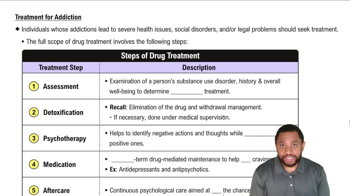
Why is detoxification necessary in addiction treatment?
Detoxification is necessary to physically clear the drug from a person's system and manage withdrawal symptoms.
What are triggers in addiction recovery?
Triggers are people, places, or situations that can prompt a return to substance use and should be avoided to prevent relapse.
What is nicotine replacement therapy (NRT) used for?
NRT is used to decrease cravings and withdrawal symptoms in individuals trying to quit smoking.
How does disulfiram help in alcohol addiction treatment?
Disulfiram causes unpleasant side effects like vomiting and nausea when combined with alcohol, discouraging drinking.
What medication is commonly used to help with marijuana addiction?
Buspirone is a commonly used medication to decrease cravings, irritability, and withdrawal symptoms in marijuana addiction.
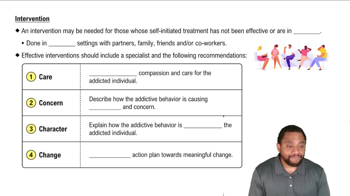
When is intervention necessary in addiction recovery?
Intervention is necessary when self-initiated treatment is ineffective or the person is in denial about their addiction.
Who should be present during an intervention?
An intervention should include familiar people like family and friends, as well as a medical professional.
What are the four C's of an effective intervention?
The four C's are care, concern, character, and change, which guide the approach to helping the addicted individual.
What does the 'care' component of intervention emphasize?
Care emphasizes compassion and support for the addicted individual.
How does 'concern' play a role in intervention?
Concern highlights how the addictive behavior causes worry for the individual and those around them.
What is the purpose of the 'character' aspect in intervention?
Character addresses how addiction affects the individual's physical and psychological well-being.
What does 'change' refer to in the context of intervention?
Change refers to outlining actionable steps for the addicted individual to improve and recover.
What is the first step in a comprehensive drug treatment program?
The first step is assessment, which examines the person's substance use, history, and overall well-being.
Why might detoxification require medical supervision?
Some drugs require gradual withdrawal under medical supervision to safely manage withdrawal symptoms.
What is the role of psychotherapy in addiction treatment?
Psychotherapy helps identify negative thoughts and behaviors and reinforces positive ones.
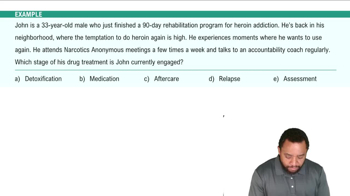
What is aftercare in addiction recovery?
Aftercare is ongoing psychological support aimed at reducing the risk of relapse after initial treatment.
What does relapse mean in addiction recovery?
Relapse is a return to drug use and can occur at any stage of the treatment process.
 BackBack
 1:05
1:05