 Back
BackHealth Promotion and Wellbeing: Foundations and Principles
Study Guide - Smart Notes
 Tailored notes based on your materials, expanded with key definitions, examples, and context.
Health Promotion: Introduction and Determinants
Overview of Health Promotion
Health promotion is a central concept in personal health, focusing on enabling individuals and communities to increase control over and improve their health. It integrates social, economic, and environmental determinants and emphasizes both personal responsibility and social action.
Definition: Health promotion is the process of enabling people to increase control over, and to improve, their health (WHO, Ottawa Charter, 1986).
Key Principles: Empowerment, participation, addressing determinants of health, and combining diverse approaches.
Milestones: Ottawa Charter (1986), Epp Report (1986), Lalonde Report (1974), Alma Ata Declaration (1978).
Determinants of Health
Determinants of health are the broad range of factors that influence health status. Health Canada identifies several determinants, collectively known as Social Determinants of Health (SDOH).
SDOH include: Income & social status, social support systems, education, employment/working conditions, social environments, physical environment, personal health practices & coping skills, healthy child development, biology & genetic endowment, health services, gender, culture.
Example: Access to quality housing and decent work are crucial for health and wellbeing.
Wellbeing Approach
Concept and Measurement
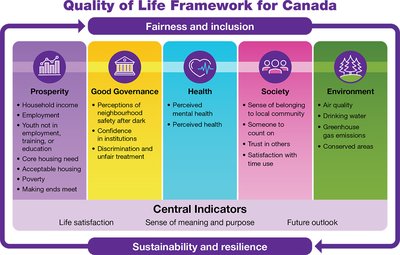
The wellbeing approach expands health promotion by integrating Western and Indigenous frameworks, focusing on strengths, and considering both current and future generations.
Definition: Wellbeing is a state experienced by individuals and societies, determined by social, economic, and environmental conditions (WHO, 2025).
Measurement: Includes perceived mental and physical health, sense of belonging, trust in institutions, and environmental quality.
Principles and Levels of Health Promotion
Principles of Health Promotion
Health promotion is directed at the determinants of health, involves the population as a whole, and empowers communities through public participation.
Empowerment: Providing information, developing skills and self-esteem, fostering internal control over health.
Community Participation: Engaging communities in decision-making and health initiatives.

Levels of Prevention
Prevention in health promotion is categorized into three levels:
Primary Prevention: Measures to prevent illness before it occurs (e.g., seat belts, smoke detectors, healthy lifestyle).
Secondary Prevention: Early identification and treatment of health problems (e.g., breast screening, developmental screening).
Tertiary Prevention: Reducing severity and minimizing disability from established health problems (e.g., rehabilitation).




Changing Views of Healthcare
Medical, Behavioural, and Socioenvironmental Approaches
The healthcare system has evolved from a medical model to more holistic approaches.
Medical Approach: Focuses on quality of medicine and acute care; limited impact on population health.
Behavioural Approach: Emphasizes individual responsibility and lifestyle choices (Lalonde Report).
Socioenvironmental Approach: Considers social determinants and broader environmental factors.
Key Reports and Conferences
Lalonde Report (1974): Introduced human biology, environment, lifestyle, and health care organization as key health areas.
Alma Ata Declaration (1978): Advocated for global action to protect and promote health.
Epp Report (1986): Identified challenges in health care and promoted health for all.
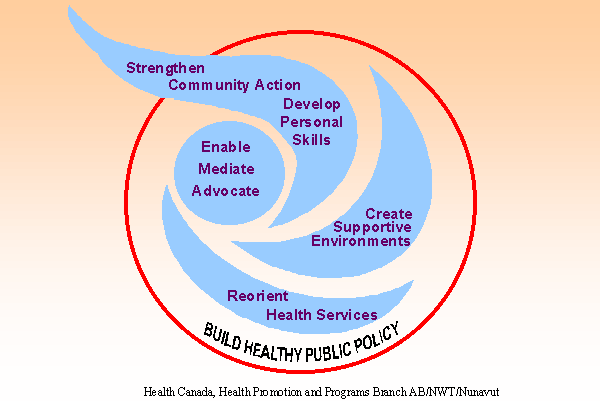
Ottawa Charter (1986): Outlined five strategies for health promotion: building healthy public policy, creating supportive environments, strengthening community action, developing personal skills, and reorienting health services.

Healthy Public Policy and Health Equity
Healthy Public Policy
Healthy Public Policy (HPP) refers to government rules, laws, and decisions across all sectors that create supportive environments and improve living conditions.
Purpose: Makes it easier for everyone to lead healthier lives by addressing economic, social, and environmental factors.
Example: Policies that improve air quality, access to healthcare, and social support systems.

Health Equity
Health equity is a core goal of health promotion, ensuring all individuals have fair opportunities to achieve their full health potential.
Strategies: Addressing disparities, supporting disadvantaged groups, and promoting inclusive policies.
Summary Table: Health Promotion Milestones
Year | Milestone | Key Concept |
|---|---|---|
1974 | Lalonde Report | Holistic health determinants |
1978 | Alma Ata Declaration | Global health action |
1986 | Ottawa Charter | Health promotion strategies |
1986 | Epp Report | Health for all framework |
1991-2021 | Global Conferences | Health equity, sustainable development |

Conclusion
Health promotion is a dynamic and evolving field, central to personal health education. It emphasizes empowerment, prevention, and the importance of social determinants, aiming for health equity and wellbeing for all.
Key Takeaway: Health is shaped by a complex interplay of individual, social, and environmental factors, and effective health promotion requires coordinated action across all levels of society.
