 Back
BackIndigenous Health - Class 19
Study Guide - Smart Notes
 Tailored notes based on your materials, expanded with key definitions, examples, and context.
Indigenous Health and Systemic Colonialism
Introduction
This section explores the historical and ongoing impacts of colonialism on the health and well-being of Indigenous Peoples in Canada. It highlights the legacy of trauma, the policies that enforced assimilation, and the importance of decolonization and reconciliation in health care and society.
Impact of Systemic Colonialism and Intergenerational Trauma
Understanding Intergenerational Trauma
Intergenerational trauma refers to the transmission of the effects of trauma across generations, often resulting from historical injustices such as colonization, forced assimilation, and cultural suppression.
Colonial policies outlawed Indigenous healing practices, compounding trauma and preventing recovery.
Family and community structures were disrupted, shifting from kinship-based support to trauma-conditioned behaviors.
Today, Indigenous communities continue to address the consequences of systemic trauma.
Symptoms include low self-esteem, emotional numbing, chronic depression, anxiety, substance abuse, and loss of language and culture.

Example: The concept of considering the impact of decisions on the next seven generations is central to many Indigenous worldviews, emphasizing long-term responsibility and healing.
Colonial Doctrines and Legal Foundations
Doctrine of Discovery (1493)
Originated from Papal Bulls in the 1400s, providing spiritual, political, and legal justification for European colonization.
Used to legitimize the seizure of Indigenous lands, ignoring the presence and rights of Indigenous Peoples.
Based on presumed racial superiority of European Christians, leading to dehumanization and exploitation.
Formed the foundation for policies of dispossession and genocide.

Royal Proclamation (1763)
Issued by King George III, establishing the legal framework for relationships between Indigenous Peoples and the Crown.
Required treaties for land acquisition, later incorporated into Canadian law (Constitution Act, 1982).
Doctrine of Terra Nullius
Latin for "land belonging to no one," used to justify the claim that Indigenous Peoples had no legal rights to their lands before European sovereignty.
Enabled the Crown to allocate land for "civilized" use, marginalizing Indigenous presence and rights.

Assimilation Policies and Legislation
Assimilation Policies (1820–1927)
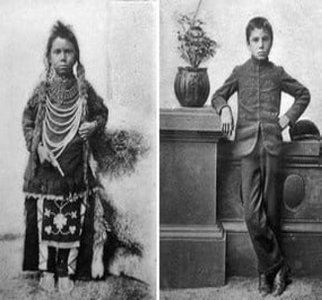
Federal government policies aimed to "civilize" Indigenous Peoples by eradicating traditional lifestyles and enforcing Christianity and European norms.
Key policies included the establishment of Indian Residential Schools (1848), the Management of Indian Lands & Property Act (1860), the Gradual Civilization Act (1867), and the Indian Act (1876).
British North America Act (1867)
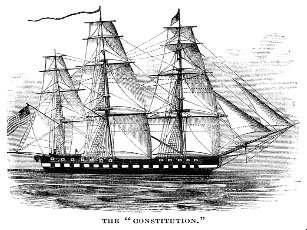
Created Canada as a self-governing federation and placed "Indians and Lands reserved for Indians" under federal control.
Resulted in the loss of Indigenous rights and autonomy over their lands.
Indian Act (1876)
Imposed without consultation, the Indian Act denied women status, introduced residential schools, created reserves, and restricted movement and rights of First Nations people.
Shifted Indigenous Peoples from allies to "wards of the Crown," stripping legal rights and identity.
Outlawed spiritual ceremonies, limited hunting and fishing, and denied basic human rights.
Until 1950, made it illegal for Indigenous Peoples to raise money for land rights advocacy.


Residential Schools and Their Legacy
Residential Schools
Established to assimilate Indigenous children by removing them from their families and communities.
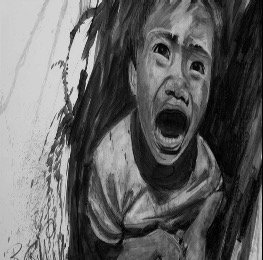
Children were forbidden to speak their languages or practice their cultures, leading to profound loss of identity and intergenerational trauma.
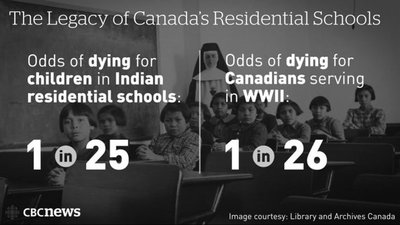
High rates of abuse, neglect, and mortality were common in these institutions.
Symptoms and Impacts of Trauma
Low self-esteem, emotional numbing, chronic depression, anxiety, substance abuse, suicidality, and loss of language and culture are prevalent among survivors and their descendants.
These impacts are recognized as intergenerational trauma, affecting community health and well-being today.
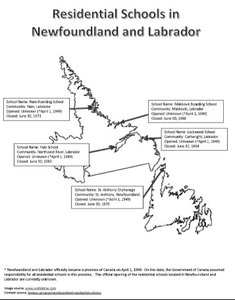
Residential Schools in Newfoundland and Labrador
Five residential schools operated in Newfoundland and Labrador, contributing to the legacy of trauma in these regions.
Child Welfare: 60s Scoop and Millennial Scoop
60s Scoop
From the 1960s to 1980s, thousands of Indigenous children were forcibly removed from their families and placed in non-Indigenous foster or adoptive homes.
Many lost connection to their culture and identity, experiencing violence, racism, and abuse.
Millennial Scoop
Currently, more Indigenous children are in government care than at the height of the residential school era.
Indigenous children represent 48% of children in care, despite being only 7% of the child population in Canada.
Decolonization, Reconciliation, and Self-Care
United Nations Declaration on the Rights of Indigenous Peoples (UNDRIP)
UNDRIP sets international standards for the survival, dignity, and well-being of Indigenous Peoples.
Canada endorsed UNDRIP in May 2016, committing to uphold these rights.
Self-Care and Community Wellness
Self-care practices are essential for healing and resilience, including connecting with culture, family, and traditional activities.
Examples: speaking with Elders, engaging in ceremony, spending time in nature, and practicing positive self-talk.
ReconciliACTIONS in Nursing Practice
Addressing Anti-Indigenous Racism
Nurses can support reconciliation by advocating for culturally safe care, challenging systemic racism, and supporting the Truth and Reconciliation Commission (TRC) Calls to Action.
Personal and professional actions include ongoing education, reflection, and allyship with Indigenous communities.
Resources
CNA Policy, Advocacy, and Resources
Witness Blanket Project
Free Course to Counter Anti-Indigenous Racism in Health Care
