 Back
BackNutrition Basics: Essential Concepts for Personal Health
Study Guide - Smart Notes
 Tailored notes based on your materials, expanded with key definitions, examples, and context.
Nutrition Basics
Introduction to Nutrition
Nutrition is the study of how food and its components affect health, growth, and disease prevention. Understanding the basics of nutrition is essential for making informed dietary choices that support overall well-being and reduce the risk of chronic diseases.
The Six Classes of Nutrients
Overview of Nutrients
Macronutrients: Required in large amounts; provide energy and structural materials. Includes carbohydrates, proteins, and fats.
Micronutrients: Needed in smaller amounts; essential for metabolic processes. Includes vitamins and minerals.
Water: Vital for all bodily functions and makes up a significant portion of the human body.
Each nutrient class plays a unique role in maintaining health and supporting bodily functions.
Macronutrients
Carbohydrates
Carbohydrates are the body's primary source of energy. They are classified as simple or complex based on their chemical structure.
Simple carbohydrates: Include glucose, fructose, galactose, maltose, sucrose, and lactose. Quickly absorbed and provide rapid energy.
Complex carbohydrates: Include starches and dietary fiber. Digested more slowly, providing sustained energy.
Glycogen: The storage form of glucose in the liver and muscles.
Glycemic Index (GI): Measures how quickly a carbohydrate-containing food raises blood glucose levels. High-GI foods can increase appetite and risk of chronic disease.
Recommended intake: 45-65% of total daily calories should come from carbohydrates (225-325g for a 2000 kcal diet).
Added sugars: Excess intake increases risk of heart disease, stroke, diabetes, high cholesterol, and dental cavities.
Dietary Fiber
Fiber is a type of carbohydrate that is not digested by the body. It is essential for digestive health and disease prevention.
Soluble fiber: Slows stomach emptying and reduces cholesterol absorption (e.g., oats, beans).
Insoluble fiber: Increases fecal bulk and prevents constipation (e.g., wheat bran, psyllium seed).
Health benefits: Reduces risk of type 2 diabetes, heart disease, and possibly colon cancer.
Recommended intake: 38g/day for men, 25g/day for women (Health Canada). Most people consume about half this amount.
Proteins
Proteins are essential for building and repairing tissues. They are made up of amino acids, some of which are essential and must be obtained from the diet.
Amino acids: 20 types; 9 are essential (must be obtained from food), 11 are non-essential (can be synthesized by the body).
Complete proteins: Contain all essential amino acids (e.g., meat, fish, eggs, milk).
Incomplete proteins: Lacking one or more essential amino acids (e.g., most plant sources). Combining different plant foods can provide all essential amino acids.
Recommended intake: 0.8g/kg body weight per day (about 50g for a 63kg person). Excess protein is converted to fat.
Fats (Lipids)
Fats are concentrated sources of energy and are necessary for absorbing fat-soluble vitamins and protecting organs.
Triglycerides: Main form of fat in food and the body; composed of glycerol and three fatty acids.
Saturated fats: Solid at room temperature; mainly from animal sources. Raise LDL ("bad") cholesterol and increase risk of heart disease.
Unsaturated fats: Liquid at room temperature; include monounsaturated and polyunsaturated fats. Improve HDL ("good") cholesterol and reduce inflammation.
Essential fatty acids: Omega-3 and Omega-6; must be obtained from the diet. Omega-3s are found in fish and some plant oils; Omega-6s in corn and soybean oil.
Hydrogenation: Process that turns unsaturated fats into saturated fats, increasing shelf life but producing unhealthy trans fats.
Recommended intake: 20-35% of daily calories from fat; saturated fat should be less than 7% of total calories; cholesterol less than 300mg/day.
Micronutrients
Vitamins
Vitamins are organic compounds required in small amounts for various metabolic processes. They do not provide energy but are essential for health.
Fat-soluble vitamins: A, D, E, K; stored in the body and can accumulate to toxic levels.
Water-soluble vitamins: B-complex, C; not stored in the body and must be consumed regularly.
Functions: Facilitate chemical reactions, act as antioxidants, support immune function.
Sources: Fruits, vegetables, grains, fortified foods. Vitamin D is also synthesized in the skin via sunlight; Vitamin K by intestinal bacteria.
Deficiencies: More common in developing countries, but some Canadians lack vitamins A, C, and E.
Preparation: Some vitamins (B, C) can be lost during food preparation.
Minerals
Minerals are inorganic elements essential for body function, including bone health, fluid balance, and nerve signaling.
Major minerals: Needed in amounts >100mg/day (e.g., calcium, phosphorus, magnesium, potassium, sodium, chloride, sulfur).
Trace minerals: Needed in smaller amounts (e.g., iron, zinc, selenium, copper).
Common deficiencies: Calcium, magnesium, potassium, iron, folate are often lacking in Canadian diets.
Water
Importance of Water
Water is vital for life, serving as the medium for chemical reactions, transporting substances, and regulating temperature.
Sources: Found in most foods and beverages; 80-90% of intake comes from fluids.
Losses: Occur through sweat, urine, feces, and breathing.
Recommended intake: Men: 3.7L/day; Women: 2.7L/day (Health Canada). More is needed during vigorous exercise or in hot climates.
Other Substances in Food
Antioxidants and Phytochemicals
Antioxidants protect the body from damage by free radicals, while phytochemicals are plant compounds that may prevent chronic disease.
Antioxidants: Vitamins A, C, E, and selenium. Found in colorful fruits and vegetables.
Phytochemicals: Found in dark green, orange, red, and yellow vegetables. Examples include carotenoids (e.g., in carrots) and compounds in cruciferous vegetables (e.g., broccoli) that may reduce cancer risk.
Guidelines for Healthy Eating
Principles of Healthy Eating
Healthy eating involves consuming a variety of foods to meet nutrient needs without excess calories or unhealthy substances.
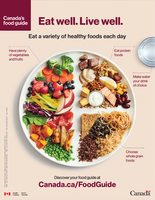
Eat plenty of vegetables, fruits, whole grains, and protein foods (prefer plant-based proteins).
Limit highly processed foods and added sugars.
Make water your drink of choice.
Use food labels to make informed choices.
Be mindful of eating habits and food marketing influences.
Canada’s Food Guide emphasizes variety, balance, moderation, and adequacy.
Dietary Reference Intakes (DRIs) and Fat Guidelines
Total fat: 20-35% of daily calories
Saturated fat: <7% of daily calories
Cholesterol: <300mg/day
Two servings of fish per week (for Omega-3 fatty acids)
Sodium: Recommended intake is 1500mg/day, but most people consume more
Vegetarian Diets
Types and Nutritional Considerations
Vegetarian diets can provide all essential nutrients if well planned. They are typically higher in potassium, fiber, and antioxidants.
Vegans: Only plant foods
Lacto-vegetarians: Plant foods and dairy products
Lacto-ovo-vegetarians: Plant foods, dairy, and eggs
Pescovegetarians: Plant foods, dairy, eggs, and fish/seafood
Semivegetarians: Plant foods, dairy, eggs, fish/seafood, and poultry
Key nutrients to monitor: Vitamin B12, Vitamin D, calcium, iron, zinc
Children, teens, pregnant and lactating women should seek professional guidance
Reading Food Labels
Understanding Nutrition Information
Food labels provide standardized information about serving size, calories, and nutrient content. They help consumers make informed choices.
Required on processed foods; not required on fresh meat, poultry, fish, vegetables, or spices
Key information: Serving size, fat, trans fat, cholesterol, sodium, dietary fiber, sugars, protein
Food Safety and Food-Borne Illness
Protecting Against Food-Borne Illness
Food-borne illnesses are primarily caused by microorganisms, not pesticides. Proper food handling and cooking are essential for prevention.
Most pathogens are destroyed by cooking
Poor food handling is the main cause of illness
Vulnerable groups: Children, pregnant women, older adults, immunocompromised individuals
Symptoms: Dehydration, fever; severe cases require medical attention
Organic Foods and Food Additives
Organic Foods
Certified organic foods meet strict criteria for production, processing, and labeling
Lower pesticide residues, no antibiotics or growth hormones, no genetic engineering or ionizing radiation
Better for the farming environment
Food Additives
Used to improve or maintain nutritional quality, freshness, and taste
Common additives: Sugar, salt, corn syrup, citric acid, baking soda, vegetable colors, mustard, pepper
Potential concerns: Nitrates, sulphites, monosodium glutamate (MSG)
Genetically Modified (GM) Foods
Benefits and Concerns
GM foods have altered DNA for improved yield, disease resistance, nutrition, and lower pesticide use
Concerns: Permanent gene pool changes, increased toxins, pesticide-resistant insects
No evidence of harm, but ongoing regulation is recommended
Certified organic foods are guaranteed GM-free
Food Allergies and Intolerances
Food Allergies
Food allergies are immune reactions to specific proteins in foods. Symptoms can be severe and rapid, including anaphylaxis.
Common allergens: Peanuts, tree nuts, sesame seeds, milk, eggs, fish, shellfish, soy, wheat, sulphites, mustard
Anaphylaxis requires immediate treatment with injectable epinephrine (epi-pen)
Food Intolerances
Food intolerances involve the metabolic system, not the immune system. Symptoms are usually less severe and not life-threatening.
Common examples: Lactose intolerance, gluten intolerance, MSG, aspartame
Symptoms: Abdominal cramping, diarrhea
Diagnosis: Trial-and-error, food diary, consultation with a dietitian or physician
