Back
BackPopulation Health: Concepts, Determinants, and Nursing Roles
Study Guide - Smart Notes
 Tailored notes based on your materials, expanded with key definitions, examples, and context.
Population Health: Introduction and Key Concepts
Definition and Scope
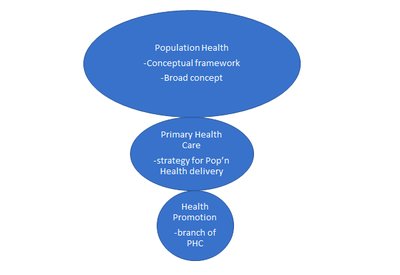
Population health is a broad conceptual framework that focuses on the health outcomes of groups of people and the environments that influence these outcomes. It considers the physical, social, and economic environments, as well as individual health practices, genetics, biology, and access to health services.
Population Health: The health of a population measured by health status indicators and influenced by multiple determinants.
Determinants of Health: Factors such as environment, genetics, early childhood development, and health services that impact health outcomes.
Health Status Indicators: Metrics used to assess the health of populations, including morbidity, mortality, and quality of life.

Population Health Approach vs. Traditional Medical Model
The population health approach differs from traditional medical thinking by addressing the entire range of factors that determine health, aiming to affect the whole population, and seeking to reduce health inequities.
Population Health Approach: Focuses on health promotion, disease prevention, and healthy public policy for entire populations or subgroups.
Biomedical Approach: Focuses on individual risks, clinical factors, diagnosis, and cure, dealing with individuals one at a time.
Determinants of Health and Causal Chains
Understanding Root Causes: Jason's Story
The causal chain illustrates how social and environmental factors contribute to individual health outcomes. For example, Jason's hospitalization due to an infection is linked to broader determinants such as neighborhood conditions, parental employment, and education.
Social Determinants: Factors like income, education, housing, and employment that shape health outcomes.
Causal Chain: A sequence of events and conditions leading to a health outcome, highlighting the interconnectedness of determinants.



Key Elements of Population Health
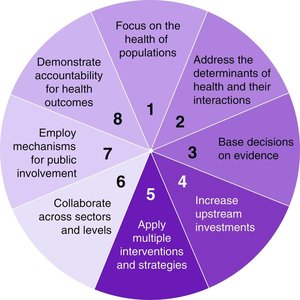
The population health approach is organized around eight key elements, including measuring health status, analyzing determinants, evidence-based decision making, upstream investments, multiple strategies, public engagement, intersectoral collaboration, and accountability.
Measure Health Status: Use indicators to assess population health.
Analyze Determinants: Examine factors influencing health.
Evidence-Based Decisions: Use research and data to guide actions.
Upstream Investments: Focus on prevention and early intervention.
Multiple Strategies: Apply diverse interventions.
Public Engagement: Involve communities in health decisions.
Intersectoral Collaboration: Work across sectors for health improvement.
Accountability: Demonstrate responsibility for health outcomes.
Evolution of Population Health in Canada
Historical Milestones
Population health in Canada has evolved through key reports and conferences, including the Lalonde Report (1974), Alma Ata Conference (1978), Ottawa Charter for Health Promotion (1986), and subsequent research and policy initiatives.
Lalonde Report (1974): Introduced the concept of health determinants beyond healthcare.
Ottawa Charter (1986): Emphasized health promotion and community action.
Canadian Institute for Advanced Research: Advanced population health research.
Social Gradient and Inequality
Wilkinson Hypothesis and SES Gradient
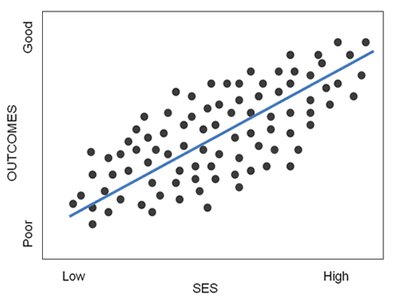
The social gradient in health demonstrates that higher income levels result in better health outcomes, while lower income levels are associated with poorer health. The Wilkinson Hypothesis posits that inequality, rather than absolute wealth, is crucial for health.
Social Gradient: Variation in health outcomes by income and social status.
Wilkinson Hypothesis: Income inequality leads to social disorganization and lower health status.
SES (Socio-Economic Status): A measure of an individual's or group's social and economic position.
Expanded Determinants of Health
Alternative Approaches and Key Determinants
The determinants of health have been expanded to include 17 key factors, such as income, education, employment, early childhood development, food insecurity, housing, social exclusion, health services, geography, disability, Indigenous ancestry, gender, immigration, race, and globalization.
Expanded Determinants: Reflect the complexity and diversity of factors affecting health.
Policy Relevance: Determinants are timely, relevant, and understandable to Canadians.

Nursing Roles in Health Promotion
Roles and Responsibilities
Nurses play a central role in health promotion, acting as advocates, care managers, consultants, direct caregivers, educators, and researchers. Their work is evident in community-based care and health promotion activities.
Advocate: Helps clients access services and promotes social justice.
Care Manager: Ensures appropriate and efficient use of health services.
Consultant: Provides expertise in health, illness, and community dynamics.
Direct Caregiver: Works independently or collaboratively in various settings.
Educator: Facilitates health education and healthy changes in populations.
Researcher: Conducts research to advance health promotion.

Summary Table: Population Health vs. Public Health vs. Biomedical Approach
Approach | Focus | Strategy | Population/Individual |
|---|---|---|---|
Population Health | Health of populations, determinants of health | Health promotion, disease prevention, policy | Entire population or subgroups |
Public Health | Community health, disease prevention | Implementation of population health recommendations | Communities |
Biomedical | Individual health, clinical factors | Diagnosis, cure, risk management | Individuals |
References and Further Reading
Social Determinants of Health: The Canadian Facts (Raphael et al.)
Toward a Healthy Future: The Health of Canadians
Public Health Agency of Canada: Population Health Approach Framework