 Back
BackSensation and Perception: Foundations of Human Experience
Study Guide - Smart Notes
 Tailored notes based on your materials, expanded with key definitions, examples, and context.
Chapter 5: Sensation and Perception
Introduction to Sensation and Perception
Sensation and perception are fundamental processes that allow us to experience and interpret the world around us. Sensation refers to the process by which our sensory organs receive information from the environment, while perception is the interpretation and conscious experience of those sensations. Understanding these processes is essential for appreciating how we interact with our surroundings and how our brains construct reality from sensory input.
Distinction Between Sensation and Perception
Sensation: The detection of physical energy (stimuli) from the environment by sensory receptors (e.g., eyes, ears, skin).
Perception: The process by which the brain organizes and interprets sensory information, giving it meaning.
Example: When you touch a lollipop, the sensation is the feeling of its texture and temperature; the perception is recognizing it as a sweet treat that reminds you of childhood.
Class Exercise: Exploring the Five Senses
Students are encouraged to use their hands, ears, eyes, nose, and tongue to experience an object (such as a lollipop) and record both their sensations and perceptions. This exercise highlights the subjective nature of perception and the role of memory and emotion in shaping our experiences.
The Five Senses and Their Systems
Visual System
The visual system allows us to detect and interpret light, enabling us to see color, depth, and movement.
Color Vision: The ability to distinguish different wavelengths of light as colors. Color blindness affects about 1 in 50 people, predominantly males.
Depth Perception: The ability to perceive spatial relationships in three dimensions, allowing us to judge distance and position.
Auditory System
The auditory system processes sound waves, enabling us to detect pitch, volume, and the location of sounds.
Pitch Perception: The ability to distinguish different frequencies of sound, crucial for understanding music and speech.
Sound Localization: The process of determining where a sound is coming from in the environment.
Hearing Loss: Can be congenital or acquired. Types include conductive (blockage or damage to the ear canal or middle ear) and sensorineural (damage to the inner ear or auditory nerve).
Deaf Culture: Includes the use of American Sign Language (ASL) and a rich community identity.
Tasting System (Gustation)
The sense of taste helps us identify nutrients and avoid harmful substances.
Basic Tastes: Sweet (energy), salty (sodium), sour (acid), bitter (potential toxins), umami (proteins), and fatty content.
Taste Buds: Have a life cycle of 10 days to 2 weeks and regenerate regularly.
Smell System (Olfaction)
The olfactory system detects airborne chemicals, playing a key role in memory and emotion.
Odor Recognition: The brain can recall long-forgotten smells and their associated memories.
Pheromones: Chemical signals used for communication, especially regarding reproductive status in many species.
Touch System (Somatosensation)
The sense of touch provides information about pressure, temperature, and pain.
Pain: A protective signal indicating potential harm. Sensitivity varies by genetics, physiology, attention, and culture.
Gate-Control Theory: Suggests that non-painful input (e.g., needles in acupuncture) can block pain signals to the brain.
Vestibular and Kinesthetic Senses
Proprioception: Awareness of body position and movement.
Vestibular Sense: Maintains balance and posture, with sensory organs located in the inner ear (utricle, saccule, semicircular canals).
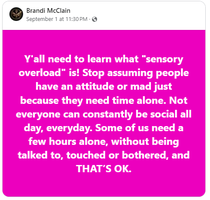
Sensory Overload
Sensory overload occurs when one or more senses are overwhelmed by excessive stimuli, leading to discomfort or distress. This can happen in environments with loud noises, bright lights, strong smells, or uncomfortable textures.
Triggers: Loud sounds, crowded visuals, strong odors, uncomfortable touch, and intense tastes.
Individual Differences: What triggers overload varies from person to person.
Example: A crowded restaurant with loud music and strong scents can cause sensory overload for some individuals.
Importance of Sensory Functions
Accurately perceive and respond to the environment.
Maintain safety by detecting dangers (e.g., hearing a siren, feeling pain).
Support learning and memory through sensory experiences.
Navigate and communicate effectively.
Experience emotions and pleasure, enhancing quality of life.
Mindfulness and Grounding Techniques
Mindfulness and grounding techniques use sensory experiences to help individuals manage stress and anxiety. For example, the 5-Sensing Grounding Toolkit encourages focusing on soothing sensory memories to remain present and calm during stressful situations, such as academic testing.
Example: A student with test anxiety uses grounding by recalling the feel of a soft blanket, the sound of rain, or the smell of fresh bread to stay calm during exams.
Gestalt Theory of Perception
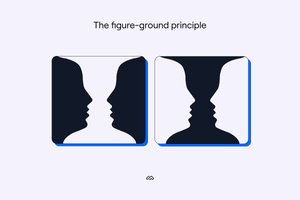
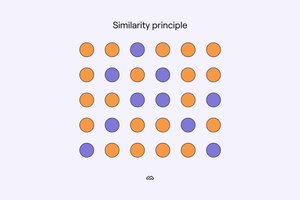
Gestalt theory explains how we perceive organized wholes rather than isolated parts. The brain uses specific principles to group sensory information, making sense of complex stimuli.
Principle of Figure-Ground: The brain distinguishes an object (figure) from its background (ground).
Principle of Similarity: Elements that are similar are grouped together.
Principle of Closure: The mind fills in gaps to perceive complete shapes.
Applications: These principles are foundational in psychology, design, and visual communication.

Summary Table: Major Sensory Systems and Their Functions
Sensory System | Main Function | Key Structures | Example |
|---|---|---|---|
Visual | Detects light, color, and movement | Eyes, retina, optic nerve | Reading a book |
Auditory | Processes sound waves | Ears, cochlea, auditory nerve | Listening to music |
Taste (Gustation) | Detects chemicals in food | Tongue, taste buds | Tasting a lemon |
Smell (Olfaction) | Detects airborne chemicals | Nose, olfactory bulb | Smelling flowers |
Touch (Somatosensation) | Senses pressure, temperature, pain | Skin, nerve endings | Feeling a hot surface |
Vestibular | Maintains balance and posture | Inner ear (semicircular canals) | Standing on one foot |
Proprioception | Senses body position and movement | Muscles, tendons, joints | Touching your nose with eyes closed |
