 Back
BackTheories of Health and Health Behaviour Change: Foundations for Personal Health
Study Guide - Smart Notes
 Tailored notes based on your materials, expanded with key definitions, examples, and context.
Theories of Health and Illness
Introduction to Health Theories
Theories of health and illness provide frameworks for understanding how individuals and societies perceive, experience, and respond to health and disease. These models influence health promotion, policy, and clinical practice.
Illness behaviour refers to how symptoms are perceived and acted upon, which varies across biomedical, biopsychosocial, and social humanistic perspectives.
Health, illness, and disease are distinct concepts; having a disease does not always mean feeling ill, and vice versa.
Theories of Health and Illness in Anthropology
Personalistic Theories: Illness is attributed to supernatural or moral causes; recovery often involves ritual and symbolism.
Naturalistic Theories: Health is seen as harmony between person and environment (e.g., humoral system, Ayurveda).
Biomedical Model
The biomedical model is the dominant approach in Western medicine, viewing health as the absence of disease and the body as a machine.
Advantages: Effective for acute medical crises, infectious diseases, and surgical interventions.
Limitations: Narrow focus, limited attention to chronic illness, aging, and social determinants of health.
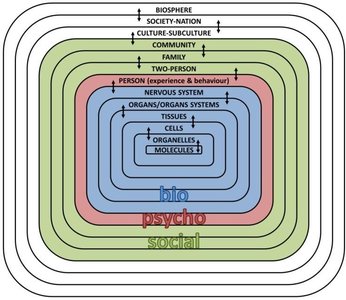
Biopsychosocial Model
This model integrates biological, psychological, and social factors in understanding health and illness.
Advantages: Improves patient-provider relationships, considers multiple determinants of health, and supports multidisciplinary care.
Limitations: Sometimes too broad, lacks methodological guidance, and may generalize individual experiences.
Social Ecological Model
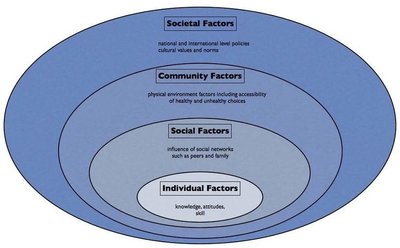
The social ecological model emphasizes the interaction between individuals and their environments (physical, social, political) at multiple levels.
Levels include individual, social, community, and societal factors.
Useful for identifying factors contributing to health and designing prevention and promotion strategies.
Social Humanistic Model
This approach values the whole human experience, dignity, autonomy, and moral reasoning in health promotion. It emphasizes subjective and objective dimensions of health and illness.
Advantages: Holistic, ethical, and promotes dignity and autonomy.
Limitations: Less effective for severe diseases, less research, and may reject biomedical evidence.
Comparison of Biomedical and Social Humanistic Definitions
Biomedical Definitions | Social Humanistic Definitions |
|---|---|
Health as absence of disease | Health as goal-directed action in a social context |
Disease as measurable deficiency | Ill health as connected on a personal level |
Illness as a state referring to disease | Subjective experience of being ill |
Social Theories of Health Inequality and Public Health
Critical Social Theories
These theories address social hierarchy, power imbalances, and structural factors that create health inequalities. They inform interventions targeting social determinants of health, such as the Fundamental Cause Theory and Structural Violence.
Theories of Health Behaviour Change
Importance of Behaviour Change Theories
Understanding and applying behaviour change theories is essential for effective health promotion and disease prevention. Human behaviours such as tobacco use, diet, and physical activity are leading causes of morbidity and mortality.
Theories help identify factors influencing behaviour, such as beliefs, social norms, and perceived control.
Interventions grounded in theory are more likely to be effective.

Health Belief Model (HBM)
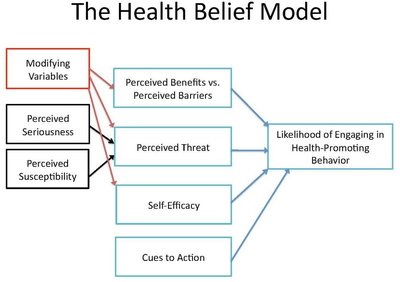
The HBM explains health behaviours by focusing on individual beliefs about health threats and the effectiveness of health behaviours.
Key constructs: Perceived susceptibility, perceived severity, perceived benefits, perceived barriers, cues to action, and self-efficacy.
Behaviour change is more likely if individuals believe they are at risk and that action will reduce risk.
Limitations: Does not account for habitual behaviours, social acceptability, or environmental/economic barriers.
Theory of Planned Behaviour (TPB)
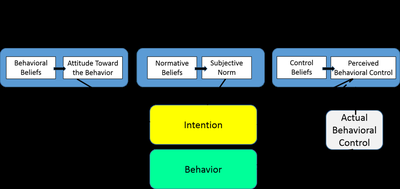
The TPB posits that intention is the best predictor of behaviour, influenced by attitudes, subjective norms, and perceived behavioural control.
Key constructs: Attitude toward behaviour, subjective norm, perceived behavioural control, intention, and behaviour.
Strong support for predicting intention to change health behaviours.
Limitations: Assumes rational decision-making, does not address actual control or time frame between intention and action.
Transtheoretical Model (Stages of Change Model)
This model describes behaviour change as a process occurring in stages: precontemplation, contemplation, preparation, action, maintenance, and termination.
Individuals can enter, exit, or re-enter at any stage.
Emphasizes readiness to change and the use of cognitive and behavioural processes.
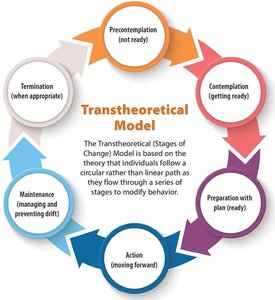
Limitations: Overlooks social context, stages may be arbitrary, and lacks guidance on time needed for each stage.
Social Norms Theory
This theory focuses on the influence of perceived and actual social norms on behaviour, particularly among college students. It is widely used for interventions targeting alcohol, tobacco, and other health-related behaviours.
Behaviour is influenced by misperceptions of peer norms.
Interventions aim to correct these misperceptions to change behaviour.
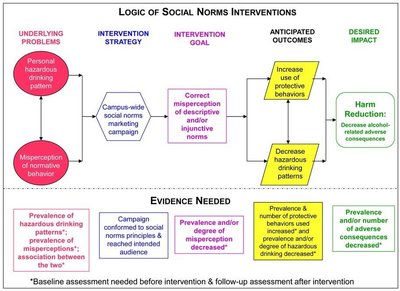
Limitations: Effectiveness depends on accurate messaging and reliable sources; participants may question the intervention.
Positive Affect and Health Behaviour Change
Role of Positive Affect
Positive affect refers to the experience of pleasurable emotions, which is associated with better health outcomes through biological, social, and behavioural pathways.
Positive affect can buffer stress and promote engagement in health behaviours.
Enjoyment of health behaviours increases the likelihood of sustained change.

Upward Spiral Theory of Lifestyle Change
This theory suggests that positive affect during health behaviours creates a reinforcing cycle, increasing engagement and building resources for further positive change.
Focuses on increasing positive health behaviours rather than reducing negative ones.
Emphasizes the importance of enjoyment and nonconscious motives.
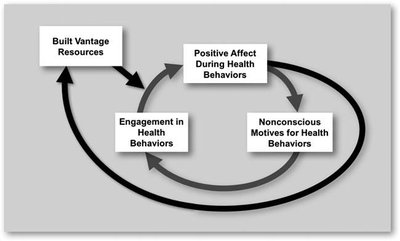
Limitations: More research is needed, especially regarding social determinants of health.
Key Considerations for Behaviour Change Interventions
Identify specific behaviours and target audiences.
Understand benefits and barriers for the audience.
Use multiple intervention types and participatory decision-making.
Set realistic expectations and consider timing, power, and control beliefs.
Additional info: Effective health promotion requires integrating multiple theories and adapting interventions to the context and population.
