 Back
BackAtmospheric Physics and the Water Cycle: Structure, Dynamics, and Human Impact
Study Guide - Smart Notes
 Tailored notes based on your materials, expanded with key definitions, examples, and context.
Atmospheric and Water Cycle Physics
Introduction to Planetary Atmospheres
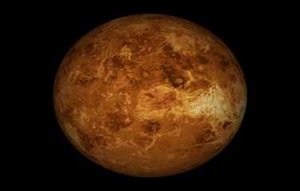
The study of planetary atmospheres is fundamental to understanding the physical conditions that support life and drive weather and climate. Earth's atmosphere is unique among the terrestrial planets, allowing water to exist in all three states: solid, liquid, and gas. - Key Point 1: Water is essential for life, covering 70% of Earth's surface and comprising 70% of the human body. - Key Point 2: Water exists in three states on Earth, but only as solid and vapor on Mars, and only as vapor on Venus. 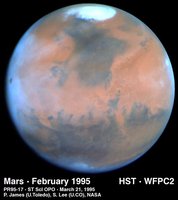
Atmospheric Structure and Density
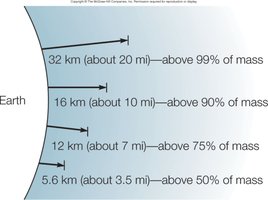
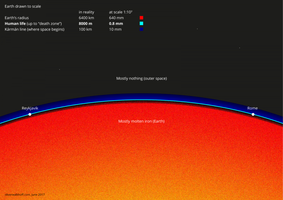
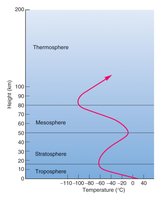
Earth's atmosphere is a thin shell of gases surrounding the solid planet. Atmospheric density decreases with altitude, meaning most of the mass is concentrated near the surface. - Key Point 1: 50% of atmospheric mass is within 5.6 km of the surface; 99% is within 32 km. - Key Point 2: The composition and density of Earth's atmosphere are unique compared to other planets. 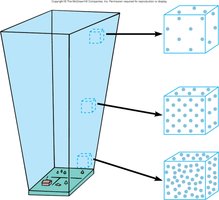
Atmospheric Layers
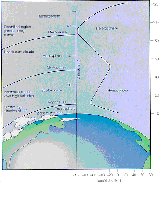
The atmosphere is divided into several layers, each with distinct properties. - Troposphere: Extends from the surface to where temperature stops decreasing with height; most weather occurs here. - Stratosphere: Temperature increases with height due to the ozone layer; less turbulent. - Ionosphere: Contains free electrons and ions, merging with the vacuum of space. 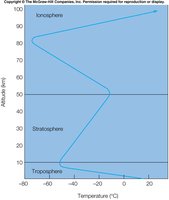
Solar Radiation and Energy Balance
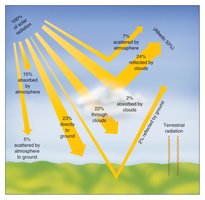
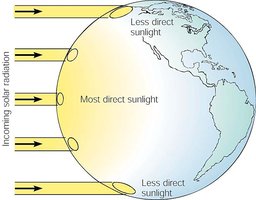
The Sun is the primary source of energy for Earth's weather and climate. Solar radiation is absorbed, reflected, and scattered by the atmosphere and surface. - Key Point 1: Only 51% of incoming solar radiation is absorbed by Earth's surface. - Key Point 2: The equatorial region receives more direct sunlight, resulting in higher average temperatures. 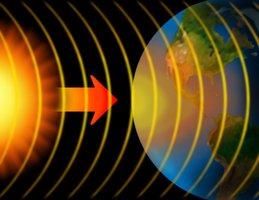
Global Wind Patterns and the Coriolis Effect
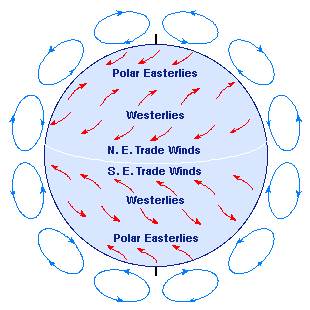
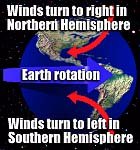
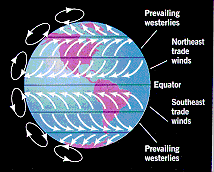
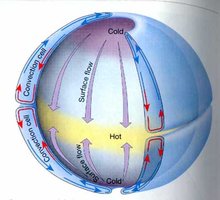
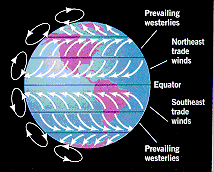
Atmospheric circulation is driven by differential heating and Earth's rotation, resulting in prevailing winds and the Coriolis effect. - Key Point 1: The Coriolis effect causes winds to turn right in the Northern Hemisphere and left in the Southern Hemisphere. - Key Point 2: Prevailing winds, such as westerlies and trade winds, influence climate and weather. 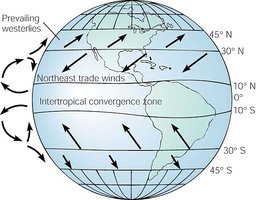
Local Wind Patterns and Convection
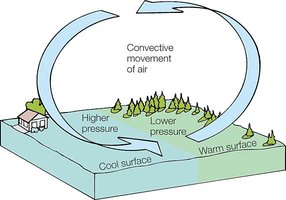
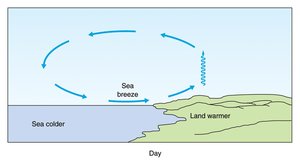
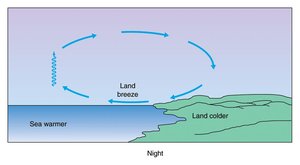
Local wind patterns arise from differential heating of land and water, creating convective cells. - Key Point 1: During the day, sea breezes occur as cooler air from the sea moves inland. - Key Point 2: At night, land breezes occur as cooler air from the land moves toward the sea. 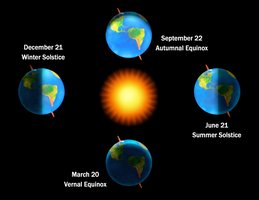
Cloud Formation and Air Masses
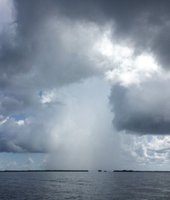
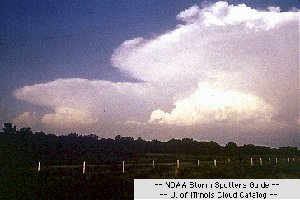
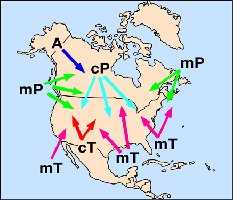
Clouds form through convection, orographic lifting, and the meeting of air masses with different densities. Air masses are classified by their origin and properties. Table: Types of Air Masses
Type | Origin | Properties |
|---|---|---|
Continental Polar (cP) | Poles, land-locked | Cold, dry |
Continental Tropical (cT) | Tropics, land-locked | Warm, dry |
Maritime Polar (mP) | Poles, over water | Cold, damp |
Maritime Tropical (mT) | Tropics, over water | Warm, humid |
Arctic (A) | Very cold land-locked | Very cold |
Weather Fronts
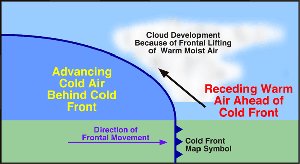
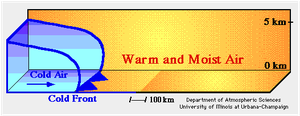
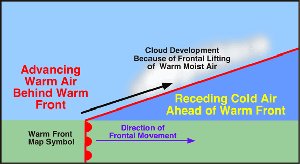
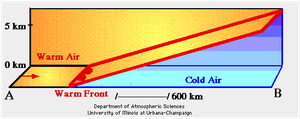
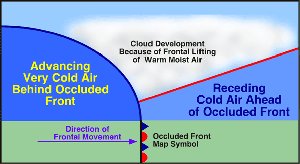
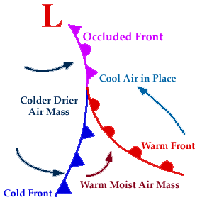
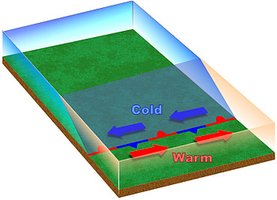
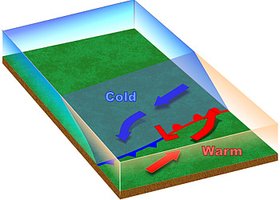
Fronts are boundaries between air masses of different densities, leading to various weather phenomena. - Cold Front: Cold air advances, displacing warm air. - Warm Front: Warm air advances, displacing cold air. - Stationary Front: Air masses remain in place with little movement. - Occluded Front: Cold air overtakes a warm front, leading to complex weather. 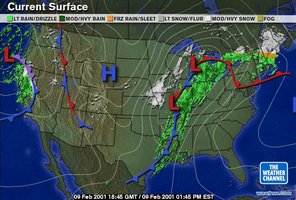



Cyclones and Weather Systems
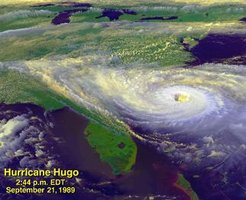
Cyclones are large-scale low-pressure systems characterized by rotating winds and complex interactions between fronts. The Norwegian Cyclone Model describes the evolution of cyclones from formation to occlusion. 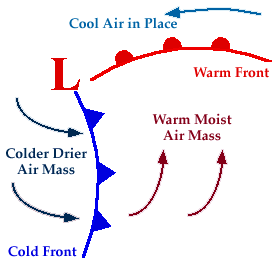
The Water Cycle (Hydrologic Cycle)
The water cycle describes the continuous movement of water on, above, and below the surface of the Earth. - Key Point 1: Water evaporates from oceans, lakes, and soil, rises into the atmosphere, condenses, and precipitates. - Key Point 2: Most of Earth's water is in the oceans; only a small fraction is available as fresh water.
Climate and Ocean Currents
Ocean currents and prevailing winds significantly affect regional climates. For example, the Gulf Stream brings warm water to Europe, moderating temperatures.
Milankovitch Cycles and Ice Ages
Ice ages are linked to changes in Earth's orbit and axial tilt, known as Milankovitch cycles, which affect the distribution of solar energy.
Earth's Cycles and Human Impact
Earth's water, rock, and atmospheric cycles are interconnected. Human activities, such as pollution and greenhouse gas emissions, have significant impacts on these cycles.
Ozone Layer and Human Influences
The ozone layer protects life by absorbing harmful ultraviolet radiation. Human-made chemicals like CFCs have damaged this layer, increasing UV exposure.
Acid Rain
Acid rain results from atmospheric pollution, causing environmental damage and posing challenges for sustainable energy alternatives.
Greenhouse Effect and Global Warming
The greenhouse effect is essential for maintaining Earth's temperature, but excess greenhouse gases from human activity are causing global warming. Equation: The greenhouse effect can be modeled by the energy balance equation: where is incoming solar radiation, is outgoing terrestrial radiation, and is energy retained by greenhouse gases. Example: Venus experiences an extreme greenhouse effect, resulting in surface temperatures around 450°C.
Summary Table: Atmospheric Layers
Layer | Altitude Range | Temperature Trend | Key Features |
|---|---|---|---|
Troposphere | 0-12 km | Decreases with altitude | Weather, clouds |
Stratosphere | 12-50 km | Increases with altitude | Ozone layer |
Ionosphere | 50-100 km | Variable | Free ions/electrons |
Conclusion
Understanding the physics of Earth's atmosphere and water cycle is crucial for predicting weather, climate, and the impact of human activities. The interplay between solar energy, atmospheric dynamics, and hydrologic processes shapes the environment and sustains life. Additional info: Academic context was added to clarify the physical principles underlying atmospheric structure, energy balance, and climate dynamics.
