 Back
BackEarth's Internal Structure and the Rock Cycle: Physics and Geoscience Study Notes
Study Guide - Smart Notes
 Tailored notes based on your materials, expanded with key definitions, examples, and context.
The Earth: Formation and Structure
Molten Stage and Differentiation
The early Earth was in a molten state, allowing heavier elements such as iron and nickel to sink toward the center, while lighter elements formed the crust. This differentiation established the basic layered structure of the planet. - Molten Earth: High temperatures caused the planet to be liquid, enabling element separation. - Crust Formation: Lighter materials formed a thin surface layer, now called the crust. - Dynamic Planet: Earth's surface and interior are constantly changing due to internal and external forces. 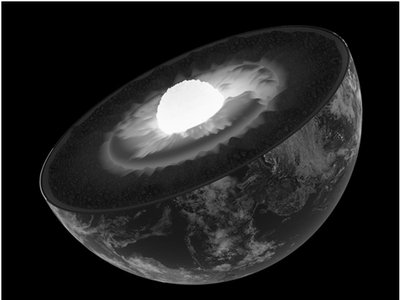
Internal Structure of the Earth
Earth's interior is composed of several distinct layers, each with unique physical and chemical properties. - Inner Core: Solid, mainly iron and nickel, about 1200 km thick. High pressure keeps it solid despite extreme temperatures (~6000°C). - Outer Core: Molten, mainly iron and nickel, about 2200 km thick. - Mantle: About 2900 km thick, rich in oxygen, silicon, magnesium, and iron. - Crust: The thinnest layer, composed of the lightest elements, ranging from 10 km (oceanic) to 70 km (continental). 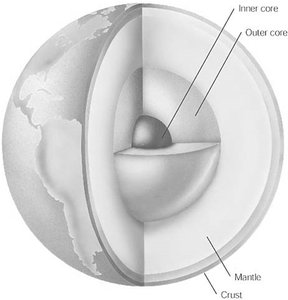
Seismic Waves and Earth's Interior
Seismic waves generated by earthquakes provide insight into Earth's internal structure. - P-waves (Primary): Travel through solids and liquids; can pass through the core. - S-waves (Secondary): Only travel through solids; do not pass through the liquid outer core, creating a shadow zone. - Shadow Zones: Regions where certain seismic waves are not detected, indicating changes in material properties. 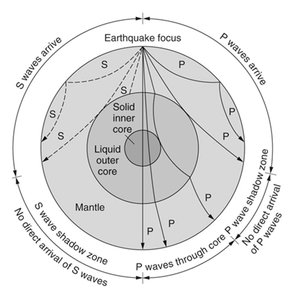
Mantle Convection and Plate Tectonics
The mantle undergoes convection, driving plate tectonics and surface changes. - Convection: Heat from the core causes mantle material to circulate, moving Earth's plates. - Subduction Zones: Regions where crust is recycled into the mantle. - Midocean Ridges: Sites of new crust formation. 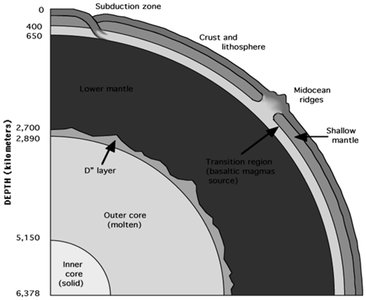
Crust Types and Density
The crust is divided into continental and oceanic types, each with distinct properties. - Continental Crust: Less dense, composed mainly of granite. - Oceanic Crust: More dense, composed mainly of basalt. - Floating on Mantle: Both types of crust float atop the denser mantle. 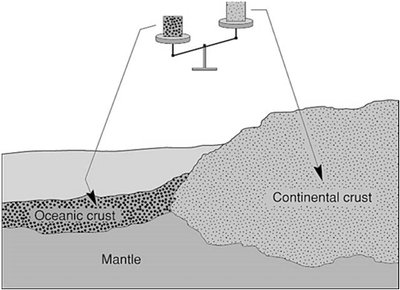
Chemical Composition of Earth and Crust
The Earth's crust and the whole Earth have different elemental compositions. - Crust: Dominated by oxygen (46.6%), silicon (27.7%), aluminum, iron, calcium, sodium, potassium, magnesium. - Whole Earth: Dominated by iron (33.3%), oxygen (29.8%), silicon, magnesium, nickel, calcium, aluminum, sodium. 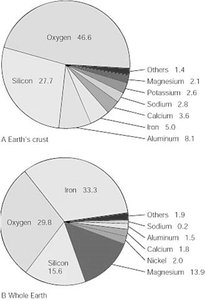
Minerals, Rocks, and Crystal Structures
Minerals and Rocks: Definitions
Minerals and rocks are fundamental building blocks of Earth's crust. - Mineral: Solid, inorganic material with a known chemical composition and unique crystalline structure. - Rock: Solid aggregate of one or more minerals, formed by geological processes.
Crystal Structures
Crystals are composed of repeating structural units in three dimensions. - Example: Sodium chloride (halite) forms a cubic lattice of sodium and chlorine ions. 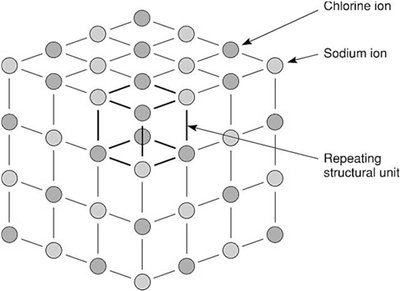
Quartz Crystals
Quartz is a common mineral with hexagonal prism crystal shapes. 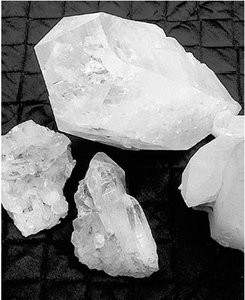
Silicates and Tetrahedral Structure
Silicates, made of silicon and oxygen, constitute 92% of Earth's crust. - Basic Structure: Silicate minerals are built from SiO4 tetrahedra. 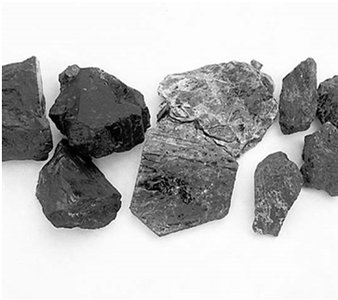
Examples of Silicate Minerals
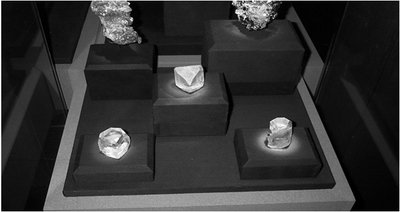
- Topaz: Al2SiO4(OH,F) - Amazonite: KAlSi3O8 - Smoky Quartz: SiO2 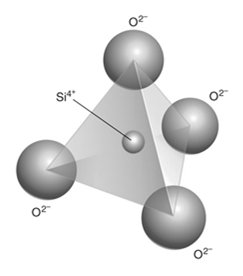
The Rock Cycle
Overview of the Rock Cycle
The rock cycle describes the transformation of rocks through various geological processes. - Igneous Rocks: Formed from cooling and solidification of magma or lava. - Sedimentary Rocks: Formed from the compaction and cementation of sediments derived from weathered rocks. - Metamorphic Rocks: Formed from existing rocks changed by heat, pressure, or chemical processes. - Driving Forces: Radioactive heating, solar energy, and gravity sustain the cycle. 
Tectonism and Rock Cycle
Tectonic activity controls the rock cycle and influences surface processes. 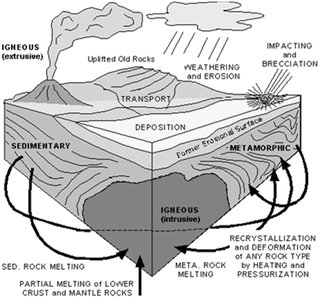
Rock Cycle Animation
Visual representation of the rock cycle, showing transitions between igneous, sedimentary, and metamorphic rocks. 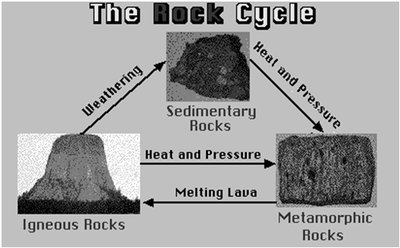
Types of Rocks
Igneous Rocks
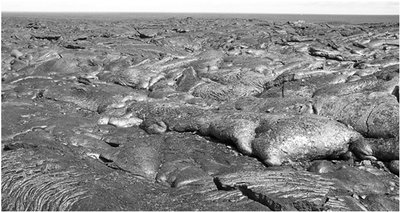
Igneous rocks are the first rocks formed on Earth, originating from molten material. - Magma: Molten rock beneath the surface. - Lava: Magma that reaches the surface. - Classification: Based on mineral composition and texture (coarse or fine-grained). 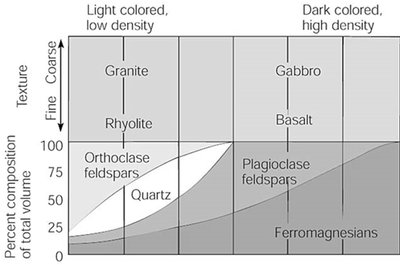

Sedimentary Rocks
Sedimentary rocks form from the accumulation and compression of material from previously existing rocks. - Weathering: Physical and chemical breakdown of rocks. - Compression: Sediments are compacted to form rock layers.
Metamorphic Rocks
Metamorphic rocks are formed when existing rocks are changed by heat, pressure, or hot solutions. - Heat and Pressure: Generated by tectonic movement or magma intrusion. - Mineral Realignment: Pressure can flatten, deform, or realign mineral grains.
Classification of Rocks
Rock Classification Table
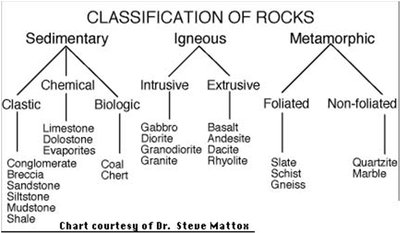
Rocks are classified into three main types: sedimentary, igneous, and metamorphic, with further subdivisions based on formation processes and texture.
Sedimentary | Igneous | Metamorphic |
|---|---|---|
Clastic: Conglomerate, Breccia, Sandstone, Siltstone, Mudstone, Shale Chemical: Limestone, Dolostone, Evaporites Biologic: Coal, Chert | Intrusive: Gabbro, Diorite, Granodiorite, Granite Extrusive: Basalt, Andesite, Dacite, Rhyolite | Foliated: Slate, Schist, Gneiss Non-foliated: Quartzite, Marble |
Summary
The study of Earth's internal structure and the rock cycle integrates concepts from physics and geoscience, including heat transfer, material properties, and dynamic systems. Understanding these processes is essential for interpreting Earth's history and predicting geological phenomena. Key Equations: - Density: - Pressure at Depth: - Radioactive Decay (Heating): Additional info: The notes expand on the original content to provide a self-contained, academically rigorous overview suitable for college physics students.
