 Back
BackCh. 22 Electric Charges and Forces: Study Notes for Physics College Students
Study Guide - Smart Notes
 Tailored notes based on your materials, expanded with key definitions, examples, and context.
Ch.22
Electric Charges and Forces
Introduction to Electric Charge
Electric phenomena are fundamental to physics and technology, arising from the properties and interactions of electric charges. There are two types of charge: positive and negative. The basic charges of ordinary matter are carried by protons (positive) and electrons (negative).
Charging is the process of transferring electrons from one object to another.
Charge is a conserved quantity; it cannot be created or destroyed.
Charge is measured in coulombs (C).
Behavior of Charges
Charges interact according to well-established rules:
Like charges repel each other; opposite charges attract.
Neutral objects are attracted to charged objects due to polarization.
Charge can be transferred between objects, typically by contact or friction.
Conductors, Insulators, and Semiconductors
Materials are classified by their ability to allow charge movement:
Conductors: Charge moves easily (e.g., metals).
Insulators: Charge is immobile (e.g., glass, plastic).
Semiconductors: Behave as insulators in their ground state, but can conduct when energy is supplied.
Charge Quantization and Conservation
Charge is always an integer multiple of the fundamental unit of charge, e ( C).
Most objects are electrically neutral, having equal numbers of protons and electrons.
Charge conservation: The total charge in a closed system remains constant.
Charging and Discharging
Charging by contact: Transfer of charge occurs when objects touch.
Discharging: Removing excess charge, often by touching a conductor.
Charging by induction: Redistribution of charge in a conductor due to the presence of a nearby charged object, without direct contact.
Charge Polarization
When a charged object is brought near a neutral object, it induces a separation of charges within the neutral object, creating a polarization force.
This effect explains why neutral objects are attracted to charged ones.
The Electric Dipole
A dipole consists of two equal and opposite charges separated by a distance.
External electric fields can polarize atoms and molecules, forming dipoles.
Coulomb’s Law
Coulomb’s law describes the force between two point charges:
The force is proportional to the product of the charges and inversely proportional to the square of the distance between them.
Mathematically: , where N·m2/C2.
Using the permittivity constant: , where C2/N·m2.

Comparison: Electric vs. Gravitational Forces
Both are inverse-square laws.
Electric forces are typically much stronger than gravitational forces for atomic-scale particles.
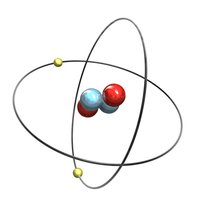
Example: Force Between Protons in Helium Nucleus
Protons in a nucleus experience strong repulsive electric forces.
The Field Model
A field assigns a value (scalar or vector) to every point in space.
The electric field is a vector field created by charges, filling all of space.
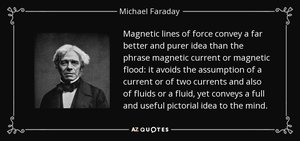
The concept of field was introduced by Michael Faraday as "lines of force".

The Electric Field
The electric field at a point is defined as the force per unit charge experienced by a probe charge at that point: .
Units: N/C or V/m.
The direction of the electric field is the direction of the force on a positive charge.
The force on a negative charge is opposite the field direction.
Electric Field of a Point Charge
The electric field due to a point charge at a distance is: .
Field vectors point away from positive charges and toward negative charges.
Unit Vector Notation
Unit vectors specify direction only and have no units.
For a point charge at the origin, the electric field at point is: .
Applications and Examples
Electric forces in biological systems: For example, the electric field in cell membranes can move ions across the membrane.
Example: The electric field of a proton at the position of an electron in a hydrogen atom is extremely large, resulting in strong binding forces.
Summary Table: Types of Materials and Charge Behavior
Material | Charge Mobility | Example |
|---|---|---|
Conductor | High | Metal |
Insulator | Low | Glass, Plastic |
Semiconductor | Variable | Silicon |
Summary Table: Types of Charge Interactions
Type of Charges | Interaction |
|---|---|
Like charges | Repel |
Opposite charges | Attract |
Charged & Neutral | Attract (via polarization) |
Key Equations
Coulomb’s Law:
Electric Field:
Force on a charge in a field:
Historical Context
Charles-Augustin de Coulomb developed the law describing electric forces.
Michael Faraday introduced the concept of fields and lines of force.
Example: Everyday Electric Phenomena
Static electricity, such as getting a shock after walking across a carpet, is due to the transfer and interaction of electric charges.

Additional info:
All equations are provided in LaTeX format for clarity and academic rigor.
Images included are directly relevant to the explanation of electric charges, forces, and historical context.
