 Back
BackElectric Forces and Fields: Study Notes for College Physics
Study Guide - Smart Notes
 Tailored notes based on your materials, expanded with key definitions, examples, and context.
Electric Forces and Fields
Electric Charge
Electric charge is a fundamental property of matter that causes it to experience a force when placed in an electric or magnetic field. There are two types of electric charge: positive and negative. The net charge of a system is the algebraic sum of all the charges present, considering their signs. The conservation of charge principle states that the net charge of a closed system remains constant.
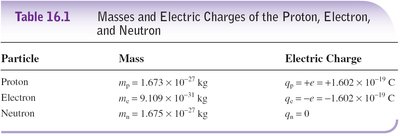
Elementary Charge: The smallest unit of charge, denoted as e, is approximately C. The charge of a proton is and that of an electron is .
SI Unit: The unit of electric charge is the coulomb (C).
Quantization: The net charge on any object is an integer multiple of the elementary charge: .
Neutral Objects: Objects with equal numbers of positive and negative charges are electrically neutral.
Example: Rubbing a balloon on hair transfers electrons, causing the balloon to attract hair due to static electricity.

Conductors, Insulators, and Semiconductors
Materials can be classified based on their ability to conduct electric charge:
Conductors: Substances that allow electric charge to move freely (e.g., metals).
Insulators: Materials that do not allow charge to move freely (e.g., rubber, glass).
Semiconductors: Materials with conductivity between conductors and insulators.
Charging Methods
Charging by Rubbing (Friction): When two insulators are rubbed together, electrons or ions can be transferred, resulting in one object becoming positively charged and the other negatively charged.
Charging by Contact: A charged object touches a conductor, transferring charge that spreads over the conductor's surface.
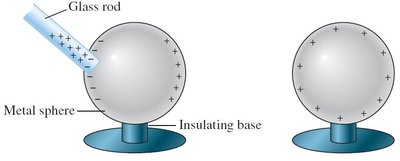
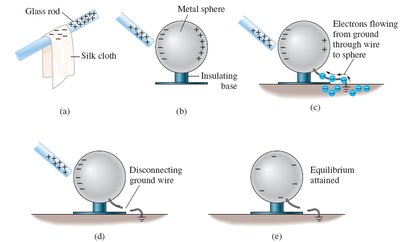
Charging by Induction: A neutral conductor can be charged without direct contact by bringing a charged object near it and grounding the conductor, allowing electrons to flow and leave the conductor charged.
Coulomb's Law
Electrostatic Force Between Point Charges
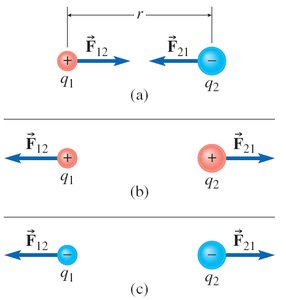
The force between two point charges is given by Coulomb's Law:
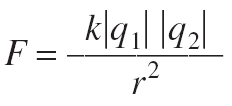
k: Coulomb constant, N·m2/C2
r: Distance between the charges
The force is attractive if the charges are of opposite sign and repulsive if they are of the same sign.
Superposition Principle
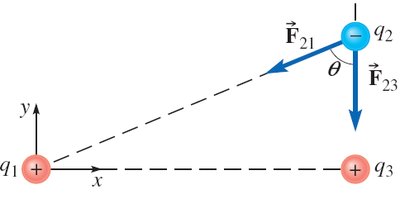
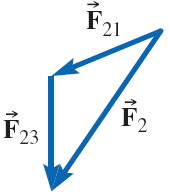
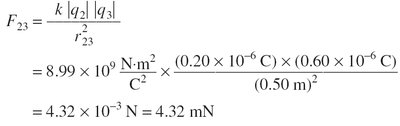
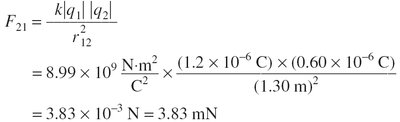
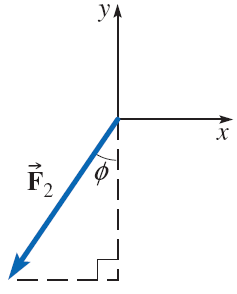
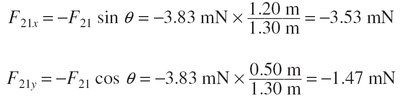
When multiple charges are present, the net force on any charge is the vector sum of the forces exerted by all other charges individually.
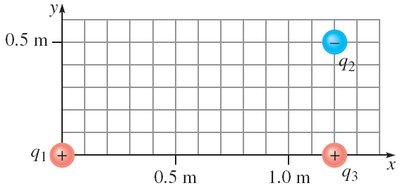
Example: Three Point Charges
Consider three charges arranged in a plane. The net force on one charge is found by calculating the individual forces due to the other two and adding them as vectors.
Electric Field
Definition and Properties
The electric field at a point is defined as the force per unit charge experienced by a small positive test charge placed at that point:
The direction of the electric field is the direction of the force on a positive test charge.
The field is measured in newtons per coulomb (N/C).
Electric Field Lines
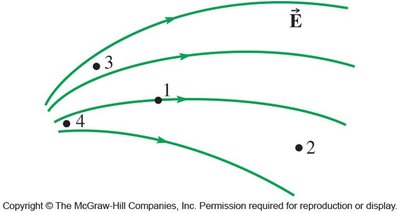
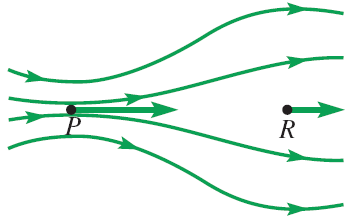
Electric field lines are a visual tool to represent the direction and strength of the electric field:
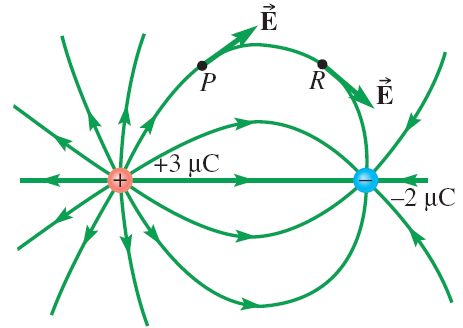
Lines start on positive charges and end on negative charges.
The density of lines indicates the field's strength (closer lines = stronger field).
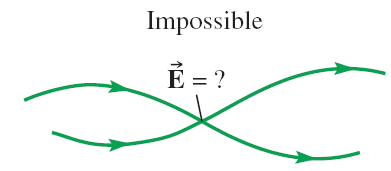
Field lines never cross.
Field of a Point Charge and a Dipole
The electric field due to a point charge is radial:
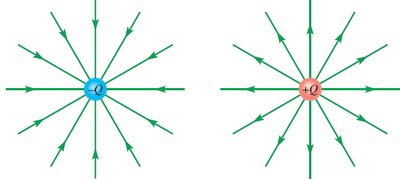
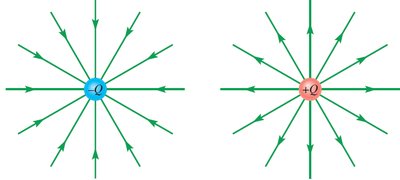
A dipole consists of two equal and opposite charges close together. Its field lines show the combined effect of both charges.
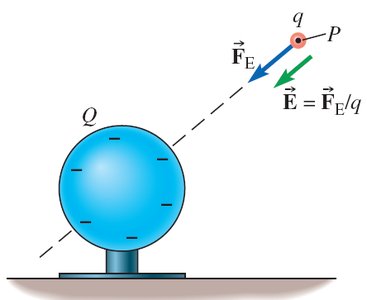
Electric Field Calculations
The electric field due to a point charge Q at a distance r is:
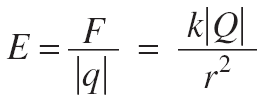
For multiple charges, use the superposition principle: add the electric fields from each charge as vectors.
Example: Electric Field from Multiple Charges
Given two or more charges, calculate the field at a point by summing the vector contributions from each charge.
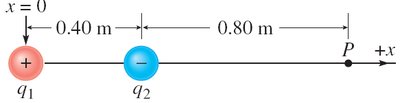
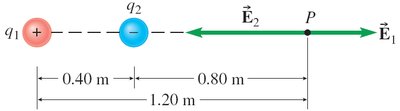
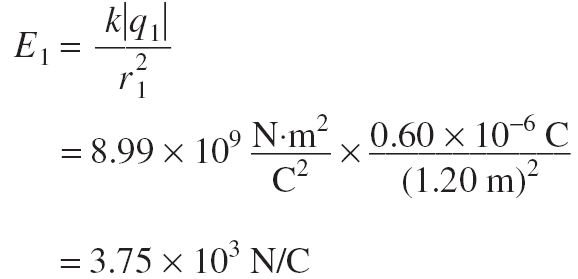
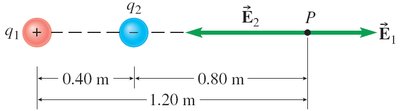
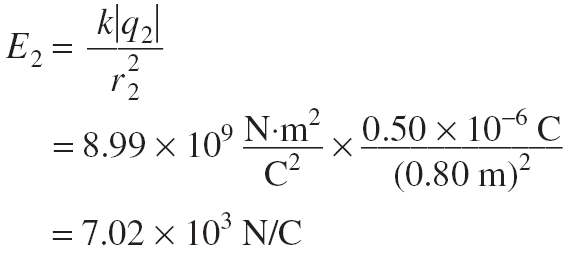
Example: Field at a Rectangle's Corner
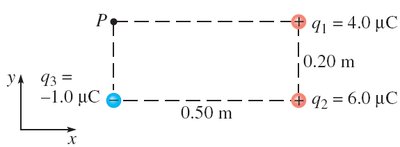
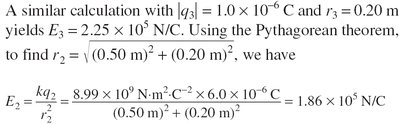
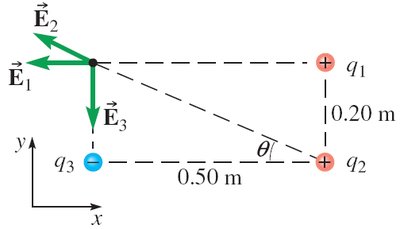


Equilibrium and Electric Forces
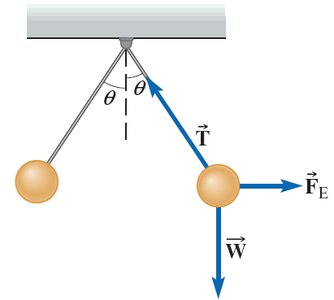
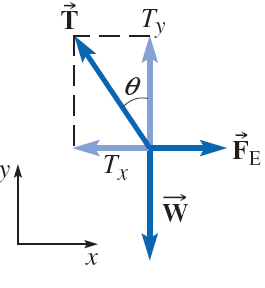
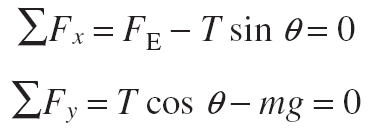
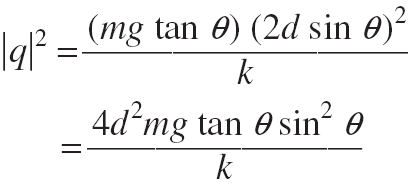
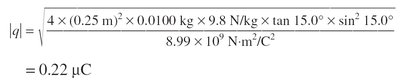
When objects are suspended and charged, the electric force can be analyzed using free-body diagrams and equilibrium conditions.
Summary Table: Masses and Charges of Subatomic Particles
Particle | Mass | Electric Charge |
|---|---|---|
Proton | kg | C |
Electron | kg | C |
Neutron | kg |
Key Equations
Coulomb's Law:
Electric Field (point charge):
Superposition Principle:
