 Back
BackElectricity and Magnetism: Fundamental Concepts and Applications
Study Guide - Smart Notes
 Tailored notes based on your materials, expanded with key definitions, examples, and context.
Electric Charge and Structure of Matter
Subatomic Particles and Charge Quantization
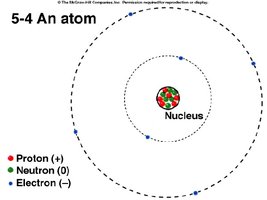
All matter is fundamentally electrical in nature, composed of atoms with charged subatomic particles. The basic constituents are protons, neutrons, and electrons, each with distinct properties:
Proton: Mass = kg, Charge = C
Electron: Mass = kg, Charge = C
Neutron: Mass ≈ Proton mass, Charge = 0
Electric charge is quantized, occurring in integer multiples of the elementary charge C. Atoms are neutral when they contain equal numbers of protons and electrons. An imbalance leads to ionization, forming positive or negative ions.
Ionization and Charge Transfer
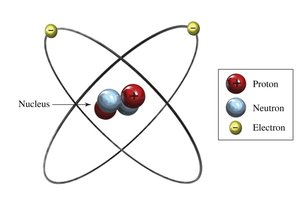
Positive ion: More protons than electrons (loss of electrons)
Negative ion: More electrons than protons (gain of electrons)
Electrons can move between atoms, creating ions and enabling the flow of charge in materials.
Electrostatics: Charging and Polarization
Charging by Friction and Induction
Objects can be charged by friction (e.g., combing hair) or by induction. Friction transfers electrons, resulting in one object becoming negatively charged and the other positively charged. Induction involves the redistribution of charges in a neutral object due to the presence of a nearby charged object.
Example: Rubbing a balloon on hair charges the balloon negatively, allowing it to stick to a wall due to polarization of the wall's surface.
Conductors, Insulators, and Charge Distribution
Materials are classified based on their ability to allow charge movement:
Conductors: Electrons move freely (e.g., metals)
Insulators: Electrons are tightly bound (e.g., glass, rubber)
Semiconductors: Intermediate behavior, conduction can be controlled
In conductors, excess charge resides on the surface, and the interior remains charge-free (Faraday's cage effect).
Conservation of Charge
Electric charge is conserved in isolated systems; it cannot be created or destroyed, only transferred. However, energy can be converted into charge pairs (e.g., gamma-ray photon producing an electron-positron pair).
Electric Force and Field
Coulomb’s Law
The electric force between two point charges is given by:
where N·m2/C2 is Coulomb’s constant, and are the charges, and is the separation distance. Like charges repel; unlike charges attract.
Comparison: Electric vs. Gravitational Force
The electric force is vastly stronger than the gravitational force between elementary particles. For a proton and electron separated by distance :
Gravitational force:
Electric force:
Typically, is about times stronger than .
Electric Field and Field Lines
A charged object creates an electric field in the surrounding space, exerting a force on other charges. The field at a point is defined as:
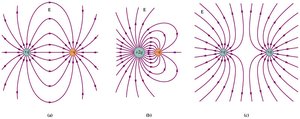
Field lines indicate the direction and strength of the field; they radiate outward from positive charges and inward toward negative charges.
Capacitance and Dielectrics
Capacitors
A capacitor stores electric energy by maintaining a separation of charge. It consists of two conductors (plates) with equal and opposite charges. The capacitance is defined as:
where is the charge stored and is the potential difference between the plates. The unit of capacitance is the farad (F).
Parallel-Plate Capacitor
For a parallel-plate capacitor:
where is the plate area, is the separation, and is the vacuum permittivity.
Electric Current and Circuits
Electric Current
Electric current is the flow of electric charge, typically carried by electrons in a conductor. The current is defined as:
where is the charge passing through a cross-section in time . The unit is the ampere (A), equivalent to one coulomb per second.
Potential Difference and Electric Circuits
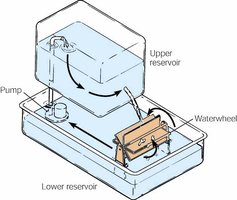
A potential difference (voltage) is required to maintain a current in a circuit. The voltage source (battery or generator) provides energy to move charges through the circuit, where they can do work (e.g., lighting a bulb).
Ohm’s Law and Resistance
Resistance is the opposition to the flow of current in a material. Ohm’s law relates voltage (), current (), and resistance ():
The unit of resistance is the ohm ().
Power and Energy in Circuits
The power delivered by an electric circuit is:
Energy consumed over time is . The unit of power is the watt (W), and energy is often measured in kilowatt-hours (kWh) for commercial purposes.
Electromagnetism: Magnetic Fields and Forces
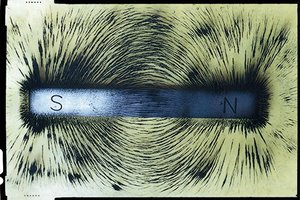
Magnetic Fields and Magnetic Materials
Magnetic fields are produced by moving electric charges (currents). The field lines form closed loops and are strongest near the poles of magnets. Magnetic domains in materials like iron, cobalt, and nickel give rise to permanent magnets.
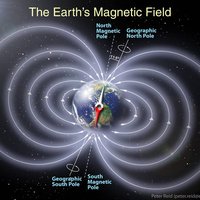
Earth’s Magnetic Field
The Earth acts as a giant magnet due to currents in its iron/nickel core. The magnetic axis is tilted relative to the rotational axis, and the field periodically reverses direction.
Electricity and Magnetism Interactions
A moving charge or current produces a magnetic field (Oersted’s discovery).
A magnetic field exerts a force on a moving charge or current-carrying wire (basis of electric motors).
A changing magnetic field induces an electric field (basis of electric generators).
Atmospheric Electricity: Thunderclouds and Lightning
Lightning Formation
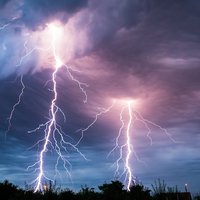
Lightning is a dramatic example of electrical discharge in nature. Charge separation occurs in thunderclouds due to collisions of water droplets, leading to a buildup of negative charge at the cloud base and positive charge on the ground. When the potential difference becomes large enough, a discharge (lightning) occurs, transferring electrons to the Earth.
Applications and Phenomena
Bioluminescence
Some organisms, such as deep-sea creatures and fungi, produce light through chemical reactions involving electrical processes. This phenomenon is called bioluminescence and is an example of the conversion of electrical energy into light energy in nature.
Aurorae and Solar Wind
The interaction of charged particles from the solar wind with Earth’s magnetic field and atmosphere produces aurorae (northern and southern lights). These displays are caused by the excitation and ionization of atmospheric gases, primarily nitrogen and oxygen, by energetic electrons from the Sun.
Summary Table: Comparison of Electric and Magnetic Phenomena
Phenomenon | Source | Field Lines | Effect |
|---|---|---|---|
Electric Field | Stationary charge | Radial (from +, to -) | Force on other charges |
Magnetic Field | Moving charge/current | Closed loops | Force on moving charges/currents |
Electromagnetic Induction | Changing magnetic field | Induced electric field | Current in conductor |
Additional info: This guide expands on the original notes with definitions, formulas, and academic context for clarity and completeness.
