 Back
BackElectromagnetic Waves: Maxwell’s Theory, Production, Properties, and Applications
Study Guide - Smart Notes
 Tailored notes based on your materials, expanded with key definitions, examples, and context.
Electromagnetic Waves
Introduction to Electromagnetic Waves
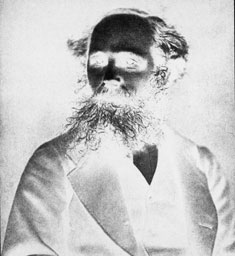
Electromagnetic (EM) waves are oscillations of electric and magnetic fields that propagate through space. The prediction and discovery of EM waves unified the fields of electricity and magnetism, leading to revolutionary advances in communication and technology. Light itself is an electromagnetic wave, and the theory was developed by James Clerk Maxwell in the nineteenth century.
Electromagnetic waves are produced by accelerating electric charges.
They can travel through empty space, unlike sound waves which require a medium.
Applications include radio, television, cell phones, wi-fi, Bluetooth, and satellite communication.
Maxwell’s Equations and Changing Fields
Maxwell’s equations are the fundamental laws describing all electromagnetic phenomena. They show that changing electric fields produce magnetic fields and vice versa, leading to the existence of EM waves.
Gauss’s Law: Relates electric field to electric charge.
Gauss’s Law for Magnetism: Magnetic field lines are continuous; they do not begin or end.
Faraday’s Law: A changing magnetic field produces an electric field.
Ampère’s Law (Extended by Maxwell): A magnetic field is produced by an electric current or a changing electric field.
Maxwell introduced the concept of displacement current to resolve contradictions in Ampère’s law, allowing for the prediction of EM waves.
Production of Electromagnetic Waves
EM waves are produced when electric charges oscillate, such as in antennas connected to AC sources. The changing electric and magnetic fields propagate outward, forming self-sustaining waves.
Near the antenna, fields are complex (near field); far from the antenna, fields are simpler (radiation field).
EM waves are transverse waves: the electric and magnetic fields are perpendicular to each other and to the direction of propagation.
The fields are "in phase"—they reach maxima and zeroes at the same points in space.
Properties of Electromagnetic Waves
EM waves travel at the speed of light in vacuum, given by:
The relationship between speed, wavelength, and frequency:
EM waves can propagate in empty space, unlike sound waves which require a medium.
Electromagnetic Spectrum
The electromagnetic spectrum encompasses all EM waves, categorized by wavelength and frequency. Visible light is only a small part of the spectrum.
Radio waves: Longest wavelength, lowest frequency.
Microwaves, Infrared, Visible light, Ultraviolet, X-rays, Gamma rays: Increasing frequency, decreasing wavelength.
All EM waves travel at the same speed in vacuum.
Human senses detect only a small portion of the spectrum (visible light and infrared for warmth).
Measuring the Speed of Light
The speed of light was first measured by astronomers and later with precision laboratory experiments. Today, it is defined as .
Energy in Electromagnetic Waves
EM waves carry energy, which is distributed between the electric and magnetic fields. The energy density is:
For a wave, (using )
The intensity (energy per unit area per unit time) is:
For sinusoidal waves:
Momentum Transfer and Radiation Pressure
EM waves carry momentum and exert radiation pressure when absorbed or reflected by a surface.
For full absorption:
For full reflection:
This effect is used in applications such as optical tweezers and proposed solar sails for spacecraft.
Transmission Lines and Wireless Communication
EM waves can travel along transmission lines (e.g., coaxial cables) as well as through space. The speed depends on the properties of the medium:

Radio, Television, and Wireless Communication
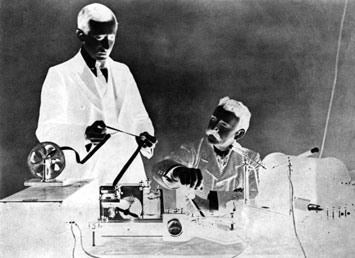
Wireless communication relies on EM waves to transmit information. Early radio and TV used amplitude modulation (AM) and frequency modulation (FM) to encode audio and video signals.
AM: Amplitude of carrier wave varies with audio signal.
FM: Frequency of carrier wave varies with audio signal.
Modern digital communication uses digital modulation techniques.
Applications: Moon Landing and EM Wave Transmission
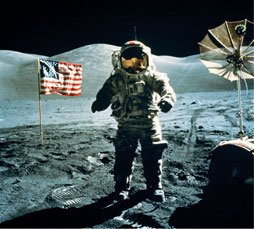
EM waves enabled live television transmission from the Moon to Earth, demonstrating the power of wireless communication.
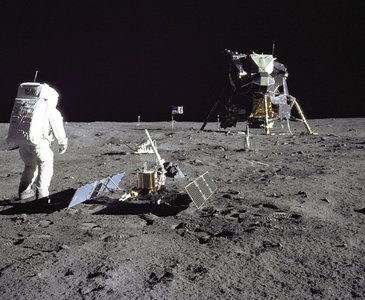

EM waves can transmit information across vast distances at the speed of light.
Satellite communication, cell phones, and remote controls are all based on EM wave technology.
Summary Table: Electromagnetic Wave Properties
Type | Wavelength Range | Frequency Range | Typical Source |
|---|---|---|---|
Radio Waves | m | Hz | Antennas, transmitters |
Microwaves | $1 m | – Hz | Microwave ovens, radar |
Infrared | $700 mm | – Hz | Heated objects |
Visible Light | $400 nm | – Hz | Sun, lamps |
Ultraviolet | $10 nm | – Hz | Sun, UV lamps |
X-rays | – $10$ nm | – Hz | X-ray tubes |
Gamma Rays | nm | Hz | Nuclear reactions |
Key Equations
Speed of EM waves:
Wave relation:
Energy density:
Intensity:
Radiation pressure: (absorption), (reflection)
Example: Calculate the wavelength of a 100 MHz radio wave: .
Additional info: The notes expand on the original material by providing definitions, formulas, and context for each topic, ensuring completeness and clarity for exam preparation.
