 Back
BackExtended Bodies at Rest: Gravitational Potential Energy, Rigid Bodies, Torque, and Equilibrium
Study Guide - Smart Notes
 Tailored notes based on your materials, expanded with key definitions, examples, and context.
CHAPTER 8: EXTENDED BODIES AT REST
7.9: Improving Gravitational Potential Energy Model
Gravitational potential energy describes the energy an object possesses due to its position in a gravitational field. Near Earth's surface, gravity is approximately constant, but at greater distances, it varies with position. This section explores both the approximate and general models for gravitational potential energy.
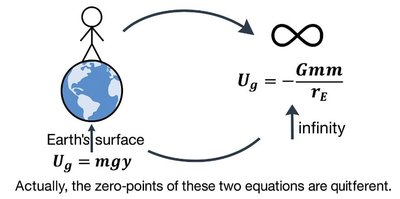
Approximate Model: Near Earth's surface, gravitational potential energy is given by , where is the acceleration due to gravity and is the height above a chosen reference point.
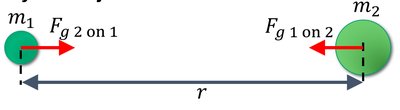
General Model: For large distances, the gravitational potential energy between two masses and separated by distance is , where is the universal gravitational constant.
Zero Point: The general model sets the zero of potential energy at , while the approximate model sets it at Earth's surface.
Force as Gradient: The gravitational force is the negative gradient of potential energy: .
Negative Energy: Gravitational potential energy is negative when objects are closer together, indicating that energy must be added to separate them.

Escape Speed and Black Holes
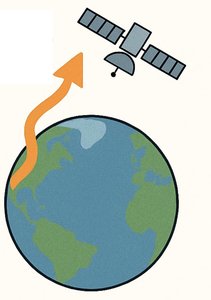
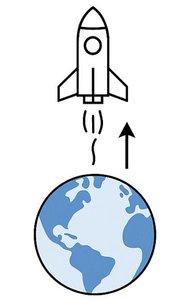
Escape speed is the minimum velocity required for an object to leave a planet's gravitational influence without returning. This concept is fundamental in astrophysics and space exploration.
Escape Speed Formula: , where is Earth's mass and is Earth's radius.
Independence of Mass: Escape speed does not depend on the mass of the escaping object.
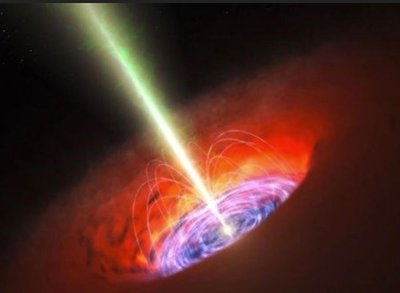
Black Holes: If escape speed exceeds the speed of light, not even light can escape, resulting in a black hole.
Work, Energy, and Conservation Principles
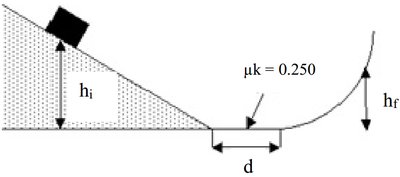
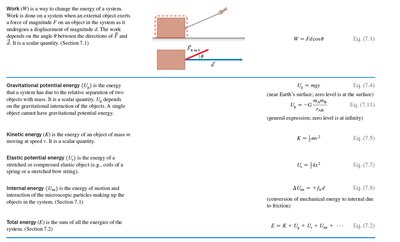
Work and energy are central concepts in physics, describing how forces change the state of a system. The work-energy principle states that the energy of a system changes when external forces do work.
Work:
Gravitational Potential Energy: (approximate), (general)
Kinetic Energy:
Elastic Potential Energy:
Internal Energy: (conversion of mechanical energy to internal energy)
Total Energy:
8.1: Rigid Bodies
Definition and Properties of Rigid Bodies
A rigid body is an idealized model of an object with fixed shape and size. It does not deform under applied forces, and the distances between its constituent particles remain constant.
Fixed Shape: No bending, stretching, or compressing.
Constant Interparticle Distances: All internal distances remain unchanged.
No Internal Forces or Moments: External forces affect the whole body uniformly.
Conservation of Mass: Mass remains constant regardless of motion.
Center of Mass
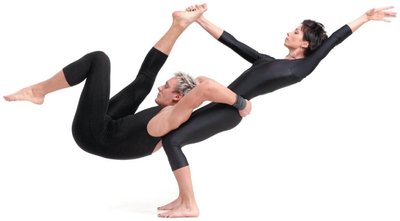
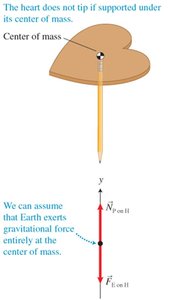
The center of mass is the point at which the mass of a body can be considered to be concentrated for analysis of translational motion. Forces applied at the center of mass do not cause rotation.
Definition: The center of mass is a unique point determined by the mass distribution.
Motion: The motion of the body can be described by the motion of its center of mass.
Center of Gravity: For gravitational analysis, the center of mass is often called the center of gravity.
Newton's Second Law: The center of mass accelerates according to .
8.2: Torque
Axis of Rotation and Rotational Motion
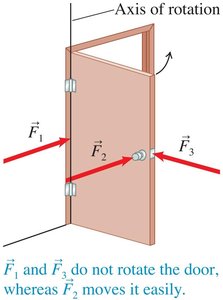
Rotational motion occurs when an obj ect turns around an axis. The axis of rotation is an imaginary line about which the object rotates.
Axis of Rotation: The line about which rotation occurs.
Rotational Motion: Objects can spin or roll around this axis.
Torque: Definition and Factors
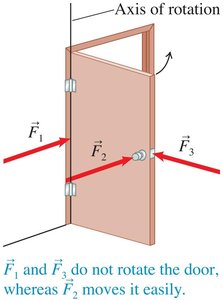
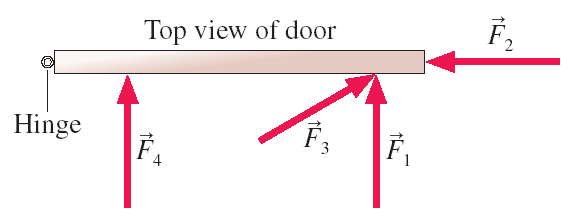
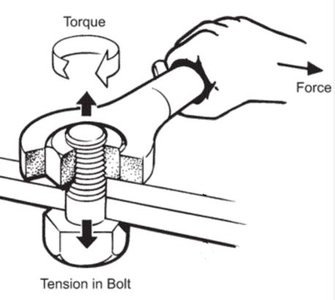
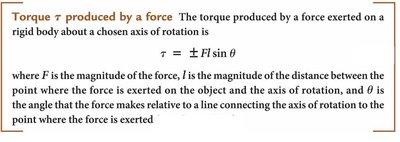
Torque is the rotational equivalent of force, causing objects to rotate about an axis. It depends on the magnitude, direction, and point of application of the force.
Definition: Torque () is a measure of the tendency of a force to cause rotation.
Formula:
Factors Affecting Torque: Place of application, magnitude, and direction of force.
SI Unit: Newton-meter (Nm).
Sign Convention: Counterclockwise torque is positive; clockwise is negative.
Static Equilibrium and Conditions
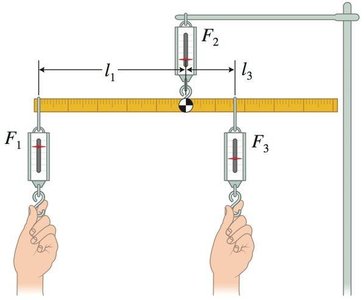
Static equilibrium occurs when an object is at rest and experiences no net force or torque. Two conditions must be satisfied: translational equilibrium and rotational equilibrium.
Translational Equilibrium: ,
Rotational Equilibrium:
Force Diagrams: Extended force diagrams help visualize forces and torques.
8.4: Centre of Mass
Calculating the Center of Mass
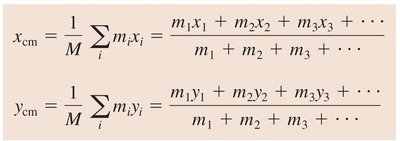
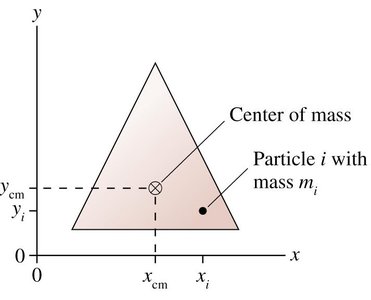
The center of mass of a system of particles is calculated using weighted averages of their positions. This is essential for analyzing the motion and equilibrium of extended bodies.
Formulas:
Applications: Used to determine balance points and analyze rotational motion.
Rotation About the Center of Mass
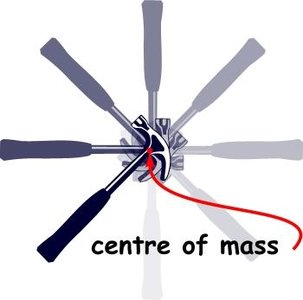
When unconstrained, objects rotate about their center of mass. The center of mass remains stationary while other points move in circular paths around it.
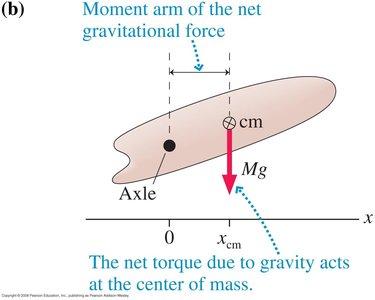
Gravitational Torque: The torque due to gravity can be calculated as if all mass is concentrated at the center of mass.
Moment Arm: The lever arm for gravitational force is measured from the axis of rotation to the center of mass.
Mass Distribution and Equilibrium
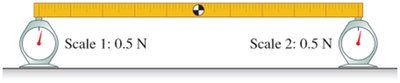
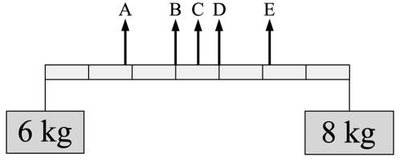
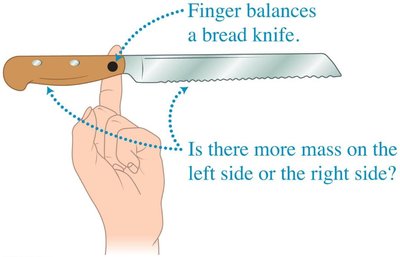
In static equilibrium, the torques produced by gravity on either side of the center of mass are equal. This principle is used to solve problems involving balance and support.
Example: Two masses hanging from a beam are balanced when their torques about the center are equal.
Applications: Used in engineering, biomechanics, and everyday situations like balancing objects.
8.5: Analyzing Situations Using Equilibrium Conditions
Solving Static Equilibrium Problems
To analyze static equilibrium, draw force diagrams, set up axes, and choose a rotation axis to simplify calculations. Sum all force components and torques to solve for unknowns.
Equations:
Applications: Used to determine forces in structures, muscle tensions, and balance conditions.
Biomechanics Example: Arm Holding a Ball
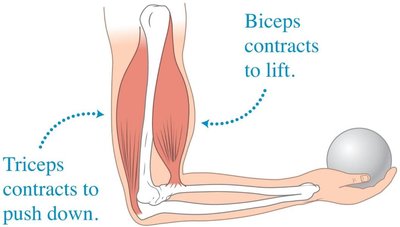
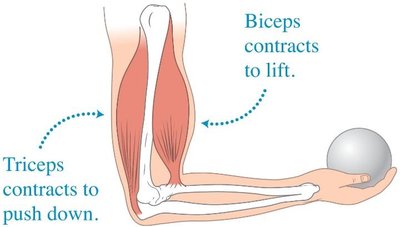
Muscle forces can be estimated using equilibrium equations. When holding a ball, the biceps and triceps exert forces to maintain equilibrium.
Force of Biceps: Calculated using torque and force balance equations.
Force of Upper Arm on Elbow: Determined by summing forces and torques.
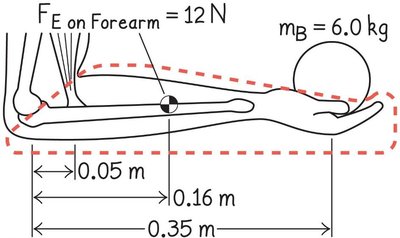
Additional info: These notes expand on the original content by providing full academic explanations, formulas, and relevant examples for each topic. All images included are directly relevant to the adjacent explanations and reinforce key concepts in extended bodies, torque, equilibrium, and center of mass.
