 Back
BackGalaxies, Clusters, and the Structure of the Universe
Study Guide - Smart Notes
 Tailored notes based on your materials, expanded with key definitions, examples, and context.
Galaxies and the Large-Scale Structure of the Universe
Introduction to Galaxies
Galaxies are vast collections of stars, gas, dust, and dark matter bound together by gravity. They are fundamental building blocks of the universe, and their study reveals much about cosmic evolution and structure. - Definition: A galaxy is a massive, gravitationally bound system consisting of stars, stellar remnants, interstellar gas, dust, and dark matter. - Types: Galaxies are classified into several types based on their shape and structure: elliptical, spiral, barred spiral, and irregular. - Example: The Milky Way is a spiral galaxy containing over 400 billion stars. 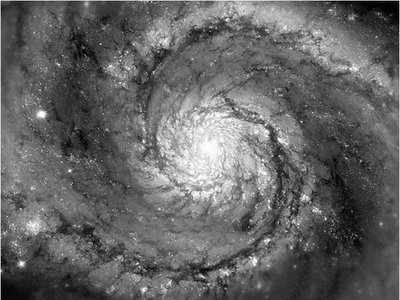
Deep Field Observations
Deep field images, such as those from the Hubble Space Telescope, provide a glimpse into the distant universe, revealing thousands of galaxies at various stages of evolution. - Hubble Deep Field: A composite image taken over several days, showing the most distant optical view of the universe. - Significance: These images help astronomers study galaxy formation and the distribution of matter in the universe. 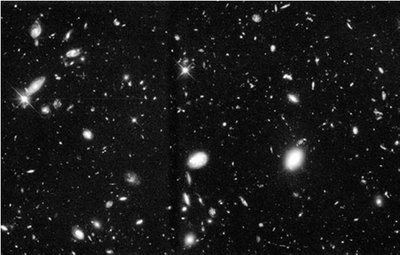
Clusters and Superclusters
Galaxies are not isolated; they are grouped into clusters and superclusters, separated by vast voids. - Cluster: A group of galaxies bound together by gravity. Example: The Coma Cluster. - Supercluster: A larger aggregation of clusters and groups, forming the largest known structures in the universe. - Voids: Regions with very few galaxies, creating a cosmic web structure. 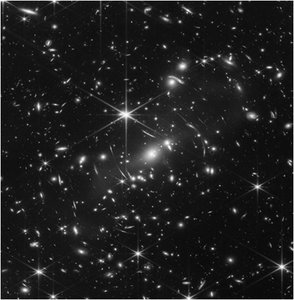
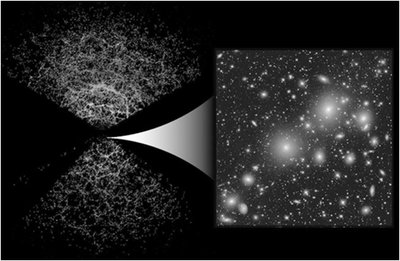
The Cosmic Web
The universe's large-scale structure resembles a web, with galaxies and clusters forming filaments and nodes, and voids occupying the spaces between. - Cosmic Web: The network-like arrangement of galaxies and matter in the universe. - Formation: Result of gravitational attraction and the expansion of the universe. 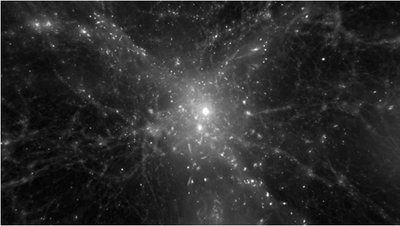
Scale of the Universe
The observable universe extends approximately 13.8 billion light-years in all directions, containing billions of galaxies organized into clusters and superclusters. - Light-Year: The distance light travels in one year (~9.46 trillion km). - Local Group: The galaxy group containing the Milky Way, Andromeda, and about 40 other galaxies. 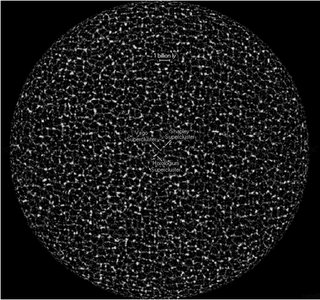
Examples of Galaxies
- Andromeda Galaxy: The nearest spiral galaxy to the Milky Way, also part of the Local Group. 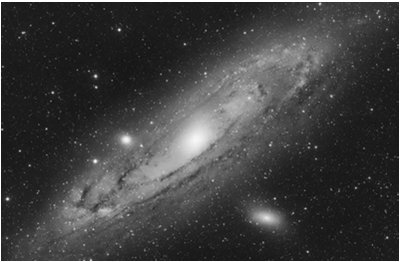
The Milky Way Galaxy
Appearance and Structure
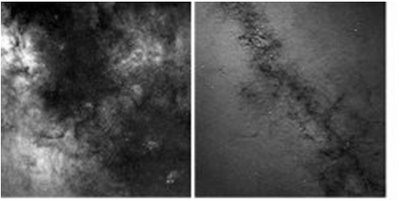
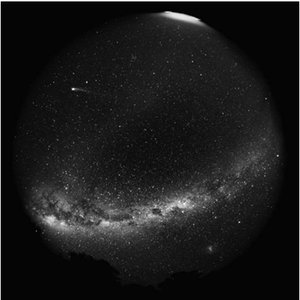
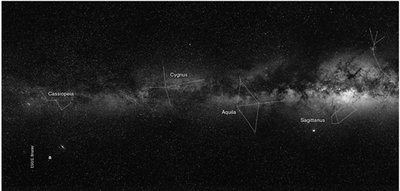
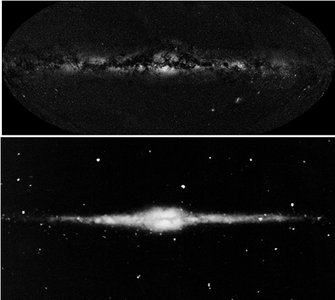
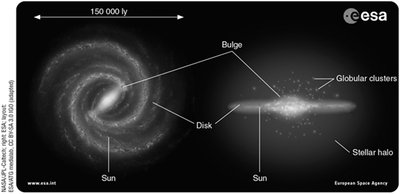
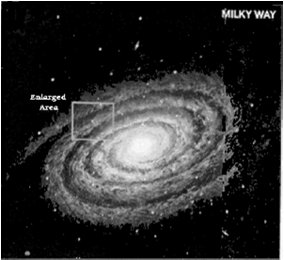
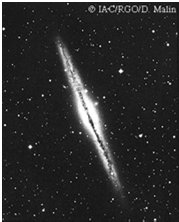
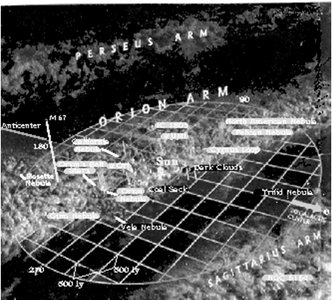
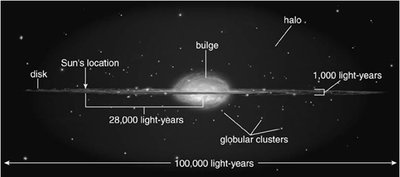
The Milky Way appears as a faint band of light across the night sky, due to our position within its disk. - Components: The Milky Way consists of a disk, bulge, and halo. The disk contains most stars and gas, the bulge is a dense central region, and the halo contains older stars and globular clusters. - Obscuration: Dust and gas obscure much of the galaxy, making it difficult to study from within. 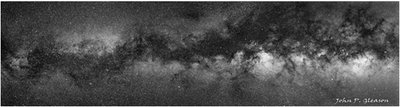
Galactic Components
The Milky Way is a spiral galaxy with three main components: - Halo: Spherical region containing old stars and globular clusters. - Nuclear Bulge: Dense central region. - Disk: Contains most stars, gas, and dust, including the Sun. 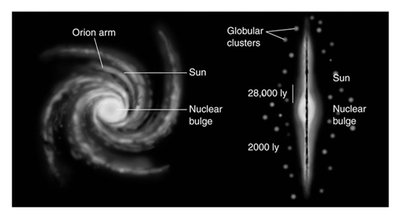
Sun's Location and Motion
The Sun is located about two-thirds of the way from the center to the edge of the Milky Way's disk, approximately 26,000 light-years from the center. - Orbital Period: The Sun completes one orbit around the galactic center every 250 million years.
Galactic Center and Black Hole
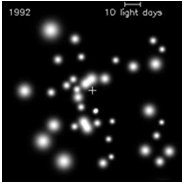
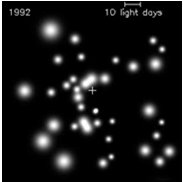
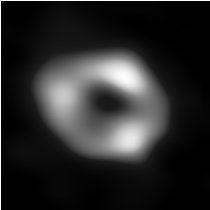
Observations indicate that stars near the galactic center orbit a massive, invisible object, likely a supermassive black hole (Sagittarius A*). - Mass: About 4 million times the mass of the Sun. - Evidence: Orbits of stars and direct imaging from the Event Horizon Telescope. 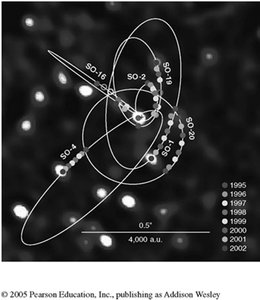
Classification of Galaxies
Hubble's Galaxy Classification
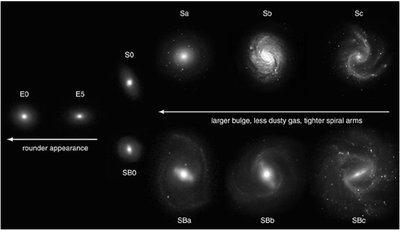
Edwin Hubble classified galaxies into four main types: elliptical, normal spiral, barred spiral, and irregular. - Elliptical: Spherical or elliptical shape, no spiral arms. - Spiral: Flat, rotating disk with spiral arms. - Barred Spiral: Spiral arms extend from a central bar. - Irregular: No definite structure. 
Elliptical Galaxies
- Shape: Spherical or elliptical, stars arranged without spiral arms. - Properties: Contain older stars, little gas or dust, less star formation. 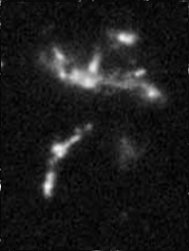
Spiral Galaxies
- Shape: Flat disk with spiral arms, central bulge. - Properties: Active star formation in arms, contains gas and dust. 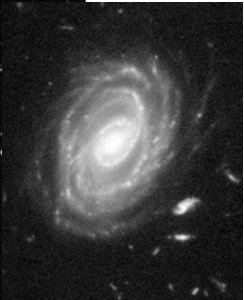
Irregular Galaxies
- Shape: No definite structure. - Properties: Often rich in gas and dust, active star formation. 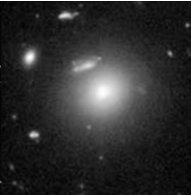
Galaxy Groups and Clusters
Galaxies are organized into groups (fewer than 50 galaxies) and clusters (hundreds to thousands of galaxies). - Local Group: Contains the Milky Way, Andromeda, and other nearby galaxies. 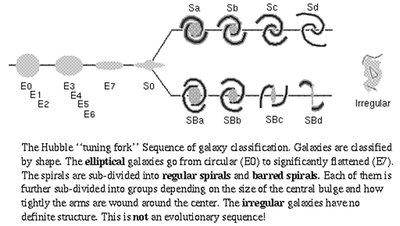
Summary Table: Galaxy Classification
Type | Shape | Star Population | Gas/Dust | Star Formation |
|---|---|---|---|---|
Elliptical | Spherical/Elliptical | Older | Low | Low |
Spiral | Disk with arms | Mixed | High | High |
Barred Spiral | Disk with bar and arms | Mixed | High | High |
Irregular | No definite shape | Mixed | High | High |
Conclusion
The study of galaxies, their classification, and their organization into clusters and superclusters is fundamental to understanding the structure and evolution of the universe. Observations from telescopes and deep field images continue to expand our knowledge of cosmic origins and the large-scale arrangement of matter. Additional info: Academic context was added to clarify galaxy types, structure, and cosmic web formation.
