 Back
BackKinematics: Elevator Motion and Sprinter Acceleration Problems
Study Guide - Smart Notes
 Tailored notes based on your materials, expanded with key definitions, examples, and context.
Q1. Elevator Acceleration, Velocity, and Displacement Analysis
Background
Topic: Kinematics (One-Dimensional Motion)
This question involves interpreting acceleration data from a graph to determine velocity and displacement over time. It tests your understanding of the relationships between acceleration, velocity, and position, as well as your ability to use graphical analysis and kinematic equations.
Key Terms and Formulas
Acceleration (): The rate of change of velocity with respect to time.
Velocity (): The rate of change of displacement with respect to time.
Displacement (): The change in position of the elevator.
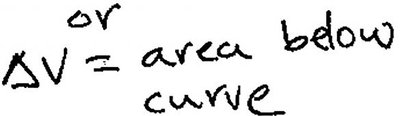
Area under the acceleration-time graph: Gives the change in velocity ().
Area under the velocity-time graph: Gives the change in displacement ().
Step-by-Step Guidance
For each 5-second interval, calculate the change in velocity by finding the area under the acceleration vs. time graph for that interval. Remember, the area can be positive or negative depending on the direction of acceleration.
Add the change in velocity for each interval to the previous velocity to get the velocity at the end of each interval. Start with at .
Fill in the velocity table with your calculated values for each time point (5 s, 10 s, 15 s, 20 s).
Plot these velocity values on the provided velocity vs. time graph to visualize how the elevator's speed changes over time.
To find displacement, use the area under the velocity-time graph for each interval, or apply kinematic equations if velocity is constant during an interval.
Try solving on your own before revealing the answer!
Q2. Sprinter's Acceleration and Motion in a 100-Meter Dash
Background
Topic: Kinematics (Constant Acceleration)
This question asks you to analyze the motion of a sprinter who accelerates from rest for the first 10 meters of a 100-meter dash, then continues at constant velocity for the remaining distance. It tests your ability to apply kinematic equations to solve for acceleration, velocity, and total time.
Key Terms and Formulas
Constant Acceleration: is the same during the first part of the motion.
Kinematic Equation for Displacement:
Velocity after time :
Total time: Add the time for the first 10 m (acceleration phase) and the time for the remaining 90 m (constant velocity phase).
Step-by-Step Guidance
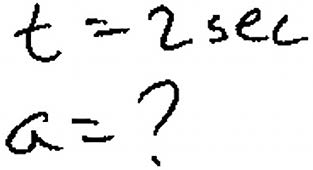
For the first 10 meters, use the kinematic equation with , m, and s to solve for .
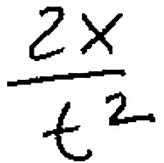
Rearrange the equation to solve for : .
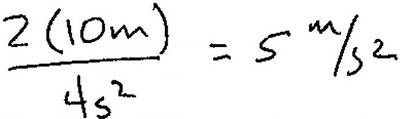
Plug in the values for and to calculate the acceleration.
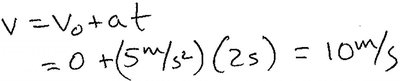
To find the velocity after 2 seconds, use with your calculated value of .
For the remaining 90 meters, use the constant velocity found at the end of the acceleration phase to determine the time needed to cover that distance.
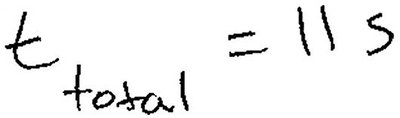
Add the time for the first 10 meters and the time for the remaining 90 meters to get the total time for the 100-meter dash.
Try solving on your own before revealing the answer!
Final Answers:
Q1: The velocity and displacement values can be found by calculating the area under the acceleration and velocity graphs, respectively, for each interval. Use the provided data and equations to complete the tables and plots.
Q2: (a) The acceleration is , (b) the velocity after 2 seconds is , and (c) the total time to run 100 meters is .
These results follow from applying the kinematic equations and understanding the relationship between acceleration, velocity, and displacement.
